Canada Forges Landmark Defense Alliance with Europe, Pivoting from Traditional Partnerships
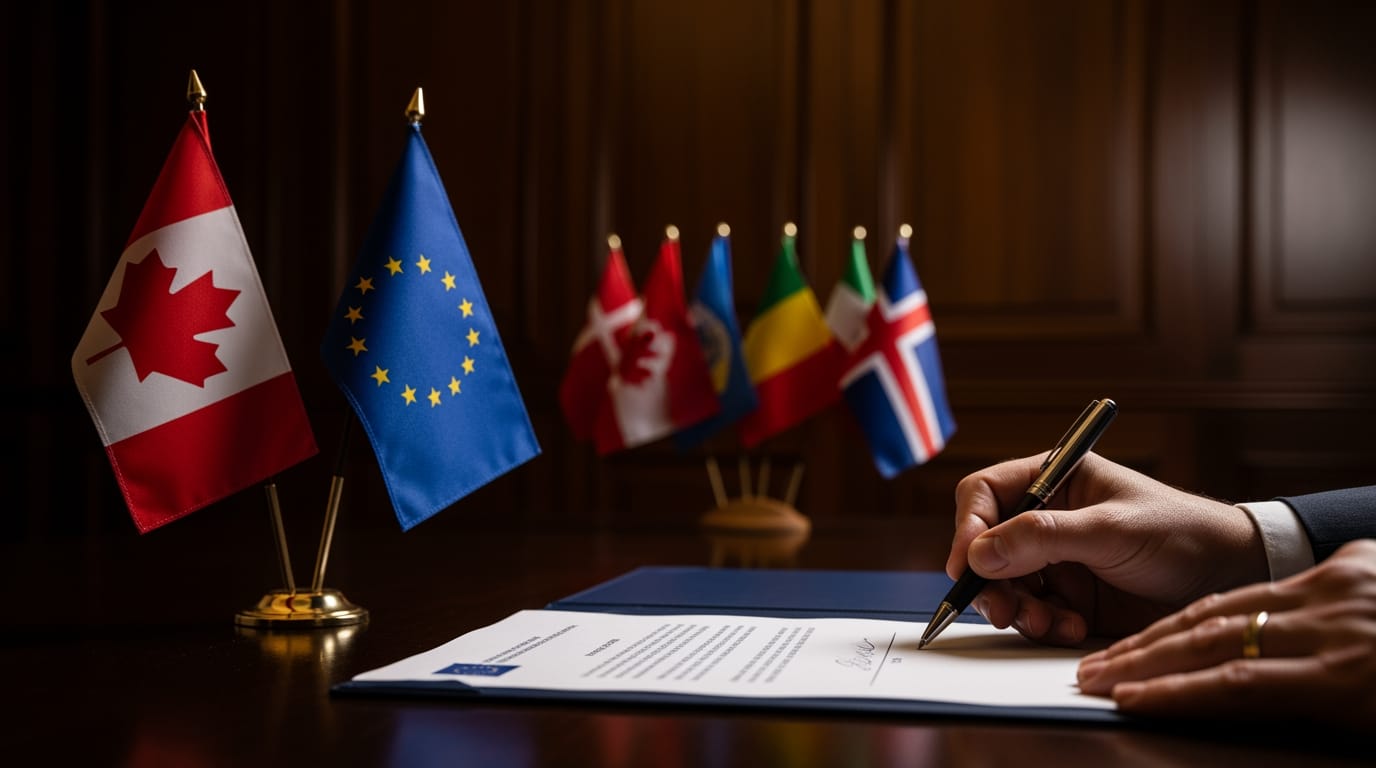
OTTAWA, December 5, 2025 – In a significant recalibration of its defense strategy, Canada has officially become the first non-European Union nation to join the bloc's flagship €150 billion Security Action for Europe (SAFE) defense credit fund. This historic move, confirmed by Prime Minister Mark Carney's office on Monday, December 1, marks a pivotal moment in Canada's foreign policy, signaling a strategic diversification of its military procurement and a deeper integration with Europe amid escalating global security challenges and shifting geopolitical dynamics.
A New Chapter in Transatlantic Defense Cooperation
The Security Action for Europe (SAFE) initiative, a cornerstone of the EU's Readiness 2030 plan, is designed to provide substantial financial assistance to member states for large-scale procurement of military equipment, including ammunition, missiles, drones, and artillery systems. Launched to bolster Europe's defense industrial base and reduce reliance on external suppliers, particularly the United States, SAFE mobilizes up to €150 billion ($170 billion) in competitively priced, long-maturity loans, secured via the EU budget. Canada's inclusion as the first non-EU country underscores the strategic importance both sides place on strengthening transatlantic security.
Prime Minister Carney's decision aligns with his administration's stated intent to diversify Canada's military spending, which has historically seen over 70 cents of every dollar of military capital expenditure directed towards the United States. This pivot is largely influenced by a desire to lessen dependency on the U.S. and is set against a backdrop of increasing Russian aggression and concerns about potential U.S. disengagement from European security. European Commission President Ursula von der Leyen and Prime Minister Carney, in a joint statement, emphasized that SAFE is a means to "increase cooperation, meet defense targets and spend better, as we address short-term urgency and long-term needs" in these geopolitically turbulent times.
Economic and Industrial Boost for Canada
Participation in SAFE is anticipated to deliver significant economic and industrial benefits for Canada. Canadian defense companies will gain unprecedented access to a vast European market, enabling them to secure cheap, EU-backed loans for military equipment procurement and bid into EU-supported joint procurement projects. This access is expected to expand markets for Canadian suppliers, attract European defense investment into Canada, and catalyze private investment, fostering job creation and growth within the Canadian defense sector, particularly in areas like munitions, drones, and advanced systems.
"Canada's participation in SAFE will fill key capability gaps, expand markets for Canadian suppliers, and attract European defense investment into Canada," Carney stated, highlighting the dual advantage of strengthening Canada's defense capabilities while bolstering its industrial capacity. The agreement is also seen as a force multiplier, accelerating the delivery of defense capabilities more efficiently and at lower cost for Canada and its NATO allies.
The pathway to entry was not without cost. Canada will contribute a total of €10 million (approximately C$16 million) to join the fund. This comprises a €2.5 million upfront administrative contribution and a €7.5 million annual participation contribution. This fee, which EU spokesman Thomas Regnier clarified is based on the economic benefits and jobs Canada can expect, stands in contrast to the United Kingdom's unsuccessful bid to join SAFE, where negotiations reportedly foundered over a significantly higher entry fee sought by Europe.
Expanding an Already Deepening Partnership
Canada's entry into SAFE is the latest and most substantial development in a deepening security and defense relationship with the European Union. Earlier this year, in June 2025, Canada and the EU formalized a comprehensive Security and Defence Partnership, establishing a dedicated political framework for enhanced cooperation. This partnership laid the groundwork for Canada's participation in EU defense procurement initiatives, including SAFE.
Prior to SAFE, Canada had already demonstrated its commitment to European security by participating in several Permanent Structured Cooperation (PESCO) projects. Since 2021, Canada has been involved in PESCO projects such as Military Mobility and Network of Logistic Hubs in Europe and Support to Operations, which aim to simplify and standardize cross-border military transport and logistics within the EU. These collaborations contribute to the swift and seamless movement of military personnel and materiel across Europe, enhancing interoperability between Canadian and European forces. The EU and Canada have also conducted an annual Security and Defence Dialogue since 2015, further cementing their strategic alignment.
The Road Ahead: Integration and Commitment
The bilateral agreement enabling Canada's formal participation in SAFE is expected to be ratified in the coming weeks, moving quickly from conclusion of negotiations to full implementation. While joint arms projects under SAFE generally require a minimum of 65 percent of components to be produced within the EU's 27 member nations, partner countries like Canada can be granted exemptions, demonstrating flexibility in the program's design. This will allow Canadian manufacturers to integrate more effectively into European supply chains.
This strategic alignment also reinforces Canada's commitment to meeting NATO's military spending guidelines, a long-standing objective that the government has pledged to achieve by early next year. By collaborating with the EU through SAFE, Canada aims to enhance its defense readiness, procure advanced equipment, and contribute more effectively to collective security within NATO and beyond.
A Redefined Role in Global Security
Canada's decision to join the European Union's SAFE defense credit fund marks a profound shift in its international defense posture. As the first non-EU nation to gain access to this significant financial instrument, Canada is not only securing economic advantages for its defense industry but also strategically positioning itself as a crucial partner in Europe's evolving security architecture. This move underscores a shared commitment to strengthening transatlantic defense, diversifying military procurement, and adapting to a complex global landscape characterized by renewed geopolitical competition. By deepening its ties with Europe through initiatives like SAFE and PESCO, Canada is forging a more resilient and integrated approach to its national security, poised to play an increasingly integral role in safeguarding stability in an uncertain world.


