Canada Rallies G7 Support for Ukraine Amidst Russian Aggression
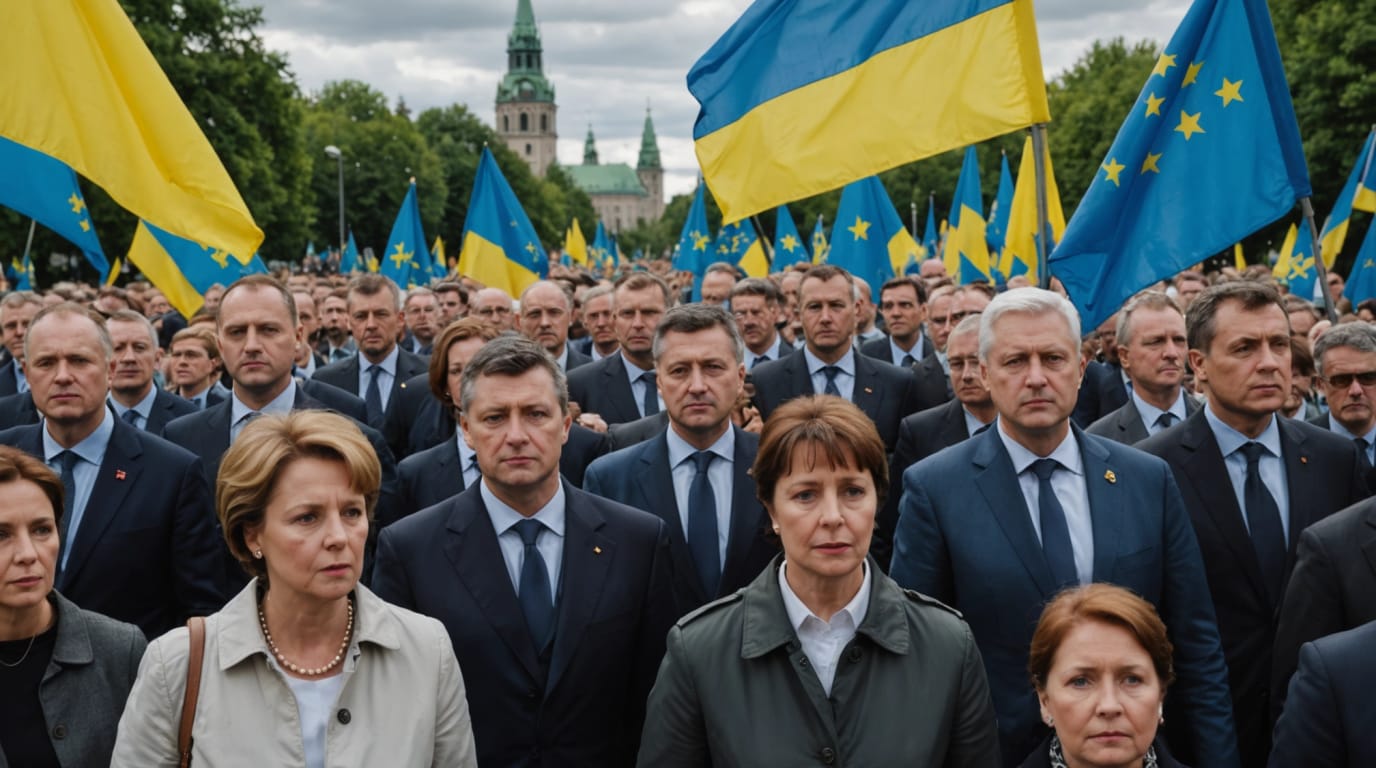
La Malbaie, Canada - As the conflict in Ukraine continues, Canada has taken a leading role in galvanizing support from the Group of Seven (G7) nations against what it describes as Russia's ongoing aggression. A meeting of G7 foreign ministers is underway in Quebec, where discussions are focused on strategies to bolster Ukraine's sovereignty and territorial integrity, while navigating a shifting geopolitical landscape influenced by evolving U.S. foreign policy.
The three-day meeting in Charlevoix, Quebec, brings together top diplomats from Britain, Canada, France, Germany, Italy, Japan, and the United States. Canadian Foreign Minister Mélanie Joly emphasized the importance of maintaining a united front in support of Ukraine, stating that "Peace and stability is at the top of our agenda, and I look forward discussing how we continue to support Ukraine in the face of Russia's illegal aggression."
Shifting Dynamics within the G7
The G7's unified stance on Russia has faced challenges, particularly with the change in U.S. administration. While previous administrations have been firm in condemning Russia's actions, the current U.S. approach has been described as more conciliatory, with a focus on de-escalation and diplomatic solutions. This shift has led to some divergence in rhetoric, with U.S. statements sometimes referring to the "Russia-Ukraine conflict" rather than Russia's "invasion" of its neighbor.
Despite these differences, Canada is seeking common ground among the G7 members. The goal is to find a formulation that addresses concerns about Russia's actions while also promoting dialogue and a potential ceasefire. Secretary of State Marco Rubio has advocated for avoiding "antagonistic" language toward Russia, arguing that it could impede diplomatic efforts to end the conflict.
Financial Aid and Asset Seizure
Beyond diplomatic efforts, financial assistance remains a crucial aspect of the G7's support for Ukraine. Canada has pledged significant financial aid to Ukraine, and is taking steps to ensure Russia is held accountable financially for its actions.
Ukraine recently received an initial tranche of $1.73 billion from Canada, derived from revenues generated by frozen Russian assets under the G7's Extraordinary Revenue Acceleration (ERA) program. This initiative aims to provide Ukraine with approximately $50 billion in loans, backed by income from frozen Russian assets, to support its budget, military, and reconstruction efforts.
The ERA program leverages the approximately $280 billion in Russian securities and cash immobilized by the EU, G7, and Australia, along with an additional $58 billion in sanctioned Russian elite assets. While the EU has already transferred billions to Ukraine using proceeds from frozen assets, full asset confiscation remains a point of contention among member states.
Canada's Broader Support for Ukraine
Canada's commitment to Ukraine extends beyond financial aid. The country has provided extensive military assistance, with over $4.5 billion in military aid committed to date. Through Operation UNIFIER, the Canadian Armed Forces have trained more than 44,000 members of the Armed Forces of Ukraine, with over 350 CAF members currently deployed in training missions across Europe. The Royal Canadian Air Force has also played a vital role, delivering over 25 million pounds of military aid from Canada and other allies to Ukraine.
In addition to military and financial support, Canada has provided humanitarian assistance to over 16 million people in Ukraine, offering essential resources such as food, water, shelter, and basic health services. Canada has also welcomed nearly 300,000 Ukrainians and their family members through the Canada-Ukraine Authorization for Emergency Travel program.
The Path Forward
As the G7 meeting progresses, discussions are expected to focus on long-term strategies for supporting Ukraine, ensuring accountability for Russia's actions, and promoting stability in the region. Canada's leadership in rallying G7 support underscores the importance of international cooperation in addressing the challenges posed by the conflict in Ukraine. While differing perspectives exist within the G7, the shared commitment to Ukraine's sovereignty and territorial integrity remains a driving force behind ongoing efforts to find a just and lasting peace.


