Capital Punishment: A World Divided on Life and Death

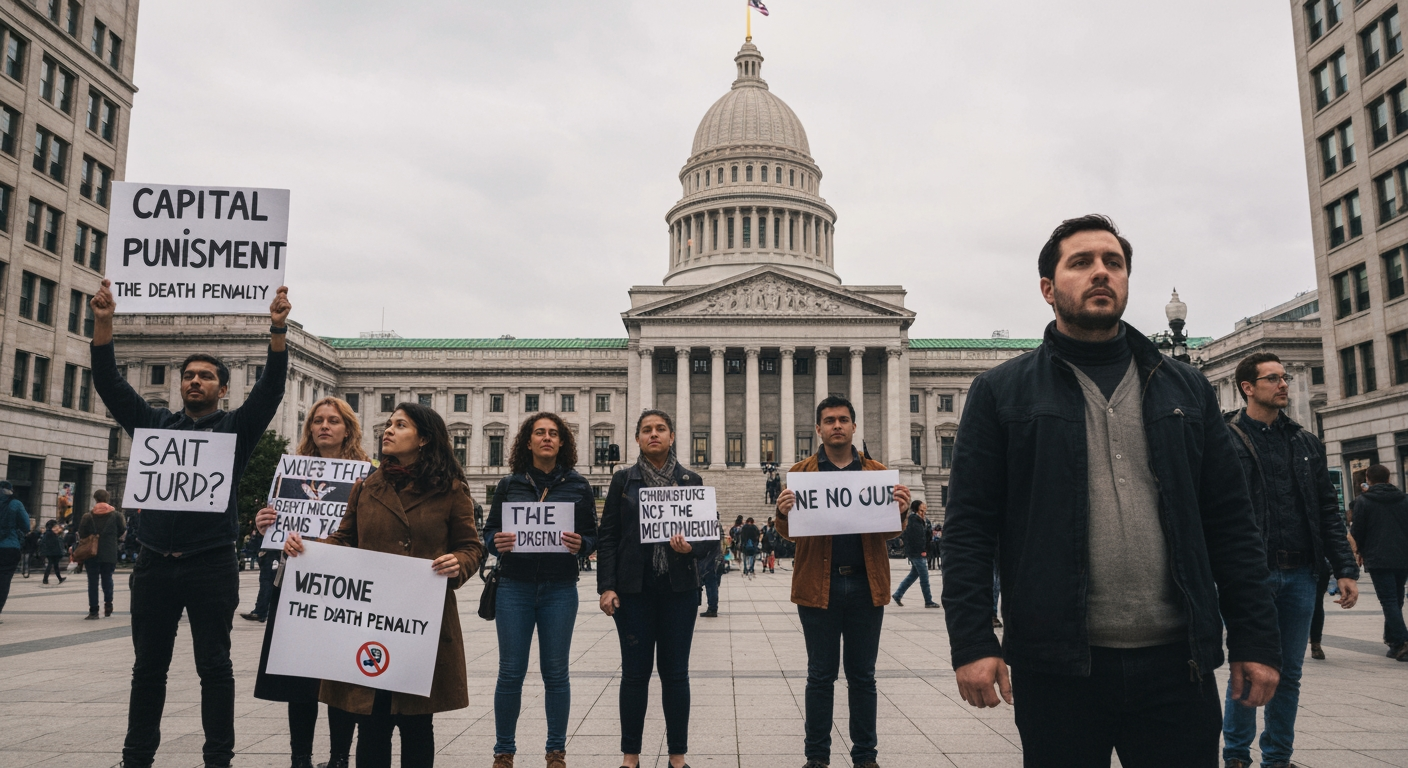
The global landscape of capital punishment presents a stark dichotomy, with a growing international consensus against the practice coexisting with its continued, and in some regions, intensified use by a minority of nations. While more than 70% of the world's countries have formally abolished the death penalty in law or practice, a concentrated group of states remains steadfast in its application, leading to a complex and often contradictory global narrative on justice, human rights, and retribution. The struggle between a clear trend towards abolition and the persistent use of state-sanctioned killing underscores a fundamental debate about legal systems, morality, and the inherent value of human life.
A World Divided: The Evolving Map of Capital Punishment
The journey toward universal abolition of capital punishment has seen significant progress over the past several decades. As of early 2025, approximately 150 countries have either eliminated the death penalty entirely or maintain official moratoria on executions. Specifically, 113 nations have fully abolished capital punishment for all crimes. An additional nine countries reserve its use only for exceptional circumstances, such as crimes committed under military law, while 23 more are considered "abolitionist in practice," meaning they retain the death penalty in their statutes but have not carried out an execution in at least 10 years and are understood to have a policy against doing so. This means a significant majority of the world's nations have moved away from this ultimate punishment, often reflecting an evolving understanding of human rights and justice.
However, roughly 55 countries continue to retain and actively use the death penalty. This group includes some of the world's most populous nations and those operating under authoritarian rule. This persistent application by a comparatively small number of states creates a persistent global challenge, even as the overall momentum for abolition strengthens.
The Core Group of Executioners and Methods Employed
The overwhelming majority of global executions are carried out by a concentrated handful of nations, a pattern that has become increasingly pronounced. In 2024, the global number of executions saw a notable increase, reaching over 1,500 worldwide, marking the highest figure recorded by Amnesty International since 2015. This surge, however, did not stem from a wider global adoption of capital punishment, but rather from a dramatic intensification of executions within a few key countries.
China consistently remains the world's leading executioner, though the precise extent of its use of the death penalty remains unknown, as such data is classified as a state secret. Human rights organizations estimate that thousands are executed in China annually. Excluding China, a staggering 91% of all known executions in 2024 took place in just three countries: Iran, Saudi Arabia, and Iraq. Iran alone accounted for approximately 64% of publicly reported global executions, carrying out at least 972 executions in 2024, a 14% increase from the previous year. Saudi Arabia executed at least 345 individuals, marking its highest recorded total ever and more than double its 2023 figure. Iraq executed at least 63 people in 2024. Other nations consistently listed among active executioners include the United States, Somalia, Egypt, Japan, and Singapore.
Methods of execution vary across these nations, often reflecting historical practices or perceived efficiency. Common methods observed globally include hanging, shooting, beheading, and lethal injection. Saudi Arabia, for instance, routinely employs beheading in public squares. In the United States, lethal injection is the most prevalent method, though some states also authorize electrocution, lethal gas, or firing squads. Public executions are still carried out in some countries, notably Afghanistan and Iran.
Driving Forces: Arguments for and Against Capital Punishment
The enduring debate surrounding capital punishment is fueled by deeply held convictions on both sides. Proponents often argue that the death penalty serves as a just retribution for the most heinous crimes, embodying the principle of "an eye for an eye." They maintain that it provides closure for victims' families and ensures that convicted murderers cannot repeat their offenses, thereby enhancing public safety. Some also contend that capital punishment acts as a deterrent, discouraging others from committing similar egregious acts, though extensive research often disputes this claim.
Conversely, opponents of the death penalty raise fundamental objections rooted in human rights, ethical concerns, and practical failings of justice systems. A primary argument is that capital punishment constitutes a violation of the inherent right to life and is a cruel, inhuman, and degrading punishment. Amnesty International unequivocally opposes the death penalty in all circumstances, regardless of the crime or method of execution. A significant concern is the irreversible nature of execution and the ever-present risk of executing innocent individuals, a mistake that cannot be rectified. Studies also indicate that the death penalty is often disproportionately applied based on factors such as race, socioeconomic status, and the quality of legal representation, highlighting systemic biases within justice systems. Furthermore, the cost of capital punishment cases, including lengthy appeals, can often be significantly higher than that of life imprisonment.
International Law and the Push for Universal Abolition
International law plays a crucial role in shaping the global discourse and practice of capital punishment. While no universally binding international treaty explicitly prohibits the death penalty in all circumstances, international legal frameworks severely restrict its application and strongly encourage its ultimate abolition. Key human rights instruments, such as the Universal Declaration of Human Rights and the International Covenant on Civil and Political Rights (ICCPR), affirm the right to life and prohibit torture and cruel, inhuman, or degrading treatment. Article 6 of the ICCPR stipulates that in countries where capital punishment has not been abolished, it may only be imposed for the "most serious crimes," generally understood to mean intentional killing, and must adhere to strict legal safeguards.
A critical international prohibition, reinforced by the Convention on the Rights of the Child, forbids the execution of individuals for crimes committed when they were under the age of 18. Despite this, some countries, including Iran and Somalia, have reportedly executed individuals who were juveniles at the time of their alleged offenses, directly contravening international law. The United Nations General Assembly has consistently passed resolutions calling for a global moratorium on the use of the death penalty, reflecting a growing international consensus against the practice. Many countries have also ratified optional protocols to international human rights treaties that aim for the complete abolition of the death penalty, making it impossible for them to reintroduce it.
Recent Trends and the Shifting Landscape
Recent years have witnessed a paradox in the global application of capital punishment: while the number of countries carrying out executions continues to shrink, the overall number of executions has increased. In 2024, only 15 countries were known to have carried out executions, the lowest number on record, yet the total number of executions rose significantly compared to previous years. This trend highlights a "concentration effect," where fewer nations are executing more people, more often.
Notable advancements towards abolition continue, particularly in regions like Africa, where momentum is shifting. Sierra Leone abolished the death penalty in 2021, and Zambia acceded to the Second Optional Protocol to the ICCPR in 2024, committing to full abolition. Zimbabwe also abolished the death penalty for ordinary crimes in 2024. In the Americas, Canada, Mexico, and nearly all South American countries have abolished capital punishment, leaving the United States as an outlier in the region in its continued use of executions. Malaysia ended its mandatory death penalty in 2023, granting judicial discretion in sentencing.
Despite these positive abolitionist steps, the significant increase in executions, predominantly in Iran, Saudi Arabia, and Iraq, especially for drug-related offenses, presents a concerning counter-trend. These actions often violate international law, which limits the death penalty to the "most serious crimes."
Conclusion
The global narrative surrounding capital punishment is one of complex and ongoing evolution. The undeniable worldwide trend leans towards the abolition of the death penalty, driven by an increasing recognition of human rights and the inherent fallibility of justice systems. However, the persistent and often intensified use of capital punishment by a concentrated group of nations creates a stark and sobering counterpoint to this global shift. The ethical, legal, and humanitarian challenges posed by the death penalty remain at the forefront of international debate, with advocates for abolition continuing their efforts to consign this practice to history, striving for a world where justice does not necessitate state-sanctioned killing.
Sources
- deathpenaltyinfo.org
- deathpenalty.org
- deathpenaltyinfo.org
- amnesty.or.th
- deathpenaltyinfo.org
- deathpenaltyinfo.org
- worlddata.info
- fjc.gov
- amnesty.org.au
- penalreform.org
- cornell.edu
- deathpenaltyinfo.org
- deathpenaltyinfo.org
- britannica.com
- amnesty.org.nz
- amnesty.org
- medium.com
- amnesty.org.au
- deathpenaltyproject.org
- ibanet.org
- amnesty.dk
- deathpenaltyinfo.org
- deathpenaltyinfo.org
Related Articles

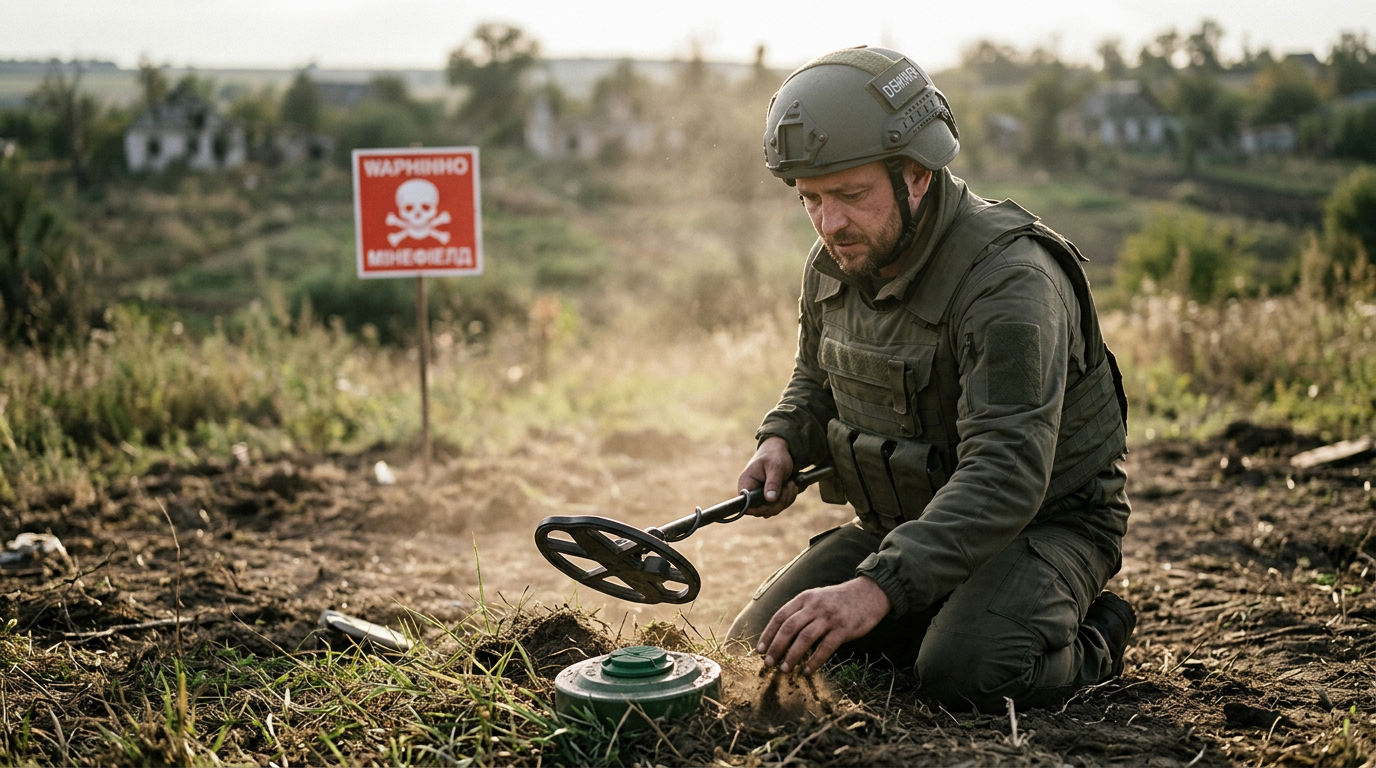
Landmines Resurge Globally, Shattering Two Decades of Progress
The global effort to eradicate antipersonnel landmines, once heralded as a monumental success in humanitarian disarmament, is facing a perilous reversal. Despite an international treaty banning these indiscriminate...


Disinformation Campaigns Cloud Michigan's Critical US Senate Race
LANSING, Mich. — The fiercely contested Democratic primary for the U.S. Senate in Michigan has become a battleground not just of policy and ideology, but of pervasive disinformation, with progressive candidate Abdul...