CDU Triumphs in Rhineland-Palatinate, Ending Decades of SPD Rule
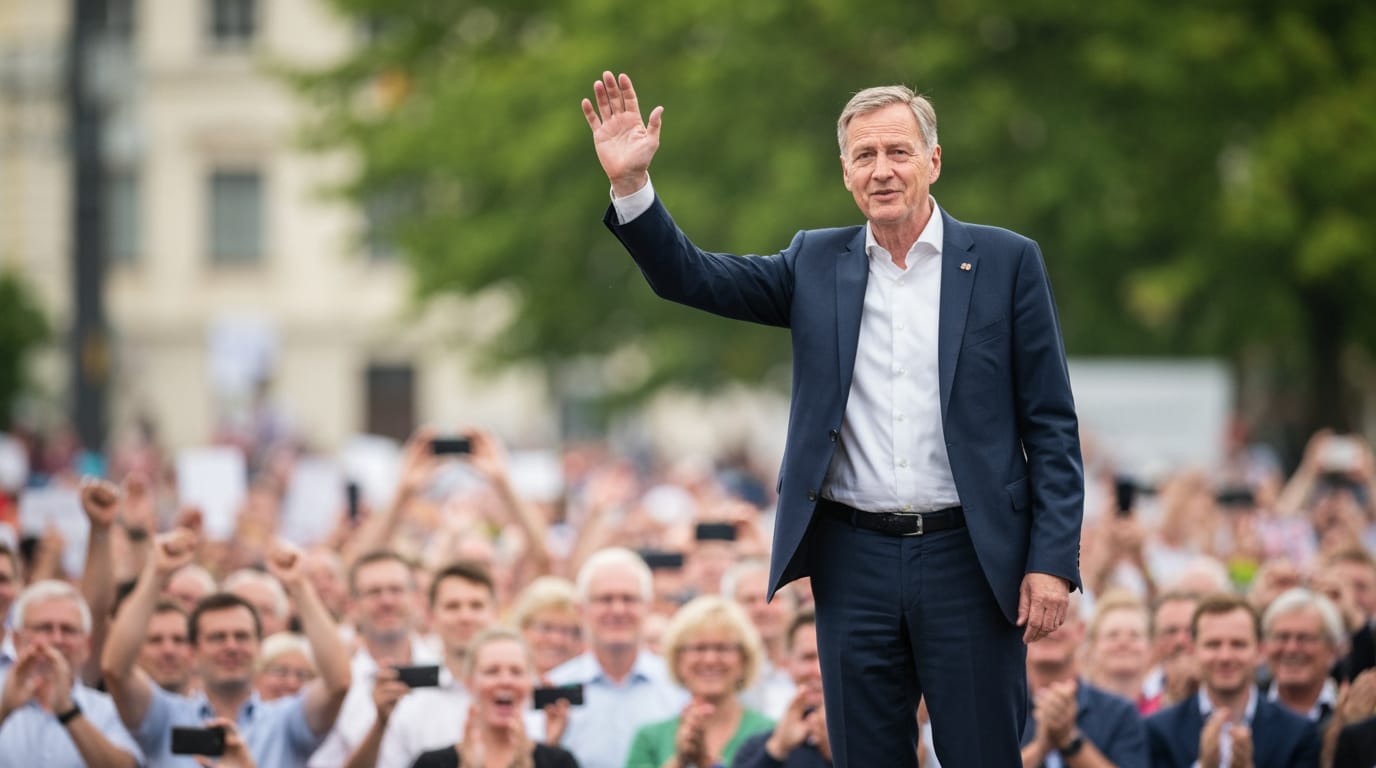
Mainz, Germany – The Christian Democratic Union (CDU) has emerged victorious in the recent Rhineland-Palatinate state election, marking a significant political shift that concludes 35 years of Social Democratic Party (SPD) governance in the western German state. The outcome, confirmed by preliminary results on March 23, 2026, sees the CDU's top candidate, Gordon Schnieder, poised to become the new Minister-President, dealing a considerable blow to the SPD and its federal coalition partners.
Historic Upset in a Long-Held SPD Stronghold
The election, held on March 23, 2026, saw the CDU secure approximately 31% of the vote, an increase from its performance in the previous 2021 election. This result positions the CDU ahead of the SPD, which garnered around 26% of the votes, a notable decline of nearly ten percentage points from its 2021 showing. The shift represents a historic defeat for the Social Democrats, who had continuously led the regional government since 1991, making Rhineland-Palatinate one of their longest-standing strongholds.
Gordon Schnieder, leading the CDU campaign, successfully capitalised on a growing sentiment for change, challenging incumbent SPD Minister-President Alexander Schweitzer. Schweitzer had taken over the top state office in July 2024, succeeding the long-serving Malu Dreyer. The CDU's performance is being hailed within the party as a "historic" and "truly fantastic" victory, with hopes it will provide momentum for the conservative party at the federal level.
Far-Right AfD Achieves Record Gains
Adding another layer of complexity to the election results is the substantial rise of the far-right Alternative for Germany (AfD). The party achieved a record performance in a western German state, securing around 19.5% to 20% of the vote. This places the AfD as the third-largest political force in Rhineland-Palatinate's state parliament, more than doubling its share compared to the 2021 election. The AfD's significant gains underscore growing electoral pressures and a shifting political landscape across Germany.
In contrast, the Green Party experienced slight losses, polling around 8% of the vote, while the Free Democratic Party (FDP), formerly a part of the state's "traffic light" coalition government alongside the SPD and Greens, failed to clear the 5% electoral threshold and will not be represented in the new state parliament. This marks a clear setback for the liberal party.
Complex Coalition Negotiations Loom
With the SPD's long-standing leadership now concluded, the focus shifts to the intricate process of forming a new government. Gordon Schnieder has stated his intention to form a coalition within the "democratic center," ruling out any alliance with the AfD. This stance aligns with the established "cordon sanitaire" around the far-right in mainstream German politics, despite the AfD's strong electoral performance.
Potential coalition scenarios include a grand coalition between the CDU and the SPD, a possibility hinted at by preliminary discussions, or other configurations involving smaller parties. The previous "traffic light" coalition of SPD, FDP, and Greens no longer holds a majority, necessitating new political alignments to govern the state. The complex nature of these negotiations will test the agility of the involved parties to forge a stable ruling alliance.
Federal Ramifications and a "Super Election Year"
The Rhineland-Palatinate outcome has immediate and significant implications for national politics. For Chancellor Friedrich Merz's CDU, this victory offers a welcome political tailwind, strengthening the conservative bloc at the federal level. It provides a much-needed boost, especially after a narrow loss to the Greens in Baden-Württemberg just weeks prior.
Conversely, the SPD's heavy losses intensify internal debates over leadership and policy direction within the party. This setback in a traditional stronghold comes amidst a series of weak performances in other regional elections, reflecting declining support and putting immense pressure on the SPD's federal leadership. The SPD's electoral woes could destabilize Merz's current federal coalition, potentially slowing broader reform efforts and facing additional scrutiny on coalition cohesion.
The Rhineland-Palatinate election is the second of several state elections scheduled for Germany in what has been termed a "super election year," with further races expected in states like Berlin, Mecklenburg-Vorpommern, and Saxony-Anhalt. The results from Rhineland-Palatinate will undoubtedly influence the dynamics and strategies of all major parties as the country navigates this intense electoral period.
The shift in Rhineland-Palatinate marks a pivotal moment in German state politics, signalling a potential realignment of power and setting the stage for increased political volatility and strategic maneuvering in the months ahead.


