Chancellor Merz Navigates Thorny Path to Consolidate Power and Revitalize Germany
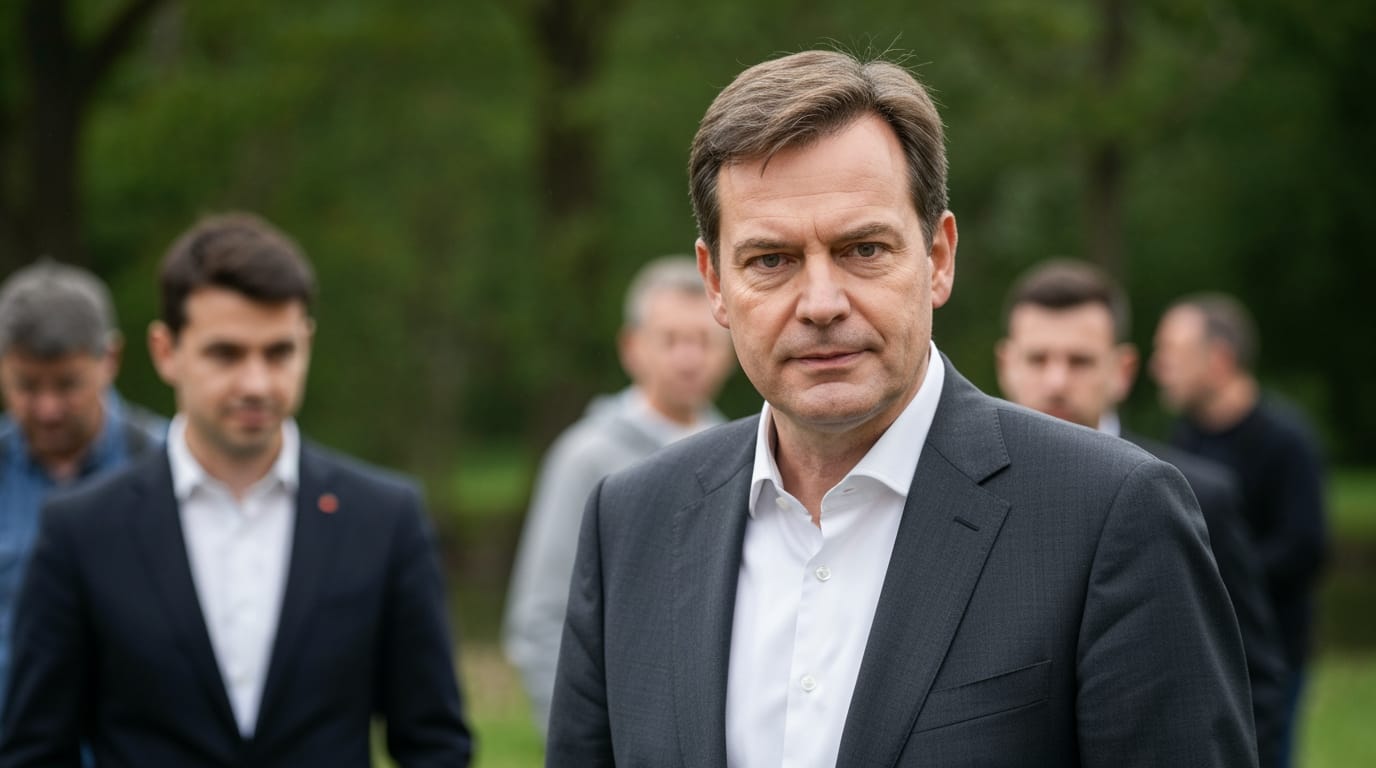
BERLIN – One year into his chancellorship, Friedrich Merz of the Christian Democratic Union (CDU) is actively working to fortify his leadership and steer Germany through a complex domestic and international landscape. Having assumed the nation's top office on May 6, 2025, after the CDU/CSU emerged as the strongest force in the preceding federal election, Merz faces the ongoing task of consolidating support not only within his own party but also across a skeptical public and a fragile coalition government.
Merz's ascent to the chancellorship followed a significant electoral victory for the CDU/CSU in the federal election held on February 23, 2025, where exit polls indicated their support ranging between 28% and 30%. This outcome positioned him as the frontrunner, though Germany's proportional representation system necessitated the formation of a coalition government. A "grand coalition" with the Social Democratic Party (SPD) ultimately materialized, providing the necessary majority in the Bundestag to govern. However, this governing arrangement, while numerically stable, faces considerable challenges from both internal and external pressures.
Navigating Internal Party Dynamics and Public Skepticism
Despite his electoral success and assuming the chancellorship, Merz's administration has encountered considerable public skepticism. As of May 2025, only 38% of Germans favored him as chancellor, with a notable 56% expressing rejection. This public sentiment underscores a broader concern, as nearly half of those surveyed believed the newly formed CDU-SPD coalition lacked the capacity to effectively address the nation's pressing issues.
Within the CDU, Merz has also had to manage internal divisions. His firm stance on migration, for instance, led to a proposal for a tougher approach that was ultimately rejected, even drawing dissenting votes from within the CDU itself. This event was notably characterized by the leader of the far-right Alternative for Germany (AfD) as a "meltdown of the CDU," highlighting the potential for internal strife to be leveraged by political rivals. Merz, a seasoned politician who returned to the political forefront after a hiatus, secured the CDU leadership in January 2022, promising a decisive break from the more centrist policies of his predecessor, Angela Merkel. This pivot, while appealing to a conservative base, has simultaneously required him to unite various factions within the party.
The Rise of the AfD and the "Firewall" Dilemma
A dominant feature of the German political landscape that significantly impacts Merz's efforts is the enduring strength of the far-right AfD. In the 2025 federal election, the AfD garnered substantial support, polling second with 19% to 21% of the vote. This robust performance, particularly strong in middle-class milieus and eastern German states, represents a persistent challenge to the established parties, including the CDU.
Merz has consistently upheld a "firewall" policy, explicitly ruling out any cooperation or coalition with the AfD. This position aligns with the broad consensus among mainstream German parties to isolate the AfD, citing the party's links to far-right extremism. However, the AfD's continued electoral success and its appeal to a segment of the electorate, sometimes fueled by disillusionment with mainstream politics, has led to internal discussions within the CDU regarding the sustainability and effectiveness of this "firewall." Some within the party have reportedly considered whether a re-evaluation of this stance might be necessary, particularly in light of upcoming state elections where the AfD enjoys considerable support. Navigating this tension while maintaining party unity and electoral competitiveness remains a critical balancing act for Merz.
Economic Revitalization and Global Reorientation
A central pillar of Chancellor Merz's agenda is the revitalization of Germany's economy, which has faced headwinds including a weak performance, industrial crises, and persistent inflation. His administration is focused on addressing high energy costs, reducing bureaucratic hurdles, and implementing corporate tax cuts to stimulate growth. Experts have noted that his government faces tough decisions on these fronts, with the success of his chancellorship hinging on the tangible economic recovery he can deliver. Merz's campaign rhetoric prior to the election heavily emphasized rebuilding the ailing German economy, proposing measures like the abolition of the German Supply Chain Act, though a comparable EU law now applies to German businesses.
Concurrently, Merz is redefining Germany's role on the global stage. He advocates for a stronger German military and a more assertive foreign policy, aiming to enhance the nation's international standing. This includes a commitment to more generous support for Ukraine, including potential military aid, and a reinforcement of ties with the United States in line with NATO guidelines. However, these efforts are not without their complexities. Merz has also had to manage strained relationships within Europe, notably with France, and navigate the intricate geopolitics of an increasingly multipolar world, including balancing relations with China amidst growing dependency concerns. His foreign policy philosophy combines Europeanism and Atlanticism with a "Germany first" approach, emphasizing the national interest while seeking to strengthen European leadership within the NATO alliance.
Social Policy and the Digital Age
Beyond economics and foreign policy, Merz's government is also turning its attention to critical social issues. Acknowledging past weaknesses in the CDU's social policy, Merz has highlighted the need for a "generational contract" to align social systems with demographic changes, including proposals for a potential rise in the retirement age.
Furthermore, in a move reflecting growing societal concerns, Chancellor Merz has voiced support for imposing controls on children's access to social media platforms. Citing evidence of harm from the deliberate spread of fake news and online manipulation, he has backed calls for compulsory limits, including proposals for a ban on platforms like TikTok or Instagram for children under 16. This initiative aligns with similar discussions and actions in other European countries and underscores his administration's engagement with the challenges posed by the digital age.
Conclusion
Friedrich Merz's tenure as Chancellor, now a year in, is characterized by a determined effort to consolidate support for his vision of a revitalized Germany. From uniting a diverse party to confronting external political and economic headwinds, his leadership is under constant scrutiny. The success of his administration will hinge on his ability to address public skepticism, manage internal party dynamics, effectively counter the rise of the AfD, and deliver on promises of economic renewal and a strengthened international presence. As Germany navigates a period of significant domestic and global transition, Merz's capacity to weave together a cohesive and effective governance strategy will define not only his political legacy but also the future trajectory of Europe's largest economy.


