Chevron's Crucial Role: How a US Oil Giant Could Reshape Venezuela's Energy Future
In the intricate geopolitical landscape of global energy, U.S. oil giant Chevron Corporation has emerged as an unlikely yet pivotal player in the potential recovery of Venezuela's oil-rich economy, a role that increasingly overshadows the influence of traditional partners like China. As the sole remaining major American energy company operating within the sanctioned nation, Chevron navigates a complex web of international diplomacy, economic restrictions, and vast underground reserves, positioning itself as a key to unlocking Venezuela's future prosperity, albeit under stringent conditions.
For years, Venezuela's oil sector, once a powerhouse, has been crippled by a combination of domestic mismanagement, underinvestment, and crippling international sanctions. Despite holding the world's largest proven oil reserves—an estimated 303 billion barrels, dwarfing those of Saudi Arabia and the United States—the nation's production has plummeted from over 3 million barrels per day (bpd) in the early 2000s to approximately 0.9 million bpd in 2025. This drastic decline has left the country, and its state-owned oil company PDVSA, in dire need of foreign capital, technological expertise, and a pathway back to global markets. Chevron's enduring, albeit limited, presence offers a unique avenue for this recovery, one closely tied to U.S. strategic interests.
An Enduring Presence Amidst Geopolitical Volatility
Chevron's century-long operational history in Venezuela, coupled with its current status as the only U.S. oil major still active, underscores its strategic importance. The company's operations are seen by the U.S. government as aligned with national interests, serving to stabilize the region and counteract the influence of adversarial nations. This stance is particularly critical given the broader U.S. foreign policy objective of preventing hostile foreign control over key assets in the Western Hemisphere, a direct nod to the involvement of countries like Russia and China.
Under a series of restricted U.S. licenses, most recently renewed in July 2025 and continued by both the Biden and Trump administrations, Chevron has been permitted to continue limited operations. These licenses are meticulously crafted to prevent direct financial benefit to the Maduro regime, a central tenet of the sanctions framework. Instead of direct cash payments, Chevron makes in-kind contributions of approximately half its production to PDVSA. This arrangement allows for continued extraction and export while adhering to the sanctions, making Chevron a carefully controlled conduit for Venezuelan oil to reach international markets, predominantly the U.S.
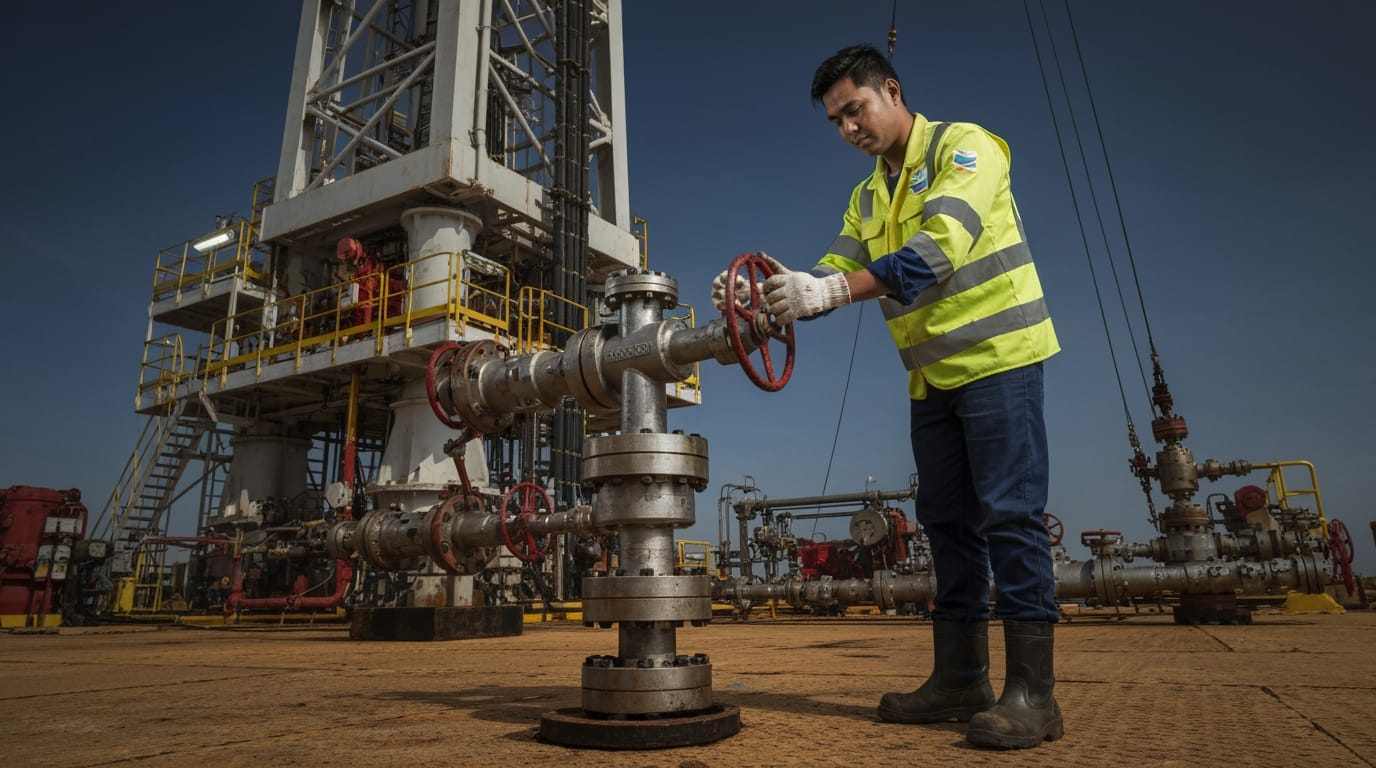
In August 2025, Chevron resumed oil shipments to the U.S. after a four-month hiatus, averaging over 100,000 bpd. The company currently produces around 240,000 bpd in Venezuela, though it is only permitted to export half of this volume. Significantly, Chevron's output accounts for roughly a quarter of Venezuela's total oil production, focusing primarily on the heavy crudes from the Orinoco Belt, which are then upgraded into lighter synthetic oils. This operational footprint, despite its constraints, positions Chevron as a critical lifeline for Venezuela's embattled oil industry.
The Capital Conundrum: Billions Needed for Revival
The path to restoring Venezuela's oil sector to its former glory is fraught with challenges, primarily the need for massive capital investment. Experts estimate that billions of dollars will be required for infrastructure upgrades, well maintenance, and the introduction of modern technology. While Chevron's immediate investments could boost its own output by an additional 250,000 bpd, a broader industry-wide recovery aiming for pre-sanction levels of over 2 million bpd would necessitate a far more substantial influx of foreign capital.
Venezuela's oil reserves, while vast, consist largely of extra-heavy crude, which is more costly to produce, carbon-intensive, and high in sulfur content, often selling at a discount compared to lighter, "sweeter" crudes. This characteristic further complicates investment decisions, requiring specialized infrastructure and processing capabilities. The nationalization of assets, loss of skilled personnel, inadequate maintenance, and a history of political instability have created a climate of uncertainty that international investors are wary of. Companies will require reassurance that conditions are stable before committing significant investment.
China's Role Versus Chevron's Distinct Advantage
While China National Petroleum Corporation (CNPC) has been an investor in Venezuela's Orinoco Belt and much of Venezuela's approximately 750,000 bpd of oil exports are directed to China, its influence differs fundamentally from Chevron's. U.S. sanctions have forced Venezuela to resort to "shadowy methods" and shell companies to facilitate oil sales to China, highlighting the precarious nature of these transactions. This stands in stark contrast to Chevron's operations, which, while limited, are conducted transparently under U.S. Treasury oversight.
The U.S. government's willingness to grant Chevron licenses, despite its broader sanctions regime against Venezuela, underscores a pragmatic approach. It allows a degree of oil flow to global markets, potentially stabilizing prices, while simultaneously maintaining pressure on the Maduro government. More importantly, it ensures that a U.S. entity, rather than a geopolitical rival, retains a foothold and potential leverage in a nation with immense energy resources. The discussions between Chevron executives and the U.S. administration indicate a strategic alignment, where Chevron's operations are viewed as serving broader U.S. national and security interests.
A Path Forward?
The future of Venezuela's oil industry, and by extension its economy, remains inextricably linked to political developments and the easing of sanctions. A significant shift, such as a U.S. agreement with Venezuela contingent on free and fair elections, could pave the way for a more comprehensive lifting of sanctions and a surge in foreign investment. In such a scenario, Chevron, with its established infrastructure, operational expertise, and U.S. government backing, would be uniquely positioned to lead the charge in revitalizing production.
However, the path is fraught with uncertainty. The potential for political upheaval, the complexities of rebuilding a dilapidated infrastructure, and the need for significant financial commitments all present formidable obstacles. Yet, as the world's energy demands continue to evolve, the strategic importance of Venezuela's vast reserves, and Chevron's role as the primary U.S. conduit to them, remains undiminished. The company's "high-risk, high-reward" bet, employing approximately 3,000 local staff and maintaining a century-long presence, could ultimately be the catalyst for Venezuela's energy revival, positioning an American giant, not China, as the crucial player in its economic destiny.