Escalation in Persian Gulf Triggers Global Energy Crisis as Iran Targets Key Oil and Gas Sites
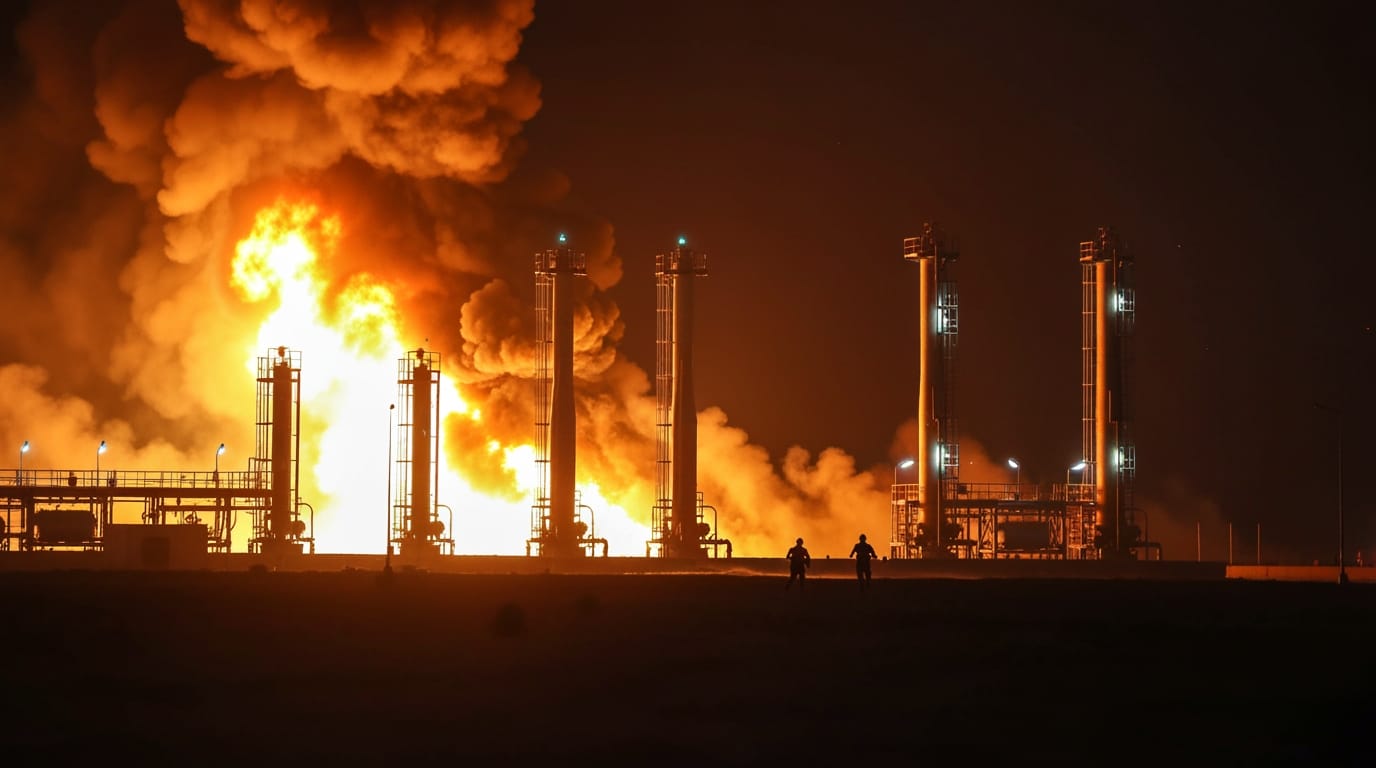
DUBAI, UAE – A dangerous new chapter has unfolded in the Persian Gulf, as a rapid escalation of tensions has seen Iran launch a barrage of drone and missile attacks against critical oil and gas infrastructure across multiple Gulf states, sending shockwaves through global energy markets and raising fears of a broader regional conflict. These widespread assaults, described by some as retaliatory following recent U.S.-Israeli strikes on Iran, have disrupted vital shipping lanes, crippled production facilities, and ignited an urgent international debate over energy security and regional stability.
The concerted attacks, which began in late February and intensified through early March 2026, have marked a significant shift in regional dynamics. Targets have ranged from major crude oil refineries and liquefied natural gas (LNG) production plants to commercial ports and oil tankers, impacting nations including Saudi Arabia, the United Arab Emirates (UAE), Qatar, Oman, Kuwait, and Bahrain. The scale and breadth of these strikes have surpassed previous regional skirmishes, directly threatening a substantial portion of the world's energy supply and prompting emergency diplomatic maneuvers.
A Deluge of Attacks Across the Gulf
The current wave of aggression follows what Iran has characterized as retaliation for U.S.-Israeli military operations against its territory, which reportedly resulted in the death of Supreme Leader Ayatollah Ali Khamenei. In a clear demonstration of its capacity to inflict economic pain, Iran has deployed hundreds of ballistic missiles and drones, overwhelming air defenses in some instances and causing significant damage.
Among the most impactful strikes was an attack on Saudi Aramco's Ras Tanura refinery, one of the world's largest oil export facilities. Debris from intercepted Iranian drones caused a fire and forced the temporary shutdown of the 550,000 barrel-per-day refinery, although Saudi officials stated that petroleum supplies to local markets were not affected. Satellite imagery has since revealed scorch marks around cooling towers at the facility, underscoring the severity of the incident.
Qatar, a crucial global supplier of liquefied natural gas, also bore the brunt of these assaults. QatarEnergy announced the suspension of LNG production at its key facilities in Ras Laffan Industrial City and Mesaieed Industrial City following drone strikes. This unilateral cessation of production by the world's second-largest LNG exporter immediately sent European natural gas prices soaring.
Further incidents have been reported across the region. Oman's Duqm port was struck multiple times by drones, with one hitting a fuel storage tank and another injuring a worker. In the UAE, ports in Abu Dhabi and Dubai, including Jebel Ali, experienced fires and disruptions from drone attacks and intercepted debris. Kuwait's Shuaiba port also saw operations suspended after similar incidents. Civilian infrastructure has not been spared, with reports of luxury hotels in Dubai and Bahrain, and residential areas in Doha, Qatar, being hit. Even the U.S. Embassy in Riyadh, Saudi Arabia, sustained minor material damage from a drone attack.
The maritime domain has also become a dangerous frontline. Several oil tankers, including the ATHE NOVA and MKD VYOM, have reportedly been struck by drones and missiles near the Strait of Hormuz and in the Gulf of Oman, with one sailor tragically killed on the MKD VYOM. Insurers have responded by significantly raising premiums for vessels transiting the region, adding to the operational costs and risks for shipping companies.
The Strait of Hormuz: A Chokepoint Under Threat
Central to the global energy fears is the precarious status of the Strait of Hormuz, the narrow waterway through which an estimated 15-20% of the world's daily oil consumption and 20% of global liquefied natural gas flows. Iranian officials have explicitly threatened to close the Strait, with a senior Islamic Revolutionary Guard Corps official stating, "The Strait [of Hormuz] is closed. If anyone tries to pass, the heroes of the Revolutionary Guards and the regular navy will set those ships ablaze."
While the U.S. Central Command (CENTCOM) has maintained that the Strait remains open, the threats alone have had a chilling effect. Many global shippers have suspended operations, and satellite images have shown a significant reduction in vessel traffic, with numerous tankers awaiting developments in nearby ports. This de facto disruption, even without an official closure, highlights the immense vulnerability of this critical chokepoint to geopolitical instability. A prolonged blockage of the Strait could lead to an unprecedented supply void, posing a severe threat to global economies.
Energy Markets Reel Amidst Uncertainty
The immediate consequence of these attacks and threats has been a sharp upward surge in global energy prices. Brent crude oil prices jumped by as much as 13% to reach their highest levels since January 2025, settling around $83 per barrel, while U.S. West Texas Intermediate (WTI) also saw significant increases. Natural gas prices have also spiked dramatically, with European benchmark prices rising by 38% to over 50% following the halt in Qatari LNG production, and U.S. natural gas prices increasing by 5%.
Analysts warn that a sustained disruption could push oil prices into triple digits, reigniting inflationary pressures across economies already grappling with high living costs. The economic implications extend beyond direct energy costs, affecting freight rates, insurance premiums, and potentially leading to wider global inflation and a slowdown in economic growth. Experts note that while some major producers like Saudi Arabia and the UAE have limited pipeline options to bypass Hormuz, these are insufficient to fully offset a significant, prolonged disruption of seaborne flows.
International Reactions and Geopolitical Fallout
The international community has reacted with alarm and a mix of condemnation, calls for de-escalation, and expressions of concern. The Gulf Cooperation Council (GCC) states – Saudi Arabia, UAE, Qatar, Kuwait, Bahrain, and Oman – have collectively condemned the Iranian aggression, labeling it an "unjustified aggression" and a "blatant violation" of their sovereignty. They have affirmed their right to respond and stressed that an attack on one member state is considered an attack on all, signaling a potential for collective security measures.
The United States and Israel, whose recent strikes on Iran precipitated the current crisis, have maintained their stance against Iranian aggression. However, the widening conflict has also drawn responses from other major powers. European nations, including France, Germany, and the UK, have condemned Iran's retaliatory attacks and urged an immediate cessation of hostilities, emphasizing the "dangerous" situation for everyone. India has called for restraint and diplomacy, highlighting the need to respect sovereignty and territorial integrity. China and Russia, while supportive of Iran's sovereignty, have also expressed concern about regional stability.
The underlying motivations for Iran's actions appear to be multifaceted. Beyond immediate retaliation for the U.S.-Israeli strikes, analysts suggest Iran may be aiming to impose significant economic costs on its regional adversaries and global markets, thereby attempting to pressure the U.S. and its partners to de-escalate or seek a settlement. Some observers also point to an internal "existential crisis" for the Iranian regime, suggesting the attacks could be a desperate measure to assert strength amidst domestic pressures.
A Precarious Future for Global Energy Security
The ongoing hostilities in the Persian Gulf underscore the region's enduring fragility and its critical importance to global energy supplies. The widespread attacks on oil and gas infrastructure, coupled with the explicit threats to the Strait of Hormuz, have created a volatile and unpredictable environment that directly impacts the daily lives and economic stability of billions worldwide.
The immediate future hinges on the duration and scope of the conflict. While some analysts believe the market can absorb short-term disruptions, a prolonged period of instability and attacks could lead to a far more severe energy shock, reminiscent of past crises. The events serve as a stark reminder of the interconnectedness of global energy markets and the profound geopolitical risks that continue to define the Middle East. The international community faces the daunting challenge of de-escalating the conflict while safeguarding the vital flow of energy that powers the world economy.