China Accelerates Electric Vehicle Dominance in South America, European Rivals Lag
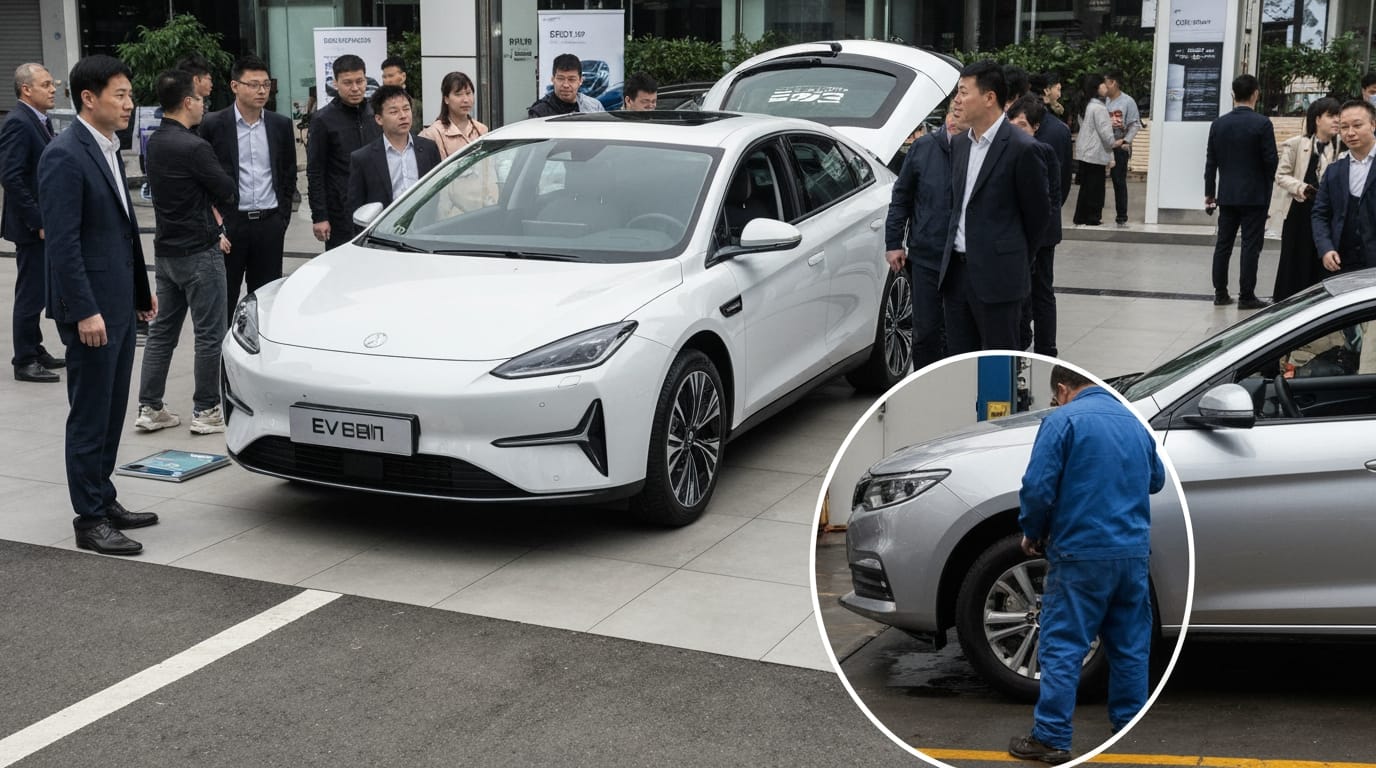
Buenos Aires, Argentina — A significant transformation is underway in South America's burgeoning electric vehicle (EV) market, as Chinese manufacturers rapidly expand their footprint, outpacing their European counterparts. While the region's overall EV adoption accelerates, Chinese brands are seizing market share through aggressive pricing strategies, localized production, and a keen understanding of regional consumer demands, leaving European automakers to grapple with a slowing presence.
The Chinese Influx: A New Era of Affordable Mobility
Chinese automakers have orchestrated a rapid and decisive entry into the South American electric vehicle market, leveraging affordability and strategic investments to capture significant market share. In 2024, the value of Chinese vehicles sold in Latin America nearly quadrupled, reaching $8.56 billion and comprising approximately 20% of the overall car market. Their dominance is particularly striking in the EV sector. In Brazil, Chinese brands accounted for an overwhelming 88% of new EV sales in 2024. Leading players like BYD and Great Wall Motor (GWM) have spearheaded this charge. BYD, for instance, leads EV sales in Brazil, Colombia, Ecuador, and Uruguay. In Uruguay, BYD has ascended to become the country's third-largest vehicle seller across all categories, with China's overall market share more than doubling since 2023 to reach 22%. In Chile, Chinese brands commanded 33% of the market by July 2025.
A key component of this success lies in their strategy of localizing operations. BYD is converting a former Ford plant in Camaçari, Brazil, into its largest electric car production facility outside Asia, aiming for an annual output of 150,000 units. Similarly, GWM is transforming a former Mercedes-Benz facility in Brazil into its South American hub, with plans to export vehicles from the country by 2027. These investments are often supported by local governments through incentives designed to stimulate the economy and create jobs. The introduction of affordable models, with BYD's battery-electric vehicles starting around $19,000 in Uruguay, approximately 60% of the price of a Tesla, has made EVs accessible to a broader consumer base. This focus on cost-effectiveness, coupled with models tailored to local tastes and partnerships with local banks for financing, has been pivotal in driving adoption. Additionally, new infrastructure like the Chinese-built Port of Chancay in Peru has halved shipping times, facilitating faster and more abundant imports of Chinese vehicles into the region.
European Automakers Confront Uphill Battle
In stark contrast to the Chinese surge, European automakers appear to be losing ground in the race for South America's electric vehicle market. While global brands like BMW, Daimler AG (Mercedes-Benz AG), Groupe Renault, and Volkswagen AG are present in the broader South American automotive landscape, their impact in the rapidly expanding affordable EV segment is notably less pronounced. Traditional European, American, and Japanese companies have historically dominated the region's market for internal combustion engine (ICE) models. However, their high-margin, premium EV strategies, which have found success in more developed markets, are proving less effective against the aggressively priced Chinese offerings in South America.
The reluctance or inability of European manufacturers to offer competitively priced EVs tailored to the economic realities of South American consumers has created a void that Chinese brands have eagerly filled. The average South American consumer, where fuel costs weigh heavily on household budgets, prioritizes affordability and practical utility. While some European brands have entered the market with domestically assembled EVs, such as Mercedes-Benz in 2023, the sheer volume and accessibility provided by Chinese manufacturers are difficult to match. This strategic diversion, with European players focusing on other regions or higher-end segments, has allowed Chinese companies to establish a strong foothold in a market that, while still developing, presents significant long-term growth potential.
South America's Electrifying Future and Infrastructural Progress
The South American EV market, though nascent compared to Europe or China, is experiencing robust growth. The electric vehicle fleet in Latin America has expanded 14-fold in the past four years. EV penetration across Latin America more than doubled in 2024 to approximately 4%, with sales doubling year-on-year and the EV share of new car sales passing 6%, up from just 2% two years prior. The market size is projected to grow from an estimated $35.05 billion in 2025 to $65.68 billion by 2029, reflecting a compound annual growth rate (CAGR) of 17.00%. Brazil, the largest automotive market in the region, saw EV sales nearly triple in 2023 to over 50,000 units, accounting for a 3% market share, largely driven by the entry of Chinese carmakers. Other countries also show impressive EV adoption rates, with Uruguay reaching 28% of new registrations in the third quarter of 2024, Chile at 10.6% in September, and Brazil at 9.4% in August.
The expansion of charging infrastructure, historically a major constraint, is also accelerating. Latin America and the Caribbean, on average, possess 3.3 charging stations for every 100 electric vehicles, surpassing Europe's 1.3 and the United States' 2.8, although still behind China's 5.1. Brazil and Mexico are leading the development of public charging networks, with Brazil expanding its network from 1,876 stations in 2023 to 12,700 by the end of 2024. Governments across the continent are recognizing the importance of EVs and implementing policies and incentives to encourage adoption, such as Colombia's National Electric Mobility Strategy aiming for 600,000 electric vehicles by 2030. This supportive environment, coupled with increasing consumer awareness and rising fuel costs, creates fertile ground for continued EV expansion.
Geopolitical Undercurrents and Future Dynamics
The shift in the South American EV market carries significant geopolitical and economic implications. China's proactive expansion into the region is not merely a commercial endeavor but also a strategic move to bypass rising trade barriers and tensions in established markets like the United States and Europe. By establishing local production hubs and strong distribution networks in South America, Chinese manufacturers are building resilient supply chains less vulnerable to external pressures. This growing economic tie naturally fosters closer relationships between China and South American nations, potentially influencing future trade agreements and technological partnerships. The transfer of EV manufacturing technology and expertise to South American countries through these investments could also reshape the region's industrial capabilities.
However, the path is not without challenges. Brazil recently ended a temporary tariff exemption for electric and hybrid vehicle kits from China, effective January 2026. This move, influenced by lobbying from traditional carmakers, means higher import taxes for companies like BYD and GWM if they continue to rely heavily on imported parts rather than fully localized production. This development signals that South American governments, while welcoming investment, may also seek to protect their domestic industries and encourage deeper local integration, potentially increasing the cost of entry or operation for foreign manufacturers. The long-term implications of China's dominance could also lead to increased reliance on Chinese technology and supply chains, a prospect that warrants careful consideration for South American economies.
Conclusion
The South American electric vehicle market is at a pivotal juncture, witnessing a pronounced shift in its competitive landscape. Chinese automakers, armed with affordable models, aggressive expansion strategies, and substantial investments in local production, have rapidly ascended to a position of dominance. Their ability to cater to the region's demand for cost-effective and practical EV solutions has allowed them to outmaneuver many traditional European players, who, focused on premium segments or other markets, have been slower to adapt.
As South America continues its journey towards electrified mobility, driven by growing consumer interest and expanding infrastructure, the influence of Chinese manufacturers is set to deepen. While challenges such as evolving tariff policies and the need for deeper local integration remain, the current trajectory suggests a future where Chinese brands play an indispensable role in shaping the region's automotive landscape. The evolving dynamics present both immense opportunities for South American consumers and economies, as well as complex considerations regarding long-term market concentration and geopolitical alignments.