India-EU Trade Deal Paves New Road for German Automakers in Dynamic Indian Market
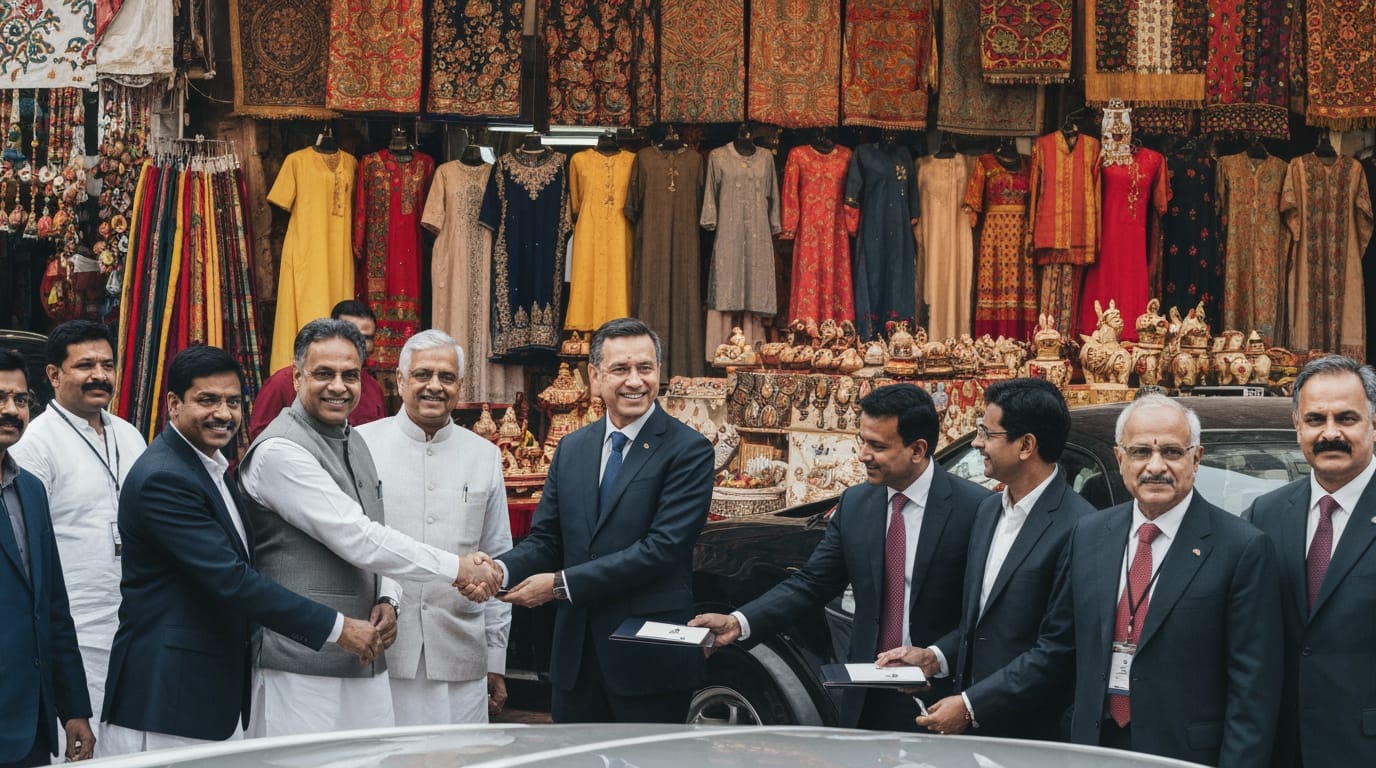
NEW DELHI, India – After nearly two decades of on-again, off-again negotiations, a landmark free trade agreement between India and the European Union, signed on January 27, 2026, is set to dramatically reshape the landscape for German automakers in India. Hailed by both sides as "the mother of all deals," this pact promises to slash prohibitive tariffs and unlock significant growth opportunities in one of the world's fastest-growing automotive markets. While European carmakers, including Germany's giants, stand to gain unprecedented access, the agreement also introduces new dynamics and challenges for both foreign entrants and domestic players in India.
Tariff Barriers Crumble, Opening Premium Segment
The core of the new trade agreement revolves around a substantial reduction in India's import tariffs on European cars. Historically, these duties have ranged from 70% to an astonishing 110%, effectively insulating the Indian market and making European imports prohibitively expensive. Under the new deal, India will gradually lower these tariffs to 10% over a five-year period. This reduction applies to a quota of 250,000 vehicles annually, specifically those priced above €15,000. Beyond finished vehicles, the agreement also mandates the complete elimination of duties on automotive components within five to ten years, a move identified by the European Automobile Manufacturers' Association (ACEA) as a critical benefit for manufacturing operations and technology transfer.
This tariff dismantling is expected to significantly reduce the cost of premium European vehicles, with projections suggesting a 20-30% price cut for luxury brands like Mercedes-Benz, BMW, Audi, and Porsche. Such price adjustments could make these aspirational cars more accessible to India's burgeoning middle and upper-middle classes, potentially transforming India's luxury car segment, which currently accounts for only 1% of the passenger vehicle market. German automotive leaders, including the CEOs of Volkswagen, BMW, and Mercedes-Benz, have universally welcomed the agreement, viewing it as a crucial opportunity for export growth and a positive development for Germany as an export nation. In 2024, Germany's automotive industry already exported goods worth €1.115 billion to India, with parts comprising a substantial €868 million of that total. The European Commission anticipates that, as a result of this deal, overall EU exports to India could double by 2032, leading to annual savings of up to €4 billion in duties across various sectors.
India's Automotive Powerhouse: A Market Ripe for Growth
India represents the world's third-largest automotive market, behind only the United States and China, with annual sales of approximately 4.4 million vehicles. The market is projected to expand further, potentially reaching 6 million vehicles per year by 2030. This growth is fueled by a large and increasing population, rising disposable incomes, and greater access to credit and financing. Despite its size, car ownership in India remains relatively low, with 44 cars per 1,000 people in 2025, indicating vast untapped potential for expansion.
The domestic market has historically been dominated by formidable local players like Tata Motors and Mahindra & Mahindra, alongside Japanese giant Suzuki Motor (through its Maruti Suzuki India joint venture), which together command approximately two-thirds of total sales. European carmakers, in contrast, have struggled to gain significant traction, holding less than 3% to 4% of the market share. This limited penetration has largely been attributed to the previously high import tariffs, which made European offerings uncompetitive in a highly price-sensitive market.
Challenges Persist Amidst New Opportunities
While the tariff reductions mark a pivotal shift, the path forward for German and other European automakers is not without its complexities. The stipulated quota of 250,000 vehicles per year, while substantial, also serves as an incentive for carmakers to consider local manufacturing should their import volumes exceed this threshold. An Indian commerce ministry official explicitly articulated this strategy, indicating that manufacturers exceeding quotas should establish Indian production facilities. This aligns with India's "Make in India" initiative, aiming to boost domestic manufacturing.
Furthermore, the agreement includes specific carve-outs, notably the exclusion of battery electric vehicles (EVs) from duty reductions for the initial five years. This measure is designed to protect and nurture India's nascent domestic EV industry, including investments by local giants like Mahindra & Mahindra and Tata Motors. After this initial period, imports will be split, allowing 160,000 internal combustion engine (ICE) vehicles and 90,000 EVs annually under the reduced tariff scheme. For German carmakers heavily investing in electric mobility, this phased approach means a delayed entry for their EV portfolios.
Beyond the deal's specifics, European automakers must contend with deeply entrenched market dynamics. The Indian consumer largely prioritizes affordability, reliability, and fuel efficiency, a segment where Suzuki and homegrown brands have excelled. Previous attempts by European manufacturers to penetrate the volume segment have faltered due to perceptions of high cost and expensive maintenance. Succeeding in this diversified market will require a nuanced strategy, balancing high-end imported models with potential localized production for more affordable segments. Moreover, India's EV infrastructure currently lags behind, with a scarcity of charging stations and inconsistent power supply, presenting additional hurdles for wider EV adoption.
Broader Implications and Reciprocal Benefits
The trade agreement extends beyond one-way benefits, offering significant reciprocal opportunities for Indian manufacturers. India will gain duty-free access for up to 625,000 vehicles into EU markets, a quota substantially exceeding the European allocation into India. This provision provides Indian carmakers, such as Mahindra & Mahindra and Maruti Suzuki, an unprecedented chance to expand their export footprint into Europe, potentially challenging the growing market share of Chinese producers in the EU. The removal of duties on auto components also benefits Indian component manufacturers, for whom the EU is a significant export destination.
This comprehensive agreement reflects a strategic diversification for both economic blocs. For the EU, it signals a commitment to open, rules-based trade and seeks to diversify supply chains amidst global uncertainties and geopolitical shifts. For India, facing pressure from various trade fronts, the EU deal provides a crucial alternative market and further establishes the nation as a growing manufacturing hub.
Conclusion: A New Era of Automotive Trade
The India-EU free trade agreement marks a new chapter for the global automotive industry, particularly for German carmakers. The significant reduction in tariffs offers a golden ticket to a market of immense scale and growth potential, where premium and luxury segments are poised for expansion. While direct benefits for European imports are clear, success will hinge on strategic adaptation to Indian consumer preferences, potential localization of manufacturing, and navigating the evolving regulatory landscape, especially concerning electric vehicles. The reciprocal nature of the deal also positions India as a stronger player in the global automotive supply chain and export market, fostering increased competition and innovation across continents. This pact underscores a broader geopolitical recalibration, creating a more interconnected and competitive future for the automotive sector.