China Executes Four Canadians, Deepening Diplomatic Rift
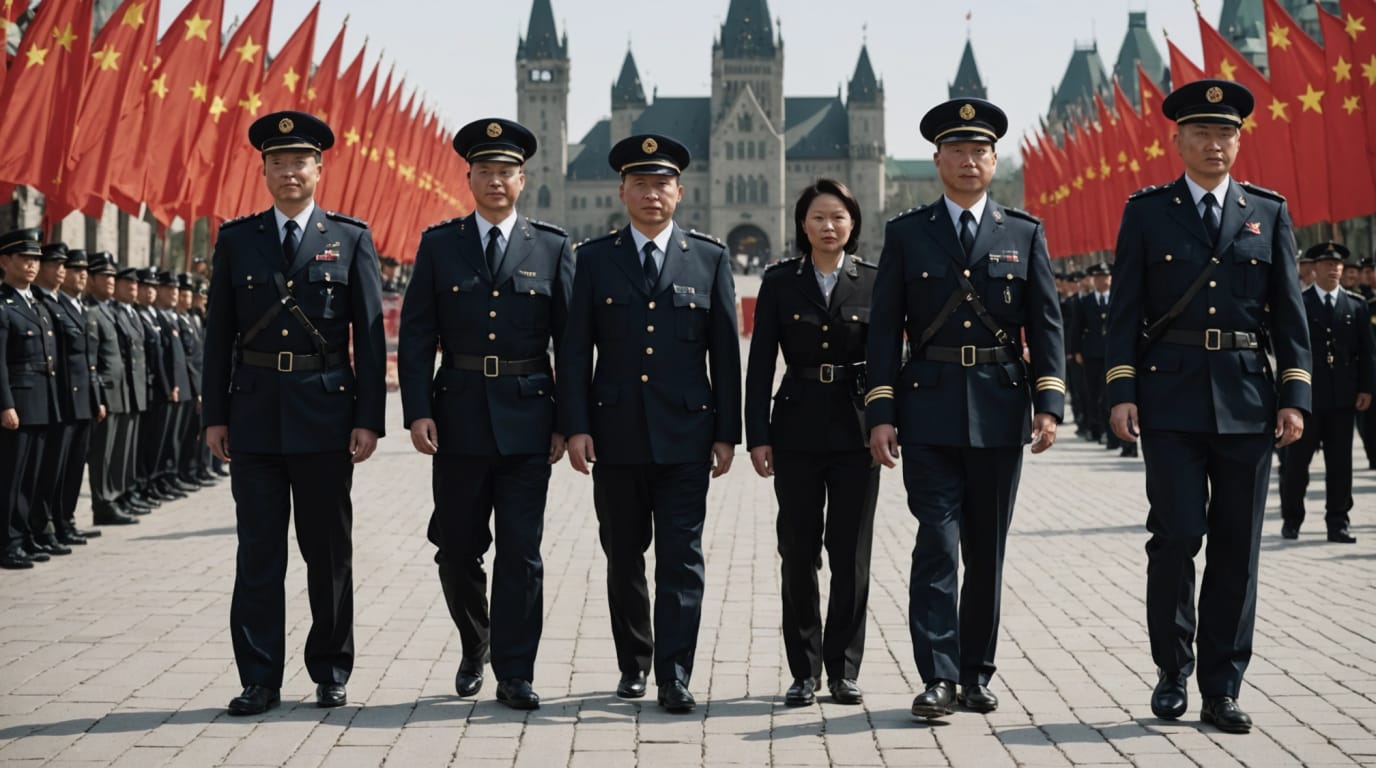
OTTAWA – The execution of four Canadian citizens in China this year has ignited a fresh wave of condemnation from Ottawa and further strained already tense relations between the two nations. The executions, carried out for what Chinese authorities claim were drug-related offenses, have prompted strong rebukes from Canadian officials, who have decried the use of the death penalty and questioned the fairness of the legal proceedings.
Foreign Affairs Minister Mélanie Joly confirmed Wednesday that the four individuals, all dual citizens, had been executed in recent months. Joly stated that she and former Prime Minister Justin Trudeau had personally appealed to China for leniency in these cases. Global Affairs Canada (GAC) released a statement expressing the government's strong opposition to the death penalty, calling it "irreversible and inconsistent with basic human dignity."
China's embassy in Ottawa defended the executions, asserting that the individuals were tried in accordance with Chinese law and that their rights were fully guaranteed. The embassy emphasized China's "zero tolerance" policy toward drug crimes and urged Canada to respect its judicial sovereignty. They also stated that they do not recognize dual citizenship.
The executions have sparked debate about the complexities of consular assistance for dual citizens facing legal challenges abroad. While Canada opposes the death penalty in all cases, its ability to intervene in the legal processes of other countries is limited, particularly when those countries do not recognize dual citizenship.
Details of the Executions
While Canadian officials have not released the names of the executed individuals at the request of their families, it has been confirmed that Robert Lloyd Schellenberg, a Canadian man sentenced to death for drug smuggling in 2019, was not among them. Schellenberg's case has been a focal point of diplomatic tensions between Canada and China for several years. His initial sentence of 15 years was increased to the death penalty following a retrial, a move widely seen as retaliation for Canada's arrest of Meng Wanzhou, a top executive at Huawei Technologies, on a U.S. extradition request.
The specific details of the cases against the four executed Canadians remain largely undisclosed. Chinese authorities have maintained that the evidence against them was "solid and sufficient," but transparency concerns persist. Critics argue that China's legal system lacks the independence and due process protections found in many Western countries.
Kovrig's Perspective
Michael Kovrig, a former Canadian diplomat who was detained in China for over 1,000 days in apparent retaliation for Meng's arrest, offered a grim assessment of the situation. He told CTV News that the executions demonstrate China's lack of interest in improving relations with Canada. "This is Beijing demonstrating once again, that it never misses an opportunity to miss an opportunity," Kovrig said. He noted that while China frequently carries out executions, it is relatively unusual for them to execute foreign citizens.
Historical Context and Diplomatic Fallout
The executions come against a backdrop of strained relations between Canada and China. The arrest of Meng Wanzhou in December 2018 triggered a diplomatic crisis that included the detention of Kovrig and fellow Canadian Michael Spavor, as well as trade restrictions on Canadian agricultural products. While Meng and the two Michaels were eventually released, the relationship between the two countries remains fraught with distrust.
China's human rights record, particularly its treatment of Uyghurs in Xinjiang and its suppression of dissent in Hong Kong, has also been a source of friction with Canada and other Western nations. Canada has repeatedly called on China to respect human rights and uphold international law.
The Broader Implications
The executions are likely to further complicate Canada's efforts to navigate its relationship with China. Canada faces a difficult balancing act between its economic interests and its commitment to human rights and the rule of law. Some analysts argue that Canada needs to adopt a tougher stance toward China, while others caution against isolating the world's second-largest economy.
The executions may also prompt renewed calls for Canada to abolish the death penalty worldwide and to work with other countries to pressure China to end its use of capital punishment. China is believed to execute more prisoners each year than the rest of the world combined, although the exact figures are a state secret.
Moving Forward
The Canadian government has vowed to continue to raise the issue of human rights with China and to advocate for the rights of Canadians abroad. However, the path forward remains uncertain. The executions have underscored the deep divisions between the two countries and the challenges of engaging with a regime that appears increasingly willing to disregard international norms.
The families of the executed Canadians are now left to grieve their loss, while the Canadian government grapples with the difficult task of responding to China's actions in a way that upholds its values and protects its interests. The incident serves as a stark reminder of the complexities and challenges of navigating the global stage in an era of rising geopolitical tensions.


