China Launches New Crew to Tiangong Space Station, Advancing Lunar Ambitions
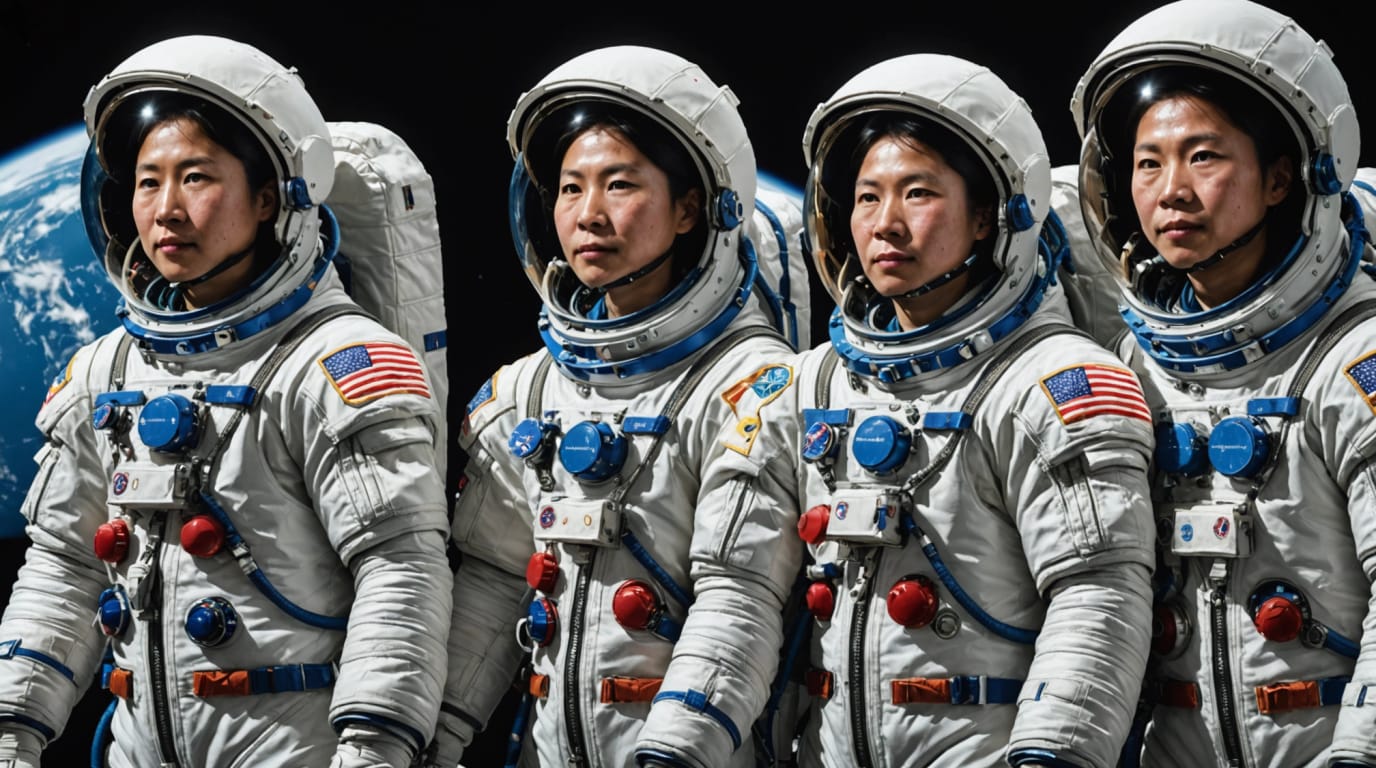
JIUQUAN, China — China launched three astronauts to its Tiangong space station Thursday, marking another milestone in the nation's ambitious space program, which aims to put a person on the moon before 2030 and explore Mars. The Shenzhou-20 spacecraft lifted off from the Jiuquan Satellite Launch Centre in the Gobi Desert, carrying a new crew to replace the current team aboard the orbiting station.
The Shenzhou-20 mission, the 15th crewed spaceflight in China's history and the 20th overall in the Shenzhou program, underscores Beijing's commitment to becoming a leading space power. The Long March-2F rocket, carrying the spacecraft, ascended into the sky at 5:17 p.m. local time (0917 GMT), initiating a journey expected to last approximately 6.5 hours before docking with the Tiangong space station.
Mission Details and Crew Composition
The all-male crew of Shenzhou-20 will replace the current three-person team who have been aboard Tiangong since October of last year. The outgoing crew is scheduled to return to Earth on April 29, after a brief overlap with their replacements. The new crew will remain in orbit for approximately six months, conducting experiments, maintaining the station, and installing new equipment.
Chen Dong, a veteran space explorer and former fighter pilot, will command the Shenzhou-20 mission. This marks Chen's third spaceflight, including a previous mission in 2022 where he became the first Chinese astronaut to accumulate over 200 days in orbit. Accompanying Chen are Chen Zhongrui, a former air force pilot, and Wang Jie, a space technology engineer. Both are making their first voyages into space.
Tiangong Space Station: A Hub for Research and Development
The Tiangong space station, fully assembled in October 2022, can accommodate up to six astronauts at a time. During their six-month stay, the Shenzhou-20 crew will conduct experiments in medical science and new technologies. They will also perform spacewalks to carry out maintenance and install new equipment on the station.
China's space program is managed by the People's Liberation Army, the military branch of the ruling Communist Party. The addition of mechanical arms to the three-module station has raised concerns from some about their potential use in disabling satellites or other space vehicles during a crisis.
China's Growing Space Ambitions
Since sending its first astronaut into space in 2003, becoming only the third country to achieve this feat, China's space program has progressed rapidly. The nation has successfully landed an explorer on Mars and a rover on the far side of the moon, a feat not yet matched by other spacefaring nations.
China's ambitions extend beyond Earth's orbit. The country aims to land a person on the moon before 2030 and is actively exploring the possibility of establishing a lunar base. These goals require significant technological advancements and substantial investment, highlighting the strategic importance China places on its space program.
International Implications and Competition
China's growing space capabilities have implications for international cooperation and competition in space. While China has expressed interest in collaborating with other nations on space exploration, its program operates largely independently. The United States, through NASA, also has ambitious plans for lunar exploration with the Artemis program.
The increasing number of actors in space, including private companies, raises questions about the future of space governance and the potential for conflict. As nations pursue their space ambitions, ensuring responsible behavior and international cooperation will be crucial for maintaining peace and stability in space.
Conclusion: A New Era of Space Exploration
The launch of Shenzhou-20 represents a significant step forward in China's space program and its broader ambitions to become a leading space power. As the crew embarks on their six-month mission aboard the Tiangong space station, they will contribute to scientific research, technological development, and the expansion of humanity's presence beyond Earth. The mission also underscores the growing competition and cooperation in space, as nations around the world pursue their own goals for exploration and utilization of this final frontier. The world will be watching as China continues to reach for the stars.


