China Mobilizes for "All-Out" Storm Response as Deadly Deluges, Tornadoes Grip Nation
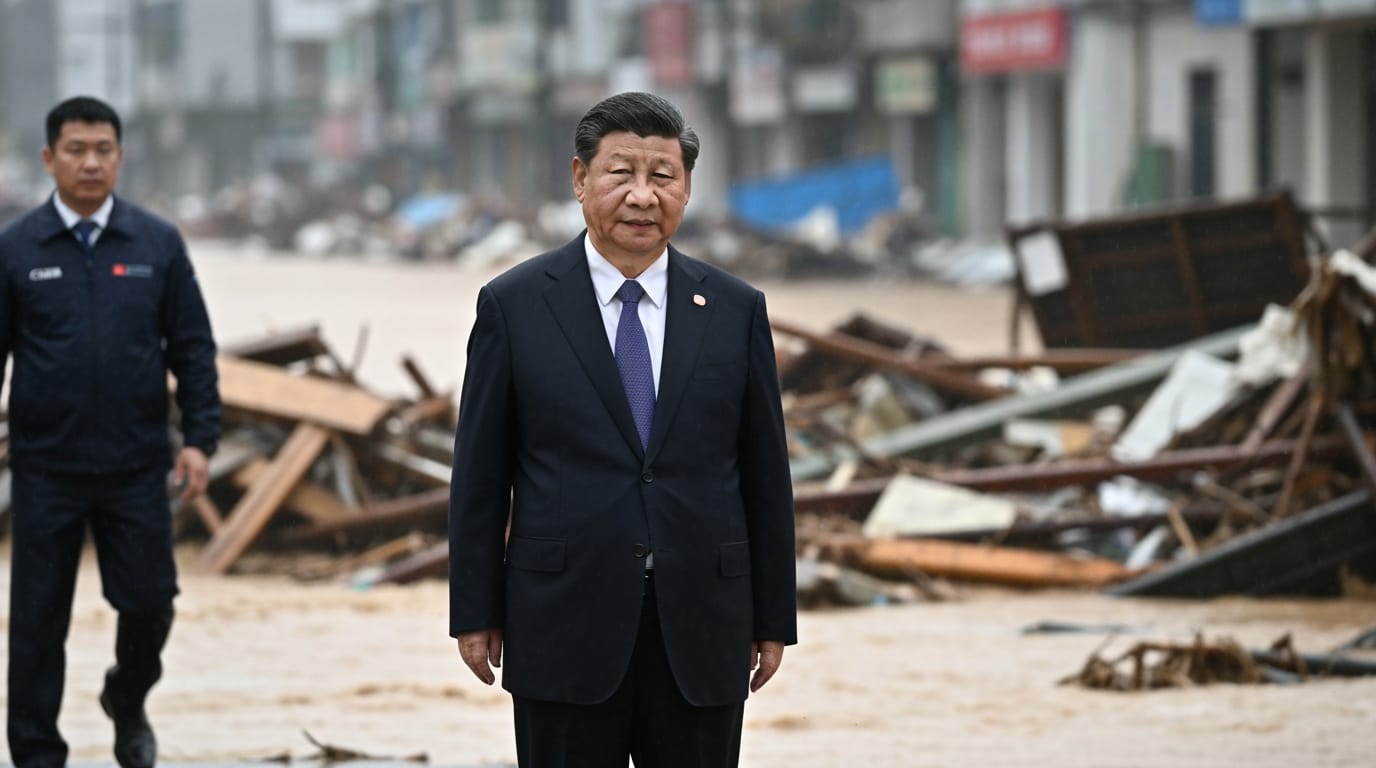
BEIJING – Chinese President Xi Jinping has ordered "all-out efforts" from emergency services and local authorities as a series of deadly storms, including tornadoes, landslides, and torrential rains, sweep across multiple regions of the country. The directive underscores the severe impact of the current weather events, which have already claimed at least 15 lives, left nine missing, and injured hundreds, prompting widespread displacement and significant property damage. As rescue operations intensify and an approaching super typhoon looms, the nation grapples with escalating natural disasters, highlighting China's increasing vulnerability to extreme weather phenomena.
Catastrophic Conditions Strike Multiple Provinces
The recent wave of severe weather has unleashed a deadly combination of natural forces across China, particularly impacting central, southern, and northwestern provinces. In central Hubei province, powerful thunderstorms and gale-force winds spawned at least two tornadoes on Monday evening, killing 11 people and injuring 331. These rare twisters, with winds reaching up to 149 kilometers per hour (92.58 mph), wrought widespread devastation, overturning vehicles and tearing roofs from buildings in cities like Huangshi, Huanggang, Ezhou, and Xianning. State media footage depicted harrowing scenes of shredded truck cabs and mangled metal, indicative of the tornadoes' destructive power. Xinhua reported that the severe convective weather damaged 4,800 houses and caused 22 more to collapse, underscoring the sudden and intense nature of the event.
Meanwhile, the southern Guangxi region is contending with the aftermath of Typhoon Maysak, which has claimed at least four lives and forced the evacuation of 50,000 people. The region's capital, Nanning, saw flood control emergency responses elevated to the highest level as torrential rains caused dam breaches and inundated vast areas. Further west, in Gansu province, a significant landslide buried 33 people in a village in Tanchang county, with 16 still missing after 17 were successfully rescued. Rescue teams, comprising firefighters, police, and medical personnel, are working tirelessly at the scene, navigating challenging conditions. Compounding the current crisis, Super Typhoon Bavi, with winds up to 180 mph, is currently tracking across the Pacific and is forecast to make landfall along China's eastern coast later this week, threatening additional widespread disruption and destruction to areas home to approximately 200 million people.
President Xi's Urgent Call for Comprehensive Response
In response to the escalating crisis, President Xi Jinping, also general secretary of the Communist Party of China Central Committee and chairman of the Central Military Commission, issued a stern directive emphasizing the utmost priority of safeguarding lives and property. He called for "all-out efforts" in organizing emergency rescue operations, providing medical treatment to the injured, and properly resettling affected residents. Xi stressed the critical importance of minimizing casualties, preventing secondary disasters, and ensuring effective disaster prevention and relief work.
The president's instructions specifically highlighted the need for local regions and relevant departments to meticulously implement flood control measures. This includes inspecting and removing risks in rivers, lakes, and dilapidated reservoirs, as well as addressing areas prone to geological disasters. He also urged strengthened monitoring, early warning systems, and enhanced emergency preparedness and response capabilities. Premier Li Qiang echoed these sentiments, calling for heightened vigilance regarding rain and flood conditions, improved hazard detection, and robust emergency rescue and relief operations. The collective emphasis from the highest levels of government signals a full national mobilization to mitigate the impact of these severe weather events.
A Recurring Pattern: China's Battle with Extreme Weather
The current onslaught of storms is not an isolated incident but rather a continuation of a worrying trend of increasing extreme weather events plaguing China. The world's second-largest economy is becoming increasingly exposed to such phenomena, with experts widely attributing this to the effects of climate change. Torrential rain, scorching summer heat, and fierce winds consistently lead to billions of dollars in annual economic losses, disrupting industries and devastating agricultural crops.
China's climate in 2024 was characterized by a noticeable warm and humid environment, leading to frequent and intense extreme weather events that shattered numerous records. That year saw the highest annual mean temperature on record and the fourth-highest annual precipitation. Significant floods in 2024, particularly in the Yangtze River basin and southern regions, were described as the strongest rainstorm process since 1961, causing widespread damage and affecting hundreds of thousands. Notable events included Typhoon Yagi, which became the strongest typhoon to land in China in autumn on record, and persistent rainstorms in Guangdong and Guangxi, which broke rainfall records. Scientists warn that the intensity and frequency of global extreme weather events will continue to rise as global temperatures increase due to fossil fuel emissions. China, with its vast and varied geography, including mountainous regions prone to landslides and coastal areas susceptible to typhoons and storm surges, faces complex and multifaceted disaster risks.
Enhancing Resilience Amidst Mounting Challenges
As China enters its annual flood season, meteorologists warn of a "complex" series of challenges ahead, encompassing severe wind, rainstorms, and geological disasters across the country. The government's strategy focuses on bolstering resilience and preparedness to confront these mounting threats. Local authorities are tasked with tightening accountability for disaster prevention and relief, alongside thoroughly checking vulnerable infrastructure such as rivers, lakes, and reservoirs.
Emphasis is also placed on strengthening early warning systems, conducting regular inspections of critical areas, and ensuring that emergency response mechanisms are activated at the earliest possible moment. The aim is to scientifically assess risks and allocate resources, including rescuers and supplies, to minimize the human and economic toll of future disasters. However, the scale and frequency of recent events highlight the immense task ahead for China in adapting to a changing climate and protecting its vast population and critical infrastructure from increasingly volatile weather patterns.
The relentless barrage of deadly storms across China underscores a stark reality: the nation is locked in an intensifying battle against the forces of nature, exacerbated by a warming planet. President Xi Jinping's urgent call for "all-out efforts" reflects the gravity of the situation, as emergency responders and local communities work to rescue the stranded, care for the injured, and rebuild what has been lost. While the immediate focus remains on humanitarian relief and preventing further tragedy, the long-term challenge of adapting to more frequent and intense extreme weather events looms large. The ongoing disasters serve as a potent reminder of the profound human and economic costs associated with climate change, demanding sustained vigilance, innovative solutions, and unwavering national resolve.


