China Reclaims Top Trading Partner Status from U.S., Reshaping Global Economic Dynamics
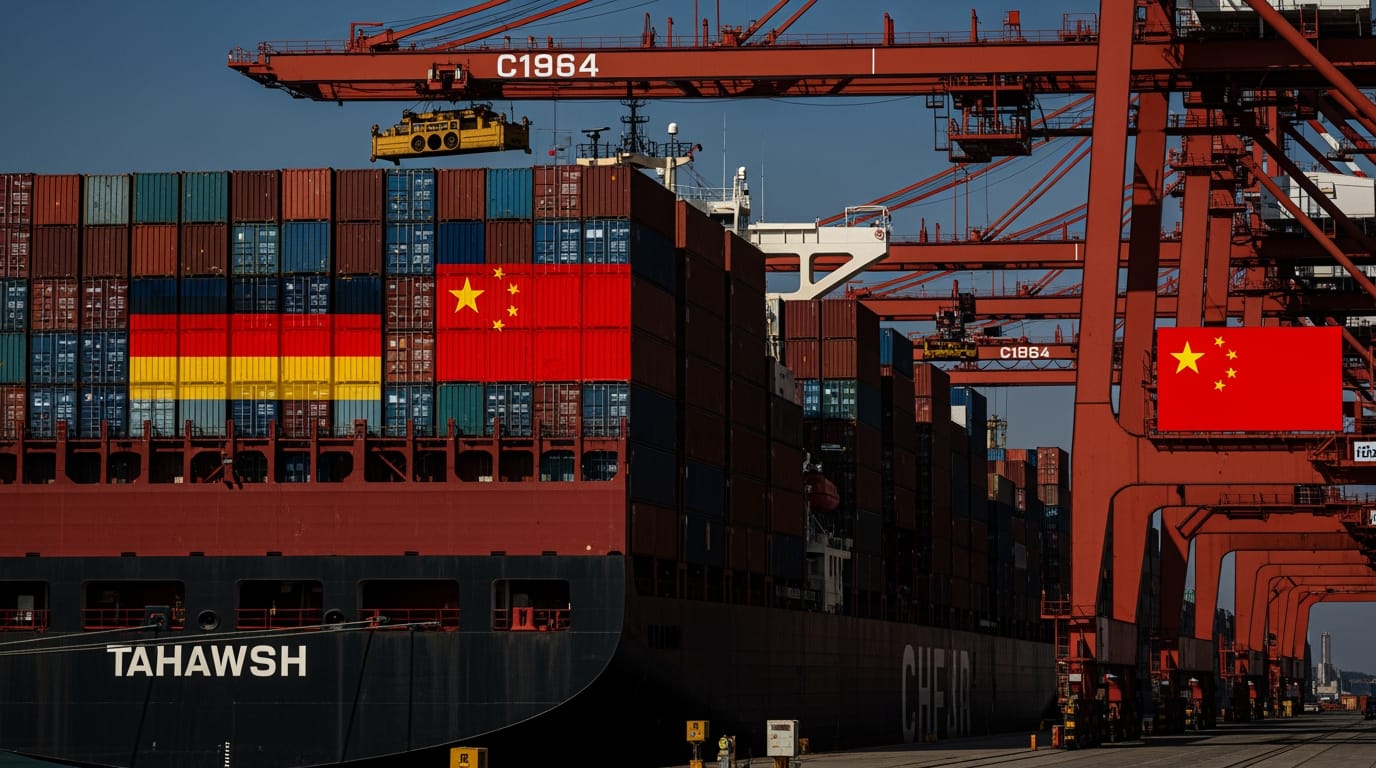
Berlin, Germany – China has once again emerged as Germany's largest trading partner, surpassing the United States in the first eight months of 2025. This shift marks a significant recalibration in global trade relations, driven by evolving geopolitical strategies, renewed protectionist measures, and the intricate dance of international supply chains. The reversal highlights the persistent challenges for Germany in its efforts to diversify economic dependencies and navigate an increasingly complex world economic order.
A Shifting Global Trade Landscape
For nearly a decade, China stood as Germany's undisputed top trading partner, a testament to deep economic integration. This long-standing relationship, which saw China account for the largest share of Germany's trade from 2016 to 2023, was briefly interrupted in 2024. During that period, the United States ascended to the top spot, a development that coincided with Berlin's stated strategy to "de-risk" its economy from an over-reliance on China, alongside a robust U.S. economic performance and a stalling recovery in China. German exports to the U.S. had seen an uptick in the first half of 2024, while trade with China experienced a contraction. The total trade volume between Germany and the U.S. reached approximately 127 billion euros in the first six months of 2024, slightly exceeding the 122 billion euros exchanged with China during the same period. This momentary reordering fueled discussions about a potential long-term realignment of Germany's economic allegiances.
The Resurgence of Chinese Trade and U.S. Tariffs
However, the dynamics quickly reversed in 2025. Preliminary data from the German statistics office indicates that trade between Germany and China totaled 163.4 billion euros from January to August, narrowly surpassing the 162.8 billion euros in trade with the United States. By September, the gap had widened further, with China-Germany trade nearing 186 billion euros, compared to just under 185 billion euros with the U.S..
This resurgence of Chinese trade is largely attributed to a confluence of factors, primarily the reintroduction of higher tariffs by the United States. Following the return of Donald Trump to the White House, EU exports to the U.S. faced a baseline levy of 15 percent, a significant increase from previous rates. These tariffs have exerted substantial pressure on German exports to the American market. In the first eight months of 2025, German exports to the U.S. plummeted by 7.4 percent compared to the previous year, reaching 99.6 billion euros, with August alone witnessing a sharp 23.5 percent year-on-year decline. Analysts noted that U.S. tariff and trade policy played a crucial role in this downturn, as demand for classic German export goods such as automobiles, machinery, and chemicals diminished. The strengthening of the euro against the dollar further compounded the challenges for German exporters, making their goods more expensive in the U.S. market and dimming prospects for a swift rebound.
While German exports to China also saw a decline of 13.5 percent, totaling 54.7 billion euros in the same period, a significant surge in imports from China ultimately tipped the balance. German imports from China rose by 8.3 percent to 108.8 billion euros, contributing to China's overall lead in bilateral trade. This increase in Chinese imports, sometimes at what some experts describe as "dumping prices," has raised concerns within Germany about exacerbating its economic dependence on Beijing and potentially straining domestic industries that now face heightened competition from Chinese rivals.
Germany's Dilemma: Economic Ties Versus Geopolitical Strategy
The latest trade figures underscore a significant dilemma for Germany, which has publicly articulated a "de-risking" strategy aimed at reducing its economic vulnerability to China. Despite these policy intentions, the practicalities of unwinding decades of deeply entrenched supply chains and robust market integration prove immensely challenging. Chinese components, electronics, and even vehicles are now woven into the fabric of German retail and manufacturing sectors.
Germany's economy, heavily export-oriented, relies on access to large global markets. For years, China has not only been a major consumer of German high-quality industrial goods but also a crucial supplier of essential inputs. However, Berlin's perspective on China has evolved, with Beijing increasingly viewed as a systemic rival and a formidable competitor rather than solely a trading partner. Chinese firms have rapidly advanced, emerging as strong rivals to leading German companies in various sectors. This shift complicates Germany's economic calculations, as it struggles to balance the immense economic benefits derived from trade with China against geopolitical concerns and the desire for greater strategic autonomy. The continued reliance on China for critical raw materials, rare earths, and semiconductors, vital for Germany's industrial base, further highlights the complexities of its de-risking ambitions.
Broader Implications for Europe and Transatlantic Relations
The re-establishment of China as Germany's top trading partner carries profound implications not just for Berlin, but for the wider European Union and transatlantic relations. The U.S. strategy of employing tariffs to protect its domestic industries and pressure foreign producers is evidently impacting the European economy, particularly Germany, which faces a challenging economic environment with meager growth forecasts.
This situation could intensify debates within the EU regarding collective responses to U.S. trade policies. While Germany is expected to seek renewed trade discussions with Washington, it will likely continue to maintain its significant economic links with Beijing. This balancing act could test the cohesion of EU foreign and trade policy, potentially complicating the bloc's ability to present a unified front on issues related to China, such as human rights or security concerns. The growing economic ties with China could make it more difficult for Germany, traditionally a champion of democratic values and human rights, to adopt robust policies that might conflict with Beijing's interests. Furthermore, the development could spur the EU to accelerate its own diversification efforts into other Asian and Latin American markets, striving for a more resilient global trade network less susceptible to unilateral tariff actions.
Conclusion
China's reclamation of its position as Germany's primary trading partner in 2025 signals a complex and challenging phase for global commerce. Driven primarily by renewed U.S. protectionism and the sustained flow of goods from China to Germany, this shift underscores the limits of rapid economic decoupling and the enduring strength of established trade routes. For Germany and the European Union, the task ahead involves navigating an intricate geopolitical landscape, balancing economic prosperity derived from deep engagement with China against strategic concerns about dependence, all while managing increasingly strained trade relations with a protectionist United States. The delicate equilibrium between economic pragmatism and strategic autonomy will continue to define Germany's, and indeed Europe's, approach to the evolving global economic order.


