China's Balancing Act: The Limits of Support for Iran Amid Potential U.S. Strikes
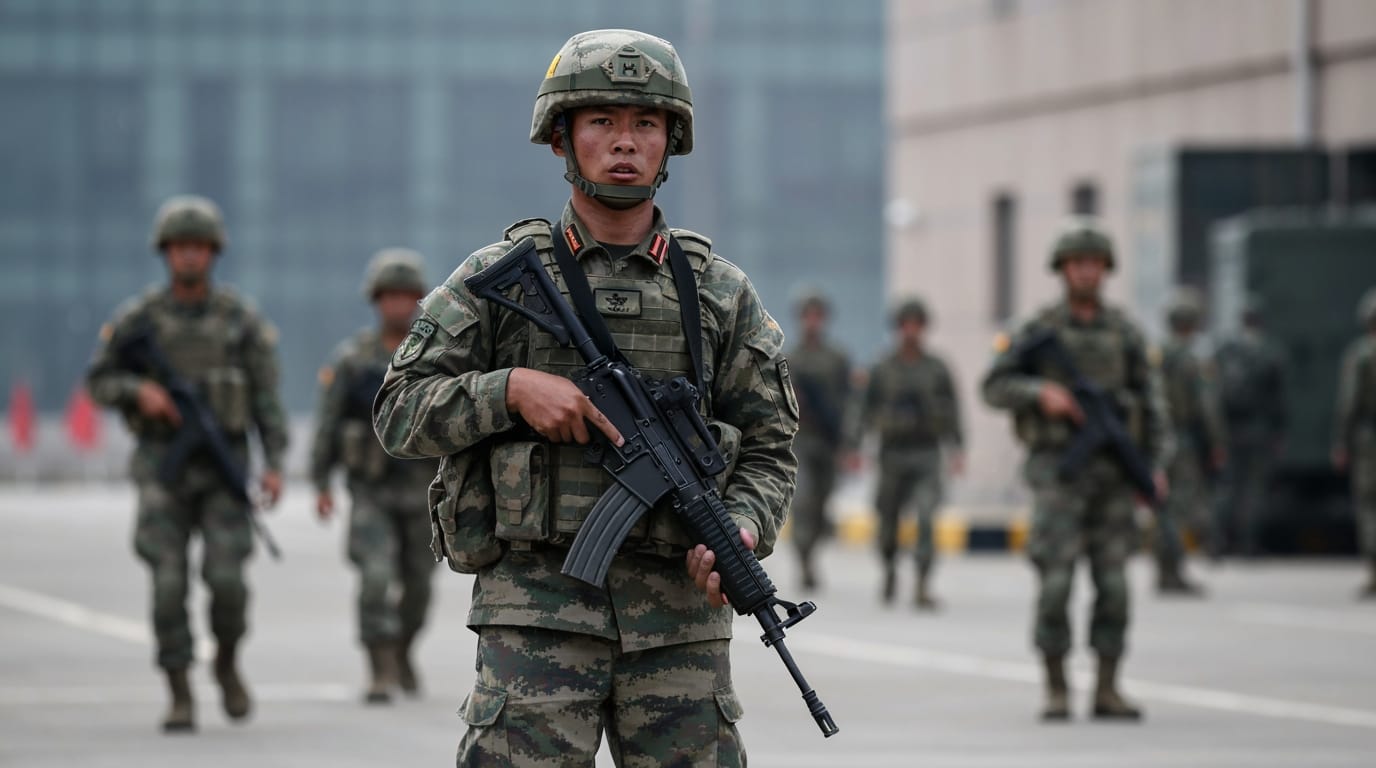
A potential U.S. military strike against Iran would unleash a complex geopolitical ripple effect, placing China in a precarious, yet predictable, position as it navigates its deep economic interests and evolving strategic ambitions in the Middle East. While Beijing has consistently voiced strong diplomatic opposition to military intervention and solidified economic and limited security ties with Tehran, analysts suggest its response to a direct U.S. attack would likely remain within the confines of rhetoric and economic maneuvering rather than direct military entanglement. The intricate dance reflects China's overarching foreign policy goals: securing vital energy supplies, expanding its global influence through the Belt and Road Initiative, and strategically leveraging regional tensions to counterbalance American power, all while prioritizing its stable relationship with the United States.
The Foundation of Sino-Iranian Ties: Energy and Strategy
China's relationship with Iran is multifaceted, rooted in critical energy needs and broader geopolitical calculations. Iran serves as a crucial, albeit not exclusive, supplier of oil and gas, particularly discounted crude that helps fuel China's vast economy and diversifies its energy import sources. In 2025, Iran exported more than 80% of its oil to China, while Iranian crude represented 13.4% of China's overall seaborne oil imports. This reliance intensified following the U.S. withdrawal from the Joint Comprehensive Plan of Action (JCPOA), leading to a significant increase in China's share of Iran's oil exports, reaching up to 90% in 2024.
Beyond energy, Iran holds significant strategic value for Beijing. Its adversarial stance towards the United States is viewed by China as a beneficial distraction, diverting American attention and resources that might otherwise be focused on containing China's rise. Furthermore, Iran is a pivotal node in China's ambitious Belt and Road Initiative (BRI), offering crucial overland corridors to Eurasia and providing a strategic alternative to potentially vulnerable maritime routes. A 2021 "25-year cooperation agreement" between the two nations, seen as largely economic, committed China to invest up to $400 billion in Iran's infrastructure and energy sectors in exchange for a steady oil supply. This strategic alignment positions Iran as an entry point for China to assert greater influence across Southwest Asia.
Diplomatic Shield and Economic Lifeline
In the face of escalating tensions, China has consistently provided Iran with a robust diplomatic shield. Beijing has repeatedly denounced potential U.S. military strikes against Iran as "military adventurism" and a "flagrant violation" of the UN Charter and international law. Chinese officials, including its Permanent Representative to the United Nations, have urged restraint and emphasized diplomatic solutions, warning that military action would plunge the region into an "unpredictable abyss" of chaos. Following U.S. strikes on Iranian nuclear facilities in June 2025, Beijing's response was largely rhetorical, condemning the attacks and calling for de-escalation, but stopping short of tangible support.
Economically, China serves as a critical lifeline for Iran, enabling it to circumvent international sanctions. China's sustained engagement, often utilizing alternative financial mechanisms and unofficial channels, has helped keep Iran's economy afloat. The primary consumers of Iranian oil in China are independent "teapot refineries," which rely on discounted crude from sanctioned countries to remain competitive. This economic partnership, however, is not without its frustrations for Iran, as China's investment pledges have not always materialized at the expected pace, and the trade relationship remains uneven.
While China has not offered Iran explicit security guarantees, Beijing has engaged in limited security cooperation. This includes the sale of air defense systems, anti-ship missiles, ballistic missile components, and dual-use items, along with technical assistance and training. Notably, Iran, China, and Russia have participated in joint naval exercises, signaling shared security interests and fostering interoperability. A significant development in January 2026 saw Iran, China, and Russia formally sign a comprehensive strategic pact, aligning them on issues from nuclear sovereignty to military coordination. Although not a mutual defense treaty, this pact signals a strengthened geopolitical coalition defined by shared opposition to Western dominance and economic coercion, raising the stakes for any potential escalation by the U.S. and NATO.
The Limits of Engagement: A Calculated Approach
Despite its multifaceted support, China's backing for Iran operates within carefully defined limits. Beijing's foreign policy is generally characterized by a doctrine of "security by subtraction," which prioritizes economic statecraft and diplomacy over direct military entanglements or alliance building. In the event of a U.S. strike, China's practical response is anticipated to be primarily diplomatic, focusing on strong condemnations, calls for immediate ceasefire, and offering diplomatic channels for de-escalation. This approach was demonstrated in June 2025 after U.S. airstrikes on Iranian nuclear facilities, where Beijing's reaction remained largely rhetorical.
A core reason for this cautious approach is China's overarching interest in regional stability. A large-scale conflict in the Middle East would severely jeopardize China's energy imports, particularly the critical flow of oil through the Strait of Hormuz, a waterway through which approximately 3 million barrels of oil per day destined for Chinese ports transit. Such a disruption could have immediate and severe economic implications for China's manufacturing sector and broader economy. Furthermore, a conflict would threaten China's significant investments in Iran under the Belt and Road Initiative, undermining its strategic goal of Eurasian connectivity.
China also has a vested interest in maintaining stable ties with the United States. While Beijing seeks to challenge American hegemony, it is wary of allowing events in the Middle East to unduly complicate its broader relationship with Washington. Chinese analysts often describe the relationship with Iran as "strategic opportunism," extracting benefits from Tehran's isolation without committing to an open-ended alliance that could lead to direct confrontation with the U.S. China's strategic petroleum reserves and alternative oil suppliers also provide a buffer, making a temporary disruption of Iranian oil imports manageable, unlike Iran's heavy dependence on China for its oil sales.
Geopolitical Chessboard: Beyond Iran
China's Middle East strategy involves a delicate balancing act, maintaining relationships not only with Iran but also with Gulf states like Saudi Arabia, Israel, and the United States. Beijing aims to build economic ties with all regional actors, ensuring energy access and advancing its BRI, while generally avoiding involvement in complex regional disputes. This "neutral" stance, however, has been tested by recent escalations, pushing China to adopt a more proactive diplomatic role.
Some Chinese military experts suggest that prolonged U.S. preoccupation in the Middle East could indirectly benefit China by diverting American attention from the Indo-Pacific region, thereby mitigating American escalation against China in its direct spheres of influence. This reflects a broader Chinese strategy of leveraging asymmetric competition to gradually weaken U.S. influence globally.
Conclusion: A Measured Response to Escalation
Should the United States undertake military action against Iran, China's response will be carefully calibrated, driven by its national interests in stability, energy security, and geopolitical influence. While Beijing will continue to offer strong diplomatic condemnation and economic support, providing a lifeline against international pressure, it is highly unlikely to intervene militarily. Its historical pattern of "strategic opportunism" and its commitment to non-interference suggest a response focused on de-escalation, the protection of its economic investments, and rhetorical opposition to American "military adventurism." The recent trilateral pact with Russia and Iran underscores a growing alignment of these powers against perceived Western unilateralism, yet it does not signal a readiness for direct military confrontation. Instead, China will continue to navigate the volatile landscape with a pragmatic, long-term vision, seeking to shape a multipolar world order while avoiding costly direct conflict.


