China's Dual Climate Reality: Global Emitter, Green Energy Leader, and Reluctant Diplomat
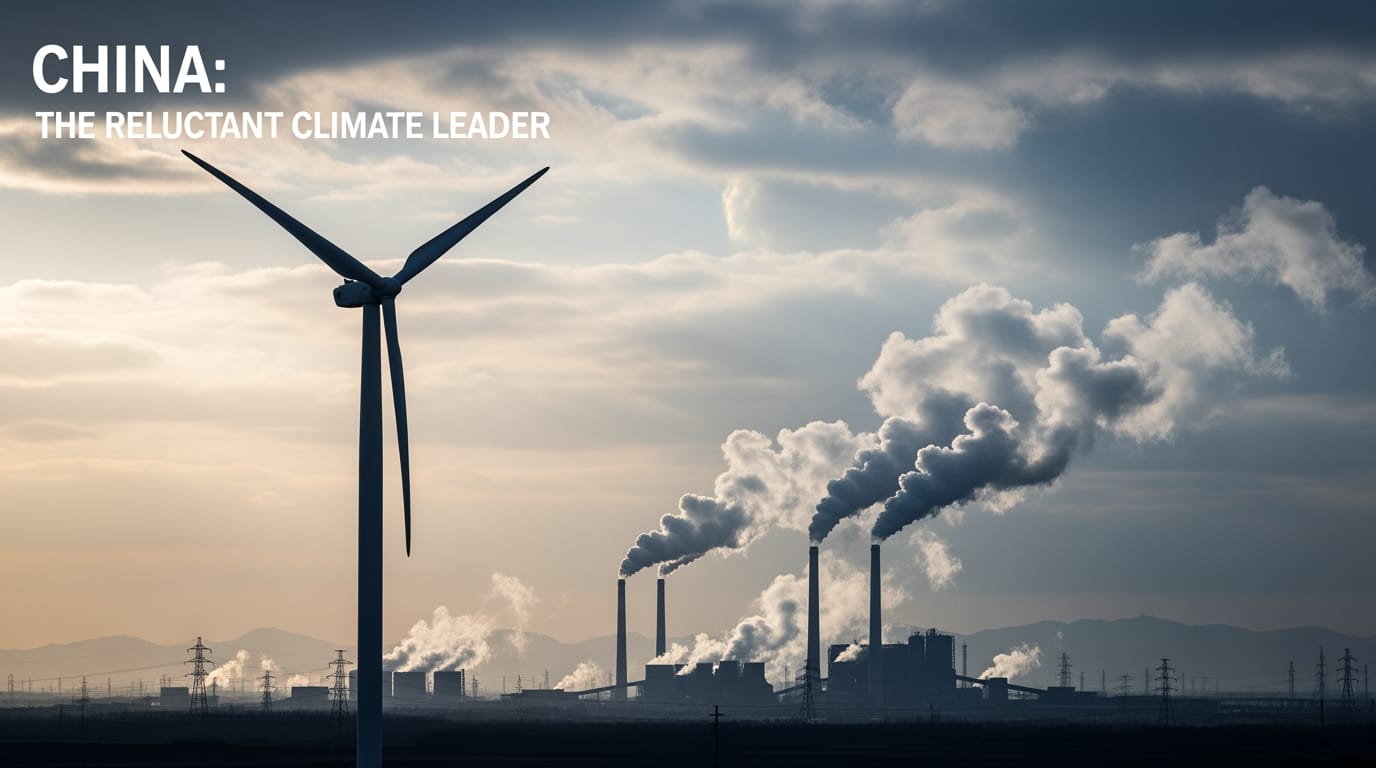
Beijing, China – In the global fight against climate change, China presents a paradox: it is at once the world's largest emitter of greenhouse gases and an unparalleled investor in renewable energy and green technologies. This dual identity positions the nation as a pivotal, yet often reluctant, actor on the international climate stage, driving both significant progress and persistent challenges in the pursuit of a sustainable future. Its ambitious domestic targets underscore a commitment to ecological transformation, while its international stance reflects a nuanced interplay of national interest, historical context, and evolving global responsibilities.
The Scale of Ambition: Targets and Emissions
China has formally committed to two headline climate goals: peaking its carbon dioxide emissions before 2030 and achieving carbon neutrality before 2060. These objectives, often referred to as the "30-60 goals," were first announced by President Xi Jinping and have since been integrated into national strategic plans, including the "1+N" policy framework for climate action. Beyond these primary targets, China also aims to reduce carbon dioxide emissions per unit of GDP by over 65% from 2005 levels by 2030, increase the share of non-fossil fuels in primary energy consumption to around 25%, and boost its forest stock volume by 6 billion cubic meters from 2005 levels.
Despite these ambitious declarations, China remains the world's leading emitter of greenhouse gases. In 2022, its CO2 emissions decreased slightly to 12,667,430 kilotons from 12,717,660 kilotons in 2021. More recently, in 2024, China's man-made carbon emissions rose by 0.6%, a significantly slower pace than the previous year and below the global average growth rate of 0.8%. While this indicates momentum in its climate commitments, the sheer volume of its emissions underscores the immense challenge in transitioning its heavily industrialized economy.
Powering the Green Revolution: Domestic Drivers and Renewable Dominance
Behind China's climate action lies a potent mix of domestic imperatives and strategic economic planning. Severe air pollution, particularly smog, has long been a critical concern for public health and social stability, pushing policymakers to seek cleaner energy alternatives. The pursuit of energy security and the desire to transform its economy from a heavy-industry-dominated model also serve as significant drivers. This internal pressure has propelled China to become the undisputed global leader in renewable energy investment and deployment.
In 2024, China invested over $290 billion in renewable energy, nearly three times the investment seen in the United States. In 2023, China attracted almost half of all global renewable energy investments. The nation installed a staggering 360 gigawatts of wind and solar capacity in 2024, accounting for more than half of global additions that year and bringing its total installed capacity to 1.4 terawatts. This rapid expansion has meant that China has already exceeded its 2030 Nationally Determined Contribution (NDC) targets for wind and solar capacity and forest stock volume. The clean energy sector was a primary driver of China's economic growth in 2023, contributing an estimated 11.4 trillion yuan ($1.6 trillion) to its economy, representing 9.0% of its GDP.
A Reluctant Helm: Navigating International Climate Leadership
Despite its substantial domestic efforts and technological prowess in clean energy, China approaches international climate leadership with notable reluctance. Beijing consistently maintains its status as a developing country, arguing that developed nations bear greater historical responsibility for climate change and should shoulder a larger financial burden for the global green transition. This position often leads to hesitation in committing to the same stringent emission reduction targets or climate finance contributions as wealthier economies. For instance, China declined to formally commit to supporting a proposed $1.3 trillion annual climate finance goal for developing nations at COP30.
China has actively participated in international climate negotiations, playing a crucial role in the successful conclusion of agreements like the Paris Agreement. However, its approach to global diplomacy is characterized by a preference for cooperation over solitary leadership. As one senior advisor stated, "China would like to do our best to steer... towards low-carbon or green transition, but in cooperation with other countries. We don't want to take the lead alone." This stance is particularly evident in the perceived vacuum left by fluctuating U.S. engagement in climate action, where China has been urged to step up but remains cautious about taking sole responsibility. Its climate diplomacy also frequently emphasizes "tech and trade," leveraging its clean technology manufacturing capabilities to expand its export economy.
The Belt and Road Initiative: A Green Path or Carbon Highway?
The Belt and Road Initiative (BRI), China's ambitious global infrastructure development strategy, presents another layer of complexity to its climate narrative. Initially promoted with rhetoric of a "Green Silk Road" and supporting green, low-carbon development in partner countries, the BRI's environmental impact has drawn considerable scrutiny.
Critics point to numerous BRI projects that have resulted in significant environmental damage, including increased pollution, habitat destruction, and water shortages. There are concerns that many infrastructure developments under the BRI pass through ecologically sensitive areas, threatening biodiversity and local livelihoods. Furthermore, fossil fuel projects, particularly coal-fired power plants, have historically received substantial Chinese funding under the BRI, exacerbating climate change in vulnerable regions. In 2021, President Xi Jinping did pledge that China would not build any new coal-fired power projects abroad, signaling a potential shift. While China actively promotes green industries and low-carbon infrastructure within the BRI framework, the practical implementation and transparency of environmental safeguards remain an ongoing challenge.
Charting a Complex Future
China's role in global climate action is undeniably multifaceted and central to the planet's ecological future. It navigates the intricate path of being the world's largest emitter while simultaneously spearheading the global transition to clean energy. Driven by a combination of domestic environmental pressures, strategic economic advantages, and a distinct approach to international responsibility, China's climate trajectory is one of immense scale and profound contradictions.
While it has demonstrated impressive progress in renewable energy deployment and set forth ambitious carbon goals, the nation faces persistent challenges, including its continued reliance on coal and a complex financial landscape to fund its green transition. Its reluctance to assume unilateral leadership in global climate governance, coupled with the environmental implications of its sprawling Belt and Road Initiative, means that China's influence will continue to be a subject of intense observation and debate. Ultimately, the success of global efforts to mitigate climate change will largely depend on how China reconciles its internal development needs with its external climate responsibilities, shaping a path that is both pragmatic for its own growth and beneficial for the shared future of humanity.