China's Military Drills Around Taiwan Draw Condemnation and Raise Regional Tensions
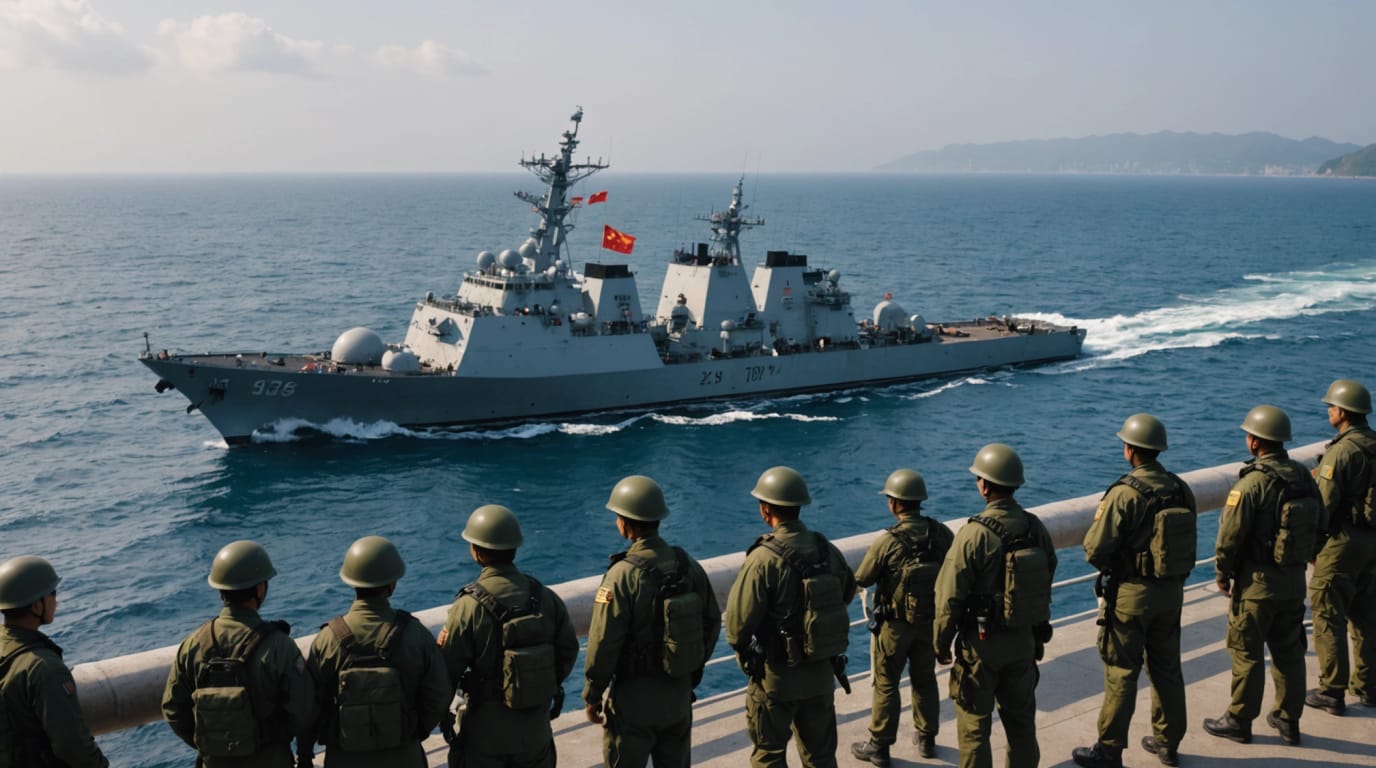
China's military has launched large-scale drills in the waters and airspace surrounding Taiwan, escalating tensions in the region and drawing strong condemnation from Taiwan, the United States, and the European Union. The exercises, which began Tuesday and continued Wednesday with the codename "Strait Thunder-2025A," involve naval, air, ground, and rocket forces, simulating attacks on maritime and ground targets, as well as a blockade of the island.
China's Justification: A "Stern Warning"
According to Shi Yi, a spokesperson for the People's Liberation Army's (PLA) Eastern Theater Command, the drills are meant to serve as a "severe warning and forceful containment against Taiwan independence." China considers Taiwan a part of its territory, to be brought under its control by force if necessary. The exercises follow statements made by Taiwan President Lai Ching-te, who labeled Beijing a "foreign hostile force" and introduced strategies to counter China's influence. China's Taiwan Affairs Office accused Lai of stirring up "anti-China sentiments" and said the exercises were a "firm punishment" for such provocations.
The PLA's Eastern Theater Command said the drills focused on testing troops' capabilities in integrated operations, seizure of operational control, and multi-directional precision strikes. Xinhua News Agency reported that the exercises included air interception, assault on maritime targets, strikes on ground objects, and joint blockade and control.
Taiwan's Response: Condemnation and Increased Vigilance
Taiwan's Presidential Office has strongly condemned the drills, calling them "blatant military provocations" that threaten peace in the Taiwan Strait and undermine security in the entire region. Taiwan's Defense Minister Wellington Koo said the actions reflect China's "destruction of regional peace and stability."
Taiwan's Ministry of National Defense (MND) said it detected 71 Chinese aircraft and 21 warships operating around the island during the exercises. The MND has been tracking the movement of the Shandong aircraft carrier since Saturday, and its carrier group entered Taiwan's air defense identification zone. In response to the drills, Taiwan has dispatched military aircraft and ships and activated land-based missile systems. The MND also established a "response center" to monitor the PLA exercises.
International Reaction: Concern and Calls for Restraint
The United States has expressed serious concerns about China's military activity, calling it "aggressive" and stating that it "only serve[s] to exacerbate tensions and put the region's security and the world's prosperity at risk." A U.S. Department of State spokesperson said the U.S. is closely monitoring the situation and will continue to support Taiwan in the face of Beijing's military, economic, and diplomatic pressure. The U.S. maintains a policy of "strategic ambiguity" regarding whether it would intervene militarily to defend Taiwan, but is legally bound to provide the island with the means to defend itself.
The European Union has also accused China of increasing cross-strait tensions and called on all parties to "exercise restraint." White House Press Secretary Karoline Leavitt said President Trump is emphasizing the importance of maintaining peace in the Taiwan Strait and encouraging the peaceful resolution of cross-strait issues.
Implications and Regional Security
The drills have raised concerns about the potential for escalation and miscalculation in the Taiwan Strait. China has been increasing its military activity around Taiwan in recent years, including sending aircraft and naval vessels into Taiwan's air defense identification zone and conducting large-scale exercises. These actions are seen as a way to pressure Taiwan and deter it from seeking independence.
The U.S. has been working to strengthen its alliances in the region to counter China's growing assertiveness. U.S. Defense Secretary Pete Hegseth recently visited Japan, where he announced a boost to the U.S. military partnership with Japan, including upgrading the U.S. military command in Japan to a new "war-fighting headquarters." The U.S. and Japan have also agreed to speed up the process involving the maintenance of U.S. warships and warplanes in Japan to strengthen defense industries.
Some analysts believe that China is more likely to attempt a blockade of Taiwan than launch an all-out invasion, which would be riskier and require a huge military deployment. Others have warned that China could launch a sneak attack under the guise of military exercises.
A Precarious Status Quo
China's military drills around Taiwan have heightened tensions in the region and raised concerns about the potential for conflict. The exercises are a reminder of the complex and sensitive nature of the Taiwan issue, and the importance of maintaining peace and stability in the Taiwan Strait. The international community is closely watching the situation, and urging both sides to exercise restraint and avoid any actions that could further escalate tensions. The future of Taiwan and its relationship with China remains uncertain, but the current situation underscores the need for continued dialogue and diplomacy to prevent a potential crisis.


