Cities as Quarries: The Emergence of Urban Mining in Sustainable Homebuilding
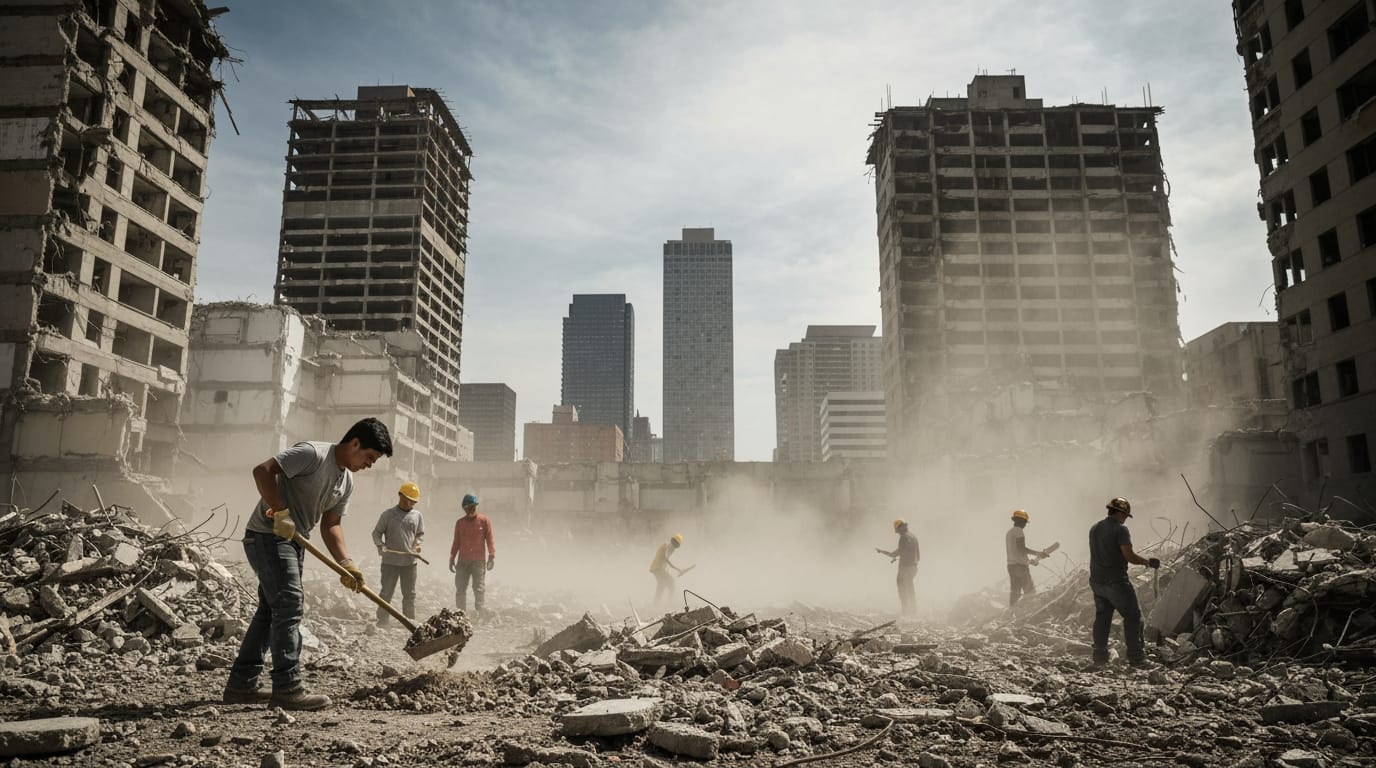
A silent revolution is underway in the construction industry, transforming what was once considered debris into a valuable resource. As urban landscapes expand and older structures reach the end of their lifecycles, a new paradigm known as "urban mining" is gaining traction, challenging the traditional linear "take-make-dispose" model of construction. This innovative approach views cities themselves as rich, untapped veins of materials, meticulously extracting and repurposing demolition waste to construct new homes and infrastructure. The implications are profound, promising significant environmental, economic, and social benefits for a planet grappling with resource depletion and mounting waste.
The Urban Mine: Unearthing Value from Demolition
At its core, urban mining in construction involves the systematic collection, sorting, and processing of materials from demolished buildings and infrastructure that would otherwise be destined for landfills. The sheer volume of construction and demolition (C&D) waste generated globally presents a daunting challenge; estimates suggest that C&D waste accounts for 30% to 40% of total worldwide waste, with the United States alone producing approximately 600 million tons annually. Historically, this waste stream has been viewed as a disposal problem, contributing to landfill overflow and environmental degradation. However, urban mining redefines this perspective, recognizing that cities are, in fact, vast repositories of processed materials.
A diverse array of materials can be recovered through urban mining. Concrete and asphalt are among the most prevalent, often crushed and reused as aggregates for new concrete mixtures, road bases, or even drainage media. Wood, metals (steel, aluminum, copper), bricks, glass, and plastics are also highly recoverable. Even larger building components like doors, windows, and plumbing fixtures can be salvaged and directly reused. This shift from discarding to reclaiming is a crucial step towards fostering a circular economy in the building sector, where materials are kept in use for as long as possible, maximizing their value throughout their lifecycle.
The Mechanics of Recovery: From Deconstruction to Reintegration
The success of urban mining hinges on a fundamental change in methodology: moving from rapid, destructive demolition to careful, selective deconstruction. Rather than bulldozing structures into undifferentiated rubble, buildings are now being meticulously dismantled, layer by layer, to preserve the integrity and value of their constituent materials. This methodical approach allows for the intact removal of windows, the careful unbolting of steel beams, the cleaning of bricks, and the cataloging of timber, ensuring that materials retain their highest possible value for reuse or high-grade recycling.
Once collected, materials undergo rigorous sorting and processing. This can occur on-site using mobile processing equipment or at specialized recycling facilities. Advanced technologies are playing an increasingly critical role in this stage. Sensor-based sorting systems, often employing artificial intelligence (AI) and machine learning, are capable of identifying and separating various materials with precision, reducing human error and boosting recycling rates. Large pieces of concrete and masonry are crushed and ground into smaller, usable aggregates, while magnetic and eddy current separators efficiently extract ferrous and non-ferrous metals. These processed materials are then re-integrated into new construction projects. For instance, recycled aggregates are incorporated into new concrete, and structural steel, which maintains its strength properties even after recycling, finds new life in building frameworks. This transformation ensures that today's buildings become tomorrow's material sources, closing the loop in the construction material supply chain.
The Multifaceted Benefits: Environment, Economy, and Community
The widespread adoption of urban mining offers a compelling suite of benefits across environmental, economic, and social spheres. Environmentally, the gains are substantial. Diverting vast quantities of C&D waste from landfills significantly reduces their burden and mitigates the release of harmful substances like methane gas and leachate pollution. Furthermore, urban mining conserves finite natural resources, lessening the demand for virgin materials such as sand, aggregates, and various metals that are traditionally extracted from the earth. Perhaps most importantly, it dramatically lowers the carbon footprint of the construction industry. The energy-intensive processes of extracting, refining, and transporting raw materials are largely circumvented, leading to a substantial reduction in greenhouse gas emissions.
Economically, urban mining presents clear advantages. Construction companies can realize significant cost savings by reducing waste disposal fees and acquiring recycled materials at a lower cost than new ones. The emergence of a robust urban mining sector also creates new revenue streams and local job opportunities in deconstruction, material processing, and specialized recycling operations. On-site processing and local sourcing of recycled materials further contribute to economic efficiency by cutting transportation costs and associated fuel consumption and emissions. Beyond the immediate economic benefits, urban mining fosters community resilience and can contribute to social welfare. By providing more affordable building materials, it can help address housing shortages and enable the construction of low-cost housing solutions, as seen in projects utilizing household and municipal waste in India. Additionally, the careful deconstruction of existing buildings can preserve architectural heritage and local character, recirculating elements that hold historical or aesthetic value.
Navigating the Challenges and Forging Ahead
Despite its immense potential, urban mining faces several hurdles. A significant challenge lies in managing contaminated waste streams, which can include hazardous materials like asbestos, lead-based paints, and other chemicals that complicate recycling efforts and necessitate careful handling. Another obstacle is the inconsistent or underdeveloped infrastructure for C&D waste collection, sorting, and processing in many regions. The economic viability of recycled materials can also be affected by fluctuating market demand and competition from often cheaper, readily available virgin materials. Furthermore, regulatory barriers, such as outdated building codes that restrict the use of recycled content, and a lack of clear standards or incentives, can hinder wider adoption. Traditional, non-selective demolition practices remain prevalent, often rendering materials unsuitable for efficient recycling.
However, concerted efforts are being made to overcome these challenges. Governments and regulatory bodies are increasingly implementing policies that mandate or incentivize C&D waste recycling. The European Union, for instance, has set targets to improve recycling and reuse rates, and cities like Austin and Denver have introduced ordinances requiring diversion of demolition debris from landfills. There is a growing emphasis on "design for deconstruction," where buildings are planned from their inception to facilitate easy dismantling and material recovery at the end of their useful life. Continued investment in advanced recycling technologies, such as AI-powered sorting and mobile processing units, is crucial for improving efficiency and material purity. Inspiring projects around the world, like "The Governor" townhouse in Rotterdam constructed from bricks made of waste, the "Collage House" in Mumbai built with salvaged doors and windows, and "La Fabrique" using recycled windows, demonstrate the aesthetic and structural viability of building with reclaimed materials.
A Sustainable Future Built from the Past
The concept of "mining the city" represents a pivotal shift in how society perceives and manages construction resources. It moves beyond simply recycling to a more holistic approach that integrates material recovery into the very fabric of urban development. By transforming demolition waste from a liability into a valuable asset, urban mining offers a powerful pathway toward a more sustainable and circular construction industry. As technology advances, regulations adapt, and awareness grows, the potential for building homes and cities from the remnants of their predecessors is not just an ecological ideal but an increasingly practical and economically sound reality. The future of sustainable construction will undoubtedly be built on the foundations of its past, literally constructing a greener tomorrow from today's reclaimed materials.