Civil Rights Pioneer Claudette Colvin Dies at 86, Leaving Enduring Legacy
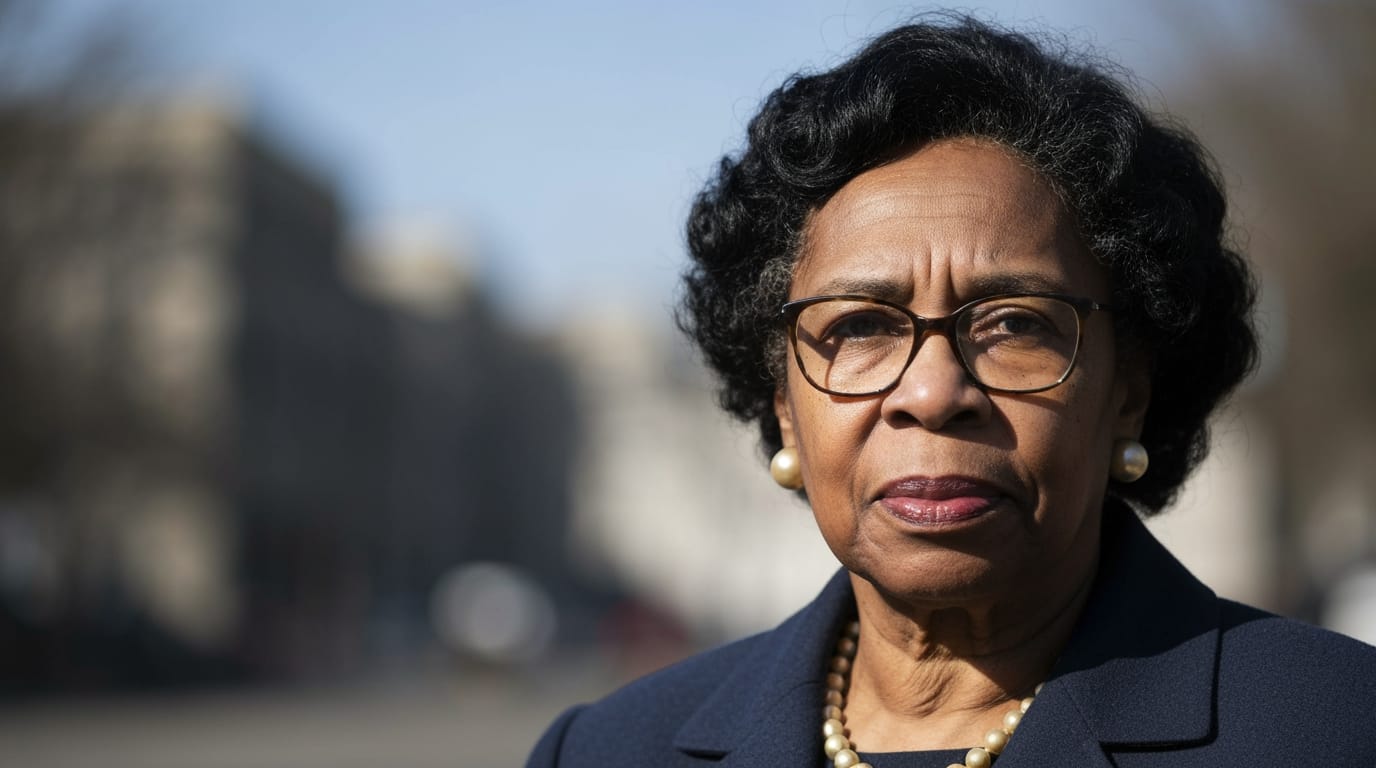
Claudette Colvin, a courageous figure whose defiant act against segregation on a Montgomery, Alabama, bus predated Rosa Parks' historic stand, has died at the age of 86. The Claudette Colvin Legacy Foundation and her family announced her passing on Tuesday, January 13, 2026, in Texas, marking the end of a life dedicated to the pursuit of justice, often from the shadows of history. Colvin's early activism, though long overlooked, laid critical groundwork for the Montgomery Bus Boycott and the broader Civil Rights Movement, leaving behind a profound legacy of courage that reshaped American society.
A Moment of Defiance on a Segregated Bus
On March 2, 1955, nine months before Rosa Parks' more widely recognized protest, a 15-year-old Claudette Colvin boarded a crowded Montgomery city bus, heading home from Booker T. Washington Magnet High School. Despite the "colored" section being full, she and three classmates were asked to surrender their seats to a white woman who had boarded the bus. While her classmates eventually moved, Colvin refused to budge. She later recounted that she felt "history had me glued to the seat" and that her "mindset was on freedom."
In a society rigidly enforced by Jim Crow laws, Colvin's refusal was a direct challenge to the racial hierarchy. The bus driver summoned police, who arrested the young woman. Colvin was charged with disturbing the peace, violating segregation laws, and assaulting a police officer. Although two of the charges were eventually dropped, the accusation of assaulting a police officer remained on her record for decades, a mark she successfully sought to have expunged in 2021, at the age of 82. Her minister paid her bail, but her courageous act quickly became a subject of discussion within Montgomery's Black community.
The Overlooked Catalyst: Why Not Colvin?
Colvin's act of defiance, while powerful, did not become the immediate spark for a city-wide protest that Rosa Parks' arrest would nine months later. At the time, civil rights organizations, including the local chapter of the NAACP, grappled with the strategic implications of publicly championing a young, unmarried teenager who later became pregnant. Leaders feared that her circumstances might make her a less "respectable" and thus less sympathetic figure to a predominantly white jury and the broader public, potentially undermining efforts to challenge segregation in court.
This pragmatic decision by civil rights strategists meant that Colvin's pioneering role was largely downplayed or ignored for many years. Instead, when Rosa Parks, an adult and respected NAACP secretary, made her stand on December 1, 1955, the community rallied, leading to the launch of the Montgomery Bus Boycott. Despite this, Colvin's bravery, along with that of other women like Mary Louise Smith and Aurelia Browder who also refused to give up their seats, provided crucial precedents and a clear understanding of the injustices faced daily by Black citizens on public transportation.
Paving the Way for Desegregation: Browder v. Gayle
While not the public face of the boycott, Claudette Colvin's defiance became foundational to the legal challenge against bus segregation. She was one of four courageous plaintiffs in the landmark federal court case Browder v. Gayle, filed by civil rights attorney Fred Gray on February 1, 1956. The lawsuit directly challenged the constitutionality of Montgomery and Alabama's bus segregation laws, arguing that they violated the Fourteenth Amendment's promises of due process and equal protection.
Colvin, alongside Aurelia Browder, Susie McDonald, and Mary Louise Smith, bravely testified before a three-judge panel of the U.S. District Court. On June 5, 1956, the court ruled that the enforced segregation of Black and white passengers on buses was unconstitutional. The State of Alabama appealed the decision, but on November 13, 1956, the U.S. Supreme Court upheld the lower court's ruling. A month later, the Supreme Court affirmed the order to end bus segregation in Montgomery. This definitive legal victory led to the formal conclusion of the 381-day Montgomery Bus Boycott and a broader declaration that all segregation on public transportation was unconstitutional across the United States. Fred Gray, Colvin's attorney, later reflected on her immense contribution, stating, "Claudette gave all of us the moral courage to do what we did."
A Life Beyond the Limelight and Later Recognition
After her pivotal, yet often unacknowledged, role in the Civil Rights Movement, Claudette Colvin found it difficult to secure and maintain employment in Montgomery. Consequently, she moved to New York City in 1958, seeking a new life away from the prejudices and challenges she faced in the South. In New York, she built a career as a nurse's aide, a profession she dedicated 30 years to before retiring in 2004. She raised two sons, Raymond and Randy, and was blessed with five grandchildren and seven great-grandchildren, passing on a legacy of resilience and dignity.
For many decades, Colvin's significant contributions remained largely untold to the general public, overshadowed by other prominent figures of the movement. However, in recent years, historians and writers have worked to bring her story to the forefront, notably through Phillip Hoose's 2009 biography, "Claudette Colvin: Twice Toward Justice." This renewed attention allowed Colvin to finally receive some of the recognition she deserved. An upcoming movie titled "Spark" is also in production, further cementing her place in American history. Colvin expressed the importance of her story, especially after having her juvenile record expunged, noting that she wanted her grandchildren and great-grandchildren to understand that "their grandmother stood up for something when she realized that she was an American at a very early age, and she wanted equal rights."
An Enduring Legacy of Courage
Claudette Colvin’s passing at 86 closes a chapter on an unsung heroine of the American Civil Rights Movement. Her brave stand on that Montgomery bus in 1955 was not an isolated incident but a testament to the pervasive injustice of segregation and the profound courage of ordinary individuals who dared to challenge it. Her determination to hold her ground, deeply rooted in a desire for freedom, helped to ignite the legal battle that ultimately dismantled bus segregation and, in doing so, altered the course of American history.
While history may have initially favored other narratives, Colvin's story serves as a powerful reminder that monumental social change is often the result of collective acts of defiance, both recognized and uncelebrated. Her life, marked by courage, struggle, and eventual recognition, underscores the importance of acknowledging all who contributed to the fight for equality. Colvin's legacy will continue to inspire, reminding future generations that the pursuit of justice often begins with a single, resolute refusal to concede.


