Clintons Agree to Testify in Epstein Probe, Averting Contempt Vote
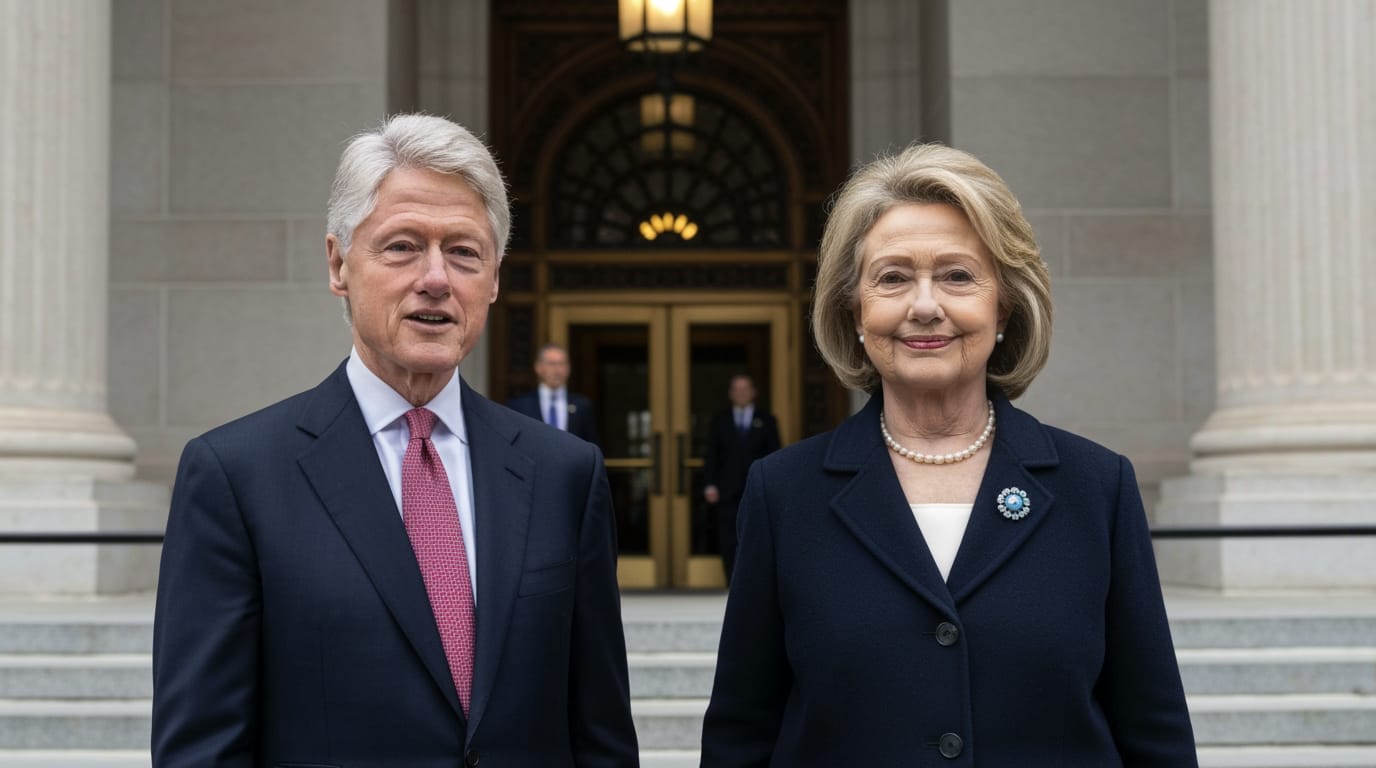
Washington D.C. — In a significant development, former President Bill Clinton and former Secretary of State Hillary Clinton have agreed to provide testimony to the House Oversight Committee as part of its ongoing investigation into the late disgraced financier Jeffrey Epstein. The Clintons' agreement, announced Monday, February 2, 2026, comes just days before the House of Representatives was scheduled to vote on holding them in criminal contempt of Congress for defying earlier subpoenas. This marks a pivotal turn in the committee's persistent efforts to compel the prominent Democrats to cooperate with the probe into Epstein's extensive criminal enterprise and its broader connections.
Standoff Ends Amid Looming Contempt Proceedings
The decision by the Clintons to testify brings an end to a prolonged and contentious standoff with the Republican-led House Oversight Committee. For months, the former first couple had resisted subpoenas, labeling them "legally invalid" and an "unprecedented infringement on the separation of powers." Their attorneys had previously argued that the Clintons had already provided all relevant information through sworn statements and that their in-person testimony was unwarranted.
However, the committee, chaired by Rep. James Comer (R-Ky.), escalated its demands, leading to a vote on January 21 by the Oversight Committee to advance motions to hold both Clintons in contempt of Congress. These contempt resolutions, which garnered some bipartisan support, set the stage for a full House vote that could have led to substantial fines or even incarceration if convicted. Faced with this imminent legislative action, the Clintons' legal team informed the committee via email on Monday that they would "accept the terms of your letter and will appear for depositions on mutually agreeable dates," explicitly requesting that the House not proceed with the contempt proceedings.
Rep. Comer acknowledged the Clintons' agreement but expressed concerns that "those terms lack clarity yet again and they have provided no dates for their depositions," indicating further negotiations on the specifics of the testimony. Angel Ureña, Bill Clinton's deputy chief of staff, confirmed the agreement, stating the Clintons "look forward to setting a precedent that applies to everyone."
Decades-Long Connection Under Scrutiny
The House Oversight Committee's inquiry centers on what Bill and Hillary Clinton may have known regarding Jeffrey Epstein's activities and the broader investigation into his sex trafficking ring. Bill Clinton's association with Epstein began in the early 1990s and continued into the early 2000s. During this period, Epstein visited the White House multiple times, and after Clinton left office, he traveled on Epstein's private jet on several occasions for what were described as charitable trips.
Bill Clinton has consistently denied any knowledge of Epstein's criminal activities and has publicly expressed regret over his past association with the financier. His representatives maintain that he broke off relations with Epstein after the initial criminal charges in 2006. Despite these denials, references to Clinton have appeared in unsealed Epstein-related court files and photographs of him with Epstein have been released by Congress and the Justice Department. None of Epstein's victims have publicly accused Bill Clinton of involvement in Epstein's crimes.
Hillary Clinton's direct links to Epstein are less clear. Her lawyers have argued she never met or spoke with Epstein. However, the committee's investigation includes examining her role as Secretary of State overseeing U.S. efforts to combat international sex trafficking, seeking to understand if she had any information relevant to the broader context of Epstein's operations.
Political Motivations and Historical Precedent
The subpoenas and the subsequent push for testimony have been highly politicized, with Republicans on the Oversight Committee suggesting the Clintons were granted special privileges and that their testimony is crucial to understanding the scope of Epstein's network and any potential failures in the Justice Department's investigations. Democrats, conversely, have at times characterized the subpoenas as a partisan exercise aimed at political targeting rather than a legitimate legislative purpose.
Should the depositions proceed, it would be a rare instance of a former U.S. president being compelled to testify before Congress. While several former presidents have voluntarily appeared, being forced to do so by subpoena, especially under the threat of contempt, is highly unusual. This sets a precedent for how Congress may seek information from former high-ranking officials in future investigations.
What Lies Ahead
With the Clintons' agreement now in place, the immediate threat of a contempt vote in the House has receded. The focus will now shift to negotiating the specific dates and terms of their depositions. While the Clintons' attorneys initially sought limited engagements, including a four-hour transcribed interview for Bill Clinton in New York and a sworn declaration for Hillary Clinton, these terms were rejected by Chairman Comer as "unreasonable." The ongoing negotiations will determine the precise format and scope of the testimonies, which are expected to shed further light on the Epstein investigation. The public and the committee alike await these testimonies, hoping they will provide more clarity on the complex and deeply disturbing saga surrounding Jeffrey Epstein.


