Colombia Faces Dire Recovery as Earthquake Rescue Efforts Enter Critical Final Phase
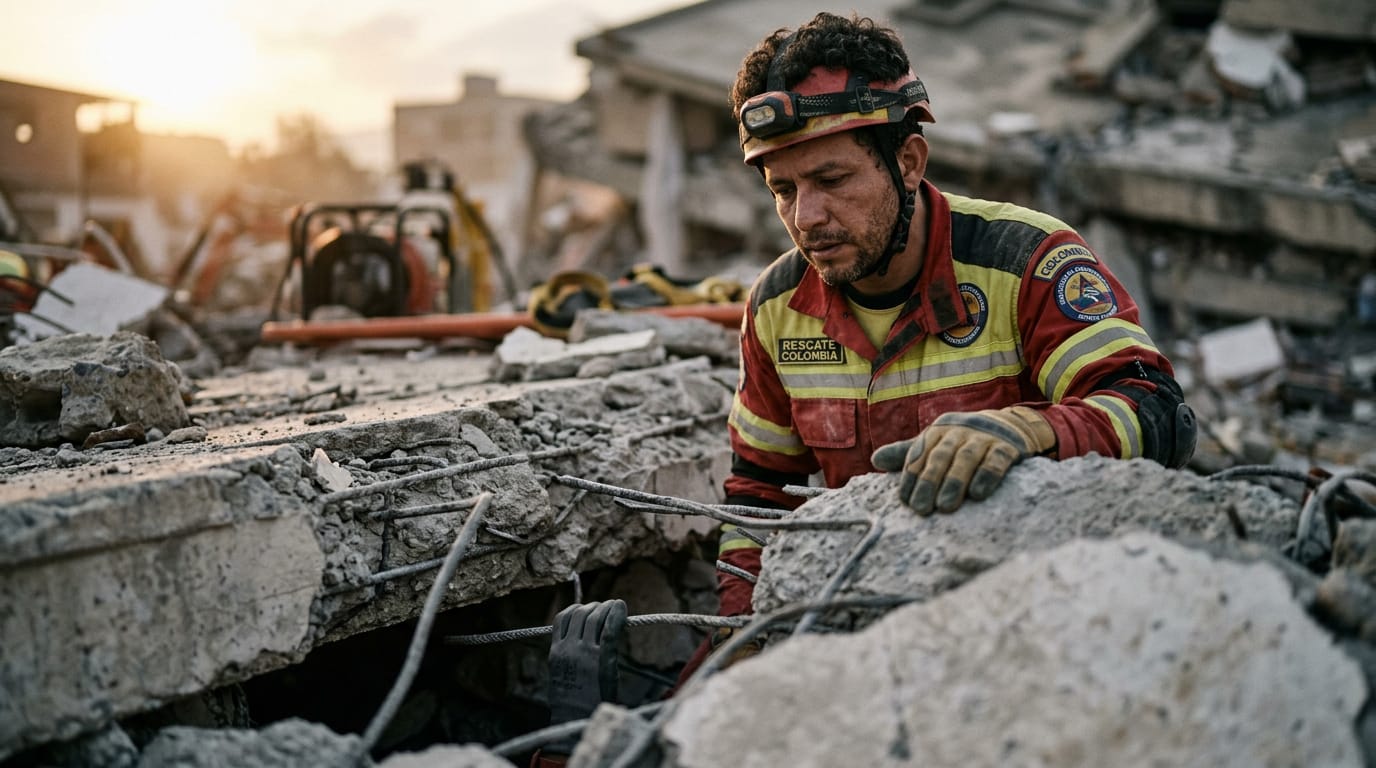
BOGOTÁ, Colombia – Hope dwindles in western Colombia as rescue operations for survivors of Monday's devastating magnitude 7.4 earthquake officially entered their "final phase" on Wednesday, marking the grim close of the critical 72-hour window for finding life beneath tons of rubble. The powerful tremor, the strongest to strike the nation this century, has left at least 265 people dead, injured more than 3,500, and left hundreds, potentially thousands, still unaccounted for, according to official figures that continue to evolve. As search-and-rescue teams transition from an intensive search for life to the sobering task of recovery, the scale of destruction across multiple cities and rural communities reveals a formidable challenge for a nation grappling with immense loss and widespread devastation.
The Earth Trembles: A Century's Strongest Quake Unleashes Chaos
The earth roared to life at approximately 7:34 a.m. local time on Monday, August 10, 2026, when a massive 7.4 magnitude earthquake struck western Colombia. With its epicenter located near San José del Palmar in the rural Chocó Department, at a depth of around 107-110 kilometers, the quake unleashed severe shaking that was felt across much of Colombia, and as far away as neighboring Ecuador, Panama, and Venezuela. The initial moments of the catastrophe were marked by panic and chaos as buildings swayed violently, then crumbled, trapping residents in their homes, workplaces, and public spaces.
The immediate aftermath saw an outpouring of local response, with ordinary citizens rushing to help neighbors and loved ones trapped beneath collapsed structures. The worst-hit areas include major cities such as Cali, Pereira, and Manizales, alongside smaller towns like Quibdó and San José del Palmar, which suffered catastrophic structural failures. Early reports quickly indicated a rising death toll and extensive damage to homes, businesses, and vital infrastructure, overwhelming local emergency services. The sheer force of the tremor created widespread destruction, turning entire blocks of homes into piles of rubble and buckling roads, isolating many communities and complicating initial rescue attempts.
Race Against Time: Rescue Operations Conclude Their Critical Phase
By Wednesday, August 12, the critical 72-hour window, during which the chances of finding survivors dramatically decrease, began to close. Authorities officially declared that rescue operations had entered their "final phase," a pronouncement that brought both a sense of urgency and despair to those desperately awaiting news of loved ones. Across the affected regions, specialized Urban Search and Rescue (USAR) teams, firefighters, military personnel, and thousands of dedicated volunteers worked tirelessly, sifting through debris with a combination of heavy machinery, sniffer dogs, and their bare hands.
The work has been physically grueling and emotionally draining. In Pereira, a focused effort centered on a collapsed bakery where a street vendor was believed to be trapped. Rescuers paused every half hour, enforcing complete silence to listen for any faint signs of life, a heart-wrenching ritual that underscored the fading hopes. Stories of resilience emerged, offering glimmers of hope amid the devastation. In Pereira, 32-year-old Daniela Largo was pulled alive from the wreckage of a hotel after 35 agonizing hours, a testament to the dedication of rescue workers and the human will to survive. However, for many others, the dwindling odds have turned the search into a grim recovery mission, with nearly 500 people officially listed as missing, and independent databases indicating potentially thousands more. The rugged terrain in some regions, coupled with communication outages and continuing aftershocks, has significantly hampered access and slowed comprehensive damage assessments, particularly in Chocó.
A Nation Mobilizes: Domestic Response and International Assistance
In the wake of the catastrophe, Colombian President Abelardo de la Espriella declared an "economic emergency" and announced three days of national mourning, vowing a full government commitment to recovery efforts. The declaration allowed for the activation of national and departmental emergency management mechanisms, aiming to strengthen the mobilization and coordination of institutional capacities.
The response has also drawn international attention and offers of support. Initially, Colombia faced some controversy for appearing to limit or delay the acceptance of international aid in the crucial hours immediately following the quake. Political scientists suggested this might have been related to a tense political transition between the outgoing and incoming administrations, and the recent appointment of a new director for the National Unit for Disaster Risk Management. However, by Wednesday, Colombia began accepting aid, specifically requesting assistance from countries like the United States, El Salvador, Ecuador, and Israel, citing their specialized teams' international certifications. The United States quickly mobilized an initial $15.5 million in emergency shelter, food, and protection assistance, deploying a Disaster Assistance Response Team (DART) to coordinate on the ground. Mexico sent two military aircraft with 19.5 tons of food and security forces, with more aid expected. Various international organizations, including the UN, UNICEF, the International Organization for Migration (IOM), and Project HOPE, also pledged support, focusing on humanitarian needs, child protection, and health services. The Republic of Korea announced $1 million in humanitarian assistance. Local communities have also demonstrated immense solidarity, with volunteers forming human chains to clear debris and long lines forming at blood donation centers.
Beyond Rescue: The Long Road to Recovery and Resilience
The earthquake's impact extends far beyond immediate casualties and collapsed buildings. More than 11,000 dwellings have been destroyed, leaving thousands of families homeless. Critical infrastructure has suffered extensive damage, with reports of 84 affected health facilities, 791 educational facilities damaged or destroyed, and disruptions to electricity, water, and telecommunications in many areas. The physical destruction has exacerbated pre-existing humanitarian challenges in a country where 6.9 million people were already in need of assistance due to conflict, climate change, and migration.
Experts point to widespread poor construction practices as a significant factor in the extensive destruction. Buildings with thin concrete walls and single layers of steel reinforcement, common across the region, proved highly vulnerable to the seismic forces. This highlights a critical long-term implication: the urgent need for resilient infrastructure and stricter building codes to mitigate the impact of future seismic events. The psychological trauma for survivors, especially children who have lost homes and access to education, represents another profound challenge. As the rescue phase concludes, the focus will inevitably shift to providing shelter, food, medical care, and psychosocial support, followed by the monumental task of rebuilding homes, schools, and communities.
The 2026 Colombia earthquake serves as a stark reminder of humanity's vulnerability to natural disasters and the enduring strength of community response. While the immediate search for survivors may be winding down, the journey to recovery and reconstruction for thousands of affected Colombians is only just beginning. The collective efforts of national authorities, international partners, and resilient communities will be crucial in navigating the long and arduous path toward healing and rebuilding.


