Colombian Military Plane Crash Claims 66 Lives in Amazon Region
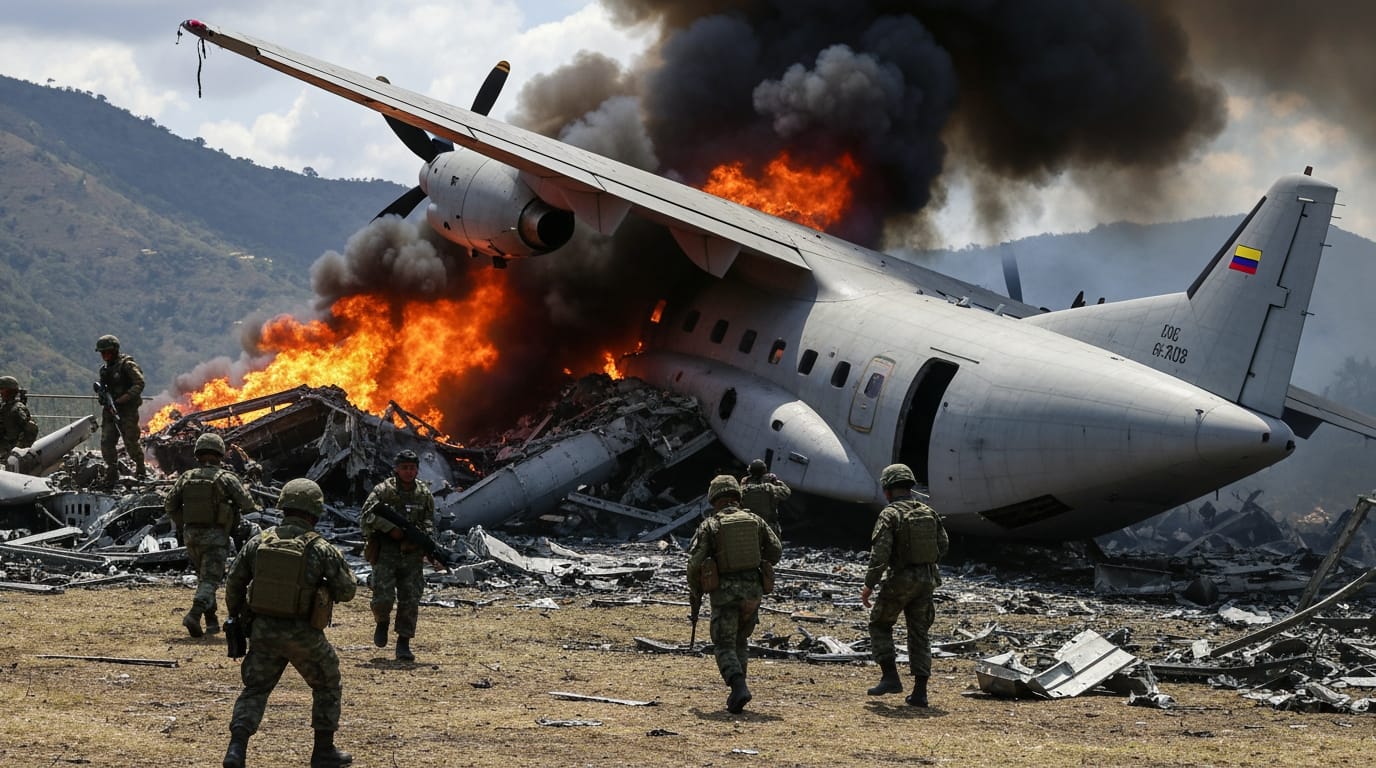
PUERTO LEGUÍZAMO, Colombia — A Colombian Air Force Lockheed Martin Hercules C-130 transport plane tragically crashed shortly after takeoff on Monday, March 23, 2026, in the remote Amazon region, killing 66 military personnel and injuring dozens more. The devastating incident, occurring in the southern department of Putumayo near the borders with Peru and Ecuador, marks one of the deadliest aviation accidents in the recent history of Colombia's armed forces. The aircraft, carrying 125 individuals, was transporting troops when it met its catastrophic end, sparking a massive emergency response and national mourning.
Catastrophic Loss in the Amazon
The ill-fated Hercules C-130, identified by its tail number FAC1016, departed from Caucayá Airport in Puerto Leguízamo, with its destination set for Tres de Mayo Airport in Puerto Asís, both located within the Putumayo department. According to preliminary reports, the aircraft experienced an impact near the end of the runway during its initial climb, with a wing reportedly clipping a tree before the plane plummeted to the ground. The crash triggered a massive fire, further intensified by the detonation of explosive devices believed to be on board, consuming the aircraft and complicating early rescue efforts. The remote and densely forested nature of the crash site in the Amazon posed significant logistical challenges for emergency responders. Local residents were among the first to reach the wreckage, with videos circulating of injured soldiers being transported on the backs of motorcycles, underscoring the immediate and harrowing community response.
A Nation Mourns: Casualties and Official Response
Of the 125 individuals aboard the military transport, comprising 11 air force members and 114 soldiers, 66 were confirmed dead, with many more suffering injuries. Initial reports from various sources presented fluctuating figures for casualties, but the grim toll was later consolidated as rescue operations continued through the night and into the following day. At least 77 injured personnel were rescued from the scene, with 14 reported to be in critical condition, necessitating immediate medical evacuation. The Colombian military swiftly deployed seven aircraft to transport the wounded to larger medical facilities in the capital, Bogotá, and other regional hospitals.
Colombian Defense Minister Pedro Sánchez confirmed the accident and quickly ruled out any possibility of an attack by armed groups, stating that the aircraft was in airworthy condition and its crew "duly qualified." President Gustavo Petro expressed his deep sorrow, calling it a "horrific accident that should never have happened." In his remarks, President Petro also alluded to long-standing "bureaucratic difficulties" that he claimed had hindered his administration's efforts to modernize the military's aging air fleet, implying a need for urgent reforms to prevent future tragedies.
The Workhorse Hercules C-130: A Critical Role
The Lockheed Martin Hercules C-130 is a robust and widely utilized tactical transport aircraft, serving military forces globally for decades. Colombia acquired its first C-130 models in the late 1960s and has since modernized its fleet, including receiving newer models from the United States under provisions for transferring surplus military equipment. The specific aircraft involved in the crash, FAC1016, was manufactured in 1984 and delivered to Colombia in September 2020. It had undergone significant maintenance and structural overhauls between 2021 and 2023, including engine updates, and was deemed airworthy at the time of the accident, according to official statements.
In Colombia, C-130s like the one that crashed are indispensable for transporting troops and essential supplies, especially given the country's challenging geography and ongoing internal conflict, which has spanned over six decades. These aircraft play a critical role in reaching remote areas, supporting military operations against illegal armed groups, and conducting humanitarian missions across the vast and often inaccessible terrains of the Amazon and other regions. The loss of such a vital asset, along with the lives it carried, significantly impacts the operational capabilities and morale of the armed forces.
Broader Context and Lingering Questions
This tragedy resonates deeply within a military that regularly confronts the complexities of an internal conflict and the logistical demands of operating in diverse, often unforgiving environments. The accident is notable as one of the most severe in the Colombian Air Force's history. The incident also comes on the heels of another recent C-130 crash involving the Bolivian Air Force in February, where a similar aircraft crashed in a populous area, highlighting potential concerns regarding the fleet's extensive use and maintenance across the region.
As investigations into the precise cause of the Puerto Leguízamo crash commence, authorities will analyze flight data recorders and conduct a thorough examination of the wreckage to determine all contributing factors. While mechanical failure or human error are common focuses in such inquiries, the President's public comments about fleet modernization may also draw attention to resource allocation and maintenance protocols. The ongoing probe aims to provide definitive answers to the grieving families and the nation, while also informing measures to enhance flight safety for military operations in the future.
The loss of 66 service members represents a profound blow to the Colombian military and the nation, underscoring the inherent risks faced by those who serve in defense of their country. The incident serves as a stark reminder of the sacrifices made daily by armed forces personnel and highlights the critical need for robust support, modern equipment, and rigorous safety standards for those operating in demanding and often dangerous conditions.


