Columbus Statue Finds New Home on White House Grounds, Reigniting Historical Debate
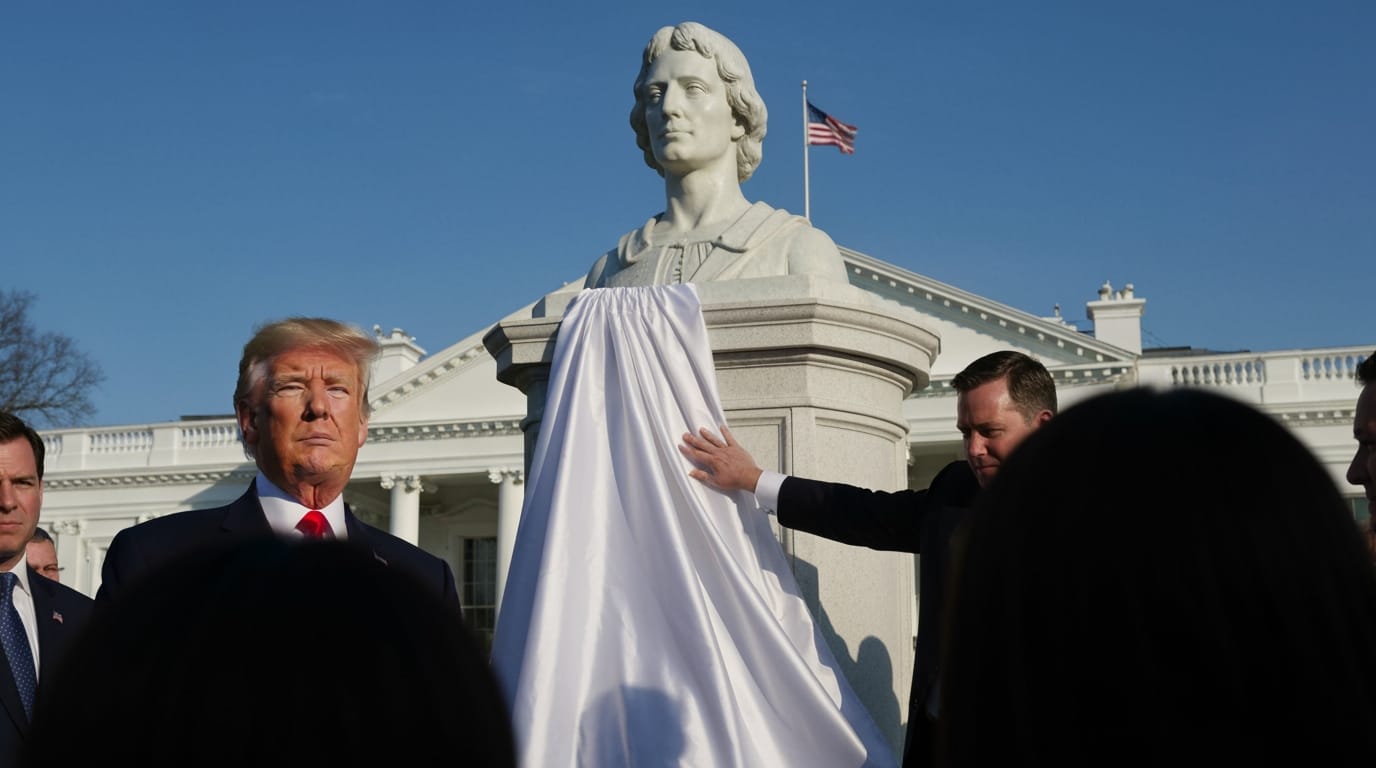
WASHINGTON D.C. – A replica of a Christopher Columbus statue, once toppled by protesters in Baltimore, has been installed on the White House campus, a move by the Trump administration that firmly reiterates its stance on historical monuments and national identity. The installation, which took place on Sunday, March 22, 2026, outside the Eisenhower Executive Office Building, underscores an ongoing cultural battle over the legacy of the 15th-century explorer and the interpretation of American history. This recent placement is a significant symbol in the administration's broader efforts to protect and restore monuments that have faced scrutiny and removal in recent years.
The controversial figure of Christopher Columbus has long been at the center of heated discussions, with advocates celebrating his role in European exploration and the contributions of Italian Americans, while critics highlight his brutal treatment of Indigenous peoples and the devastating consequences of colonization. The decision to erect the statue on federal land is seen by many as a direct response to the widespread protests of 2020, which led to the removal or defacement of numerous monuments across the United States, including the original Baltimore Columbus statue.
A Phoenix from the Harbor: The Statue's Journey
The statue now gracing the White House grounds is not the original 1984 Baltimore monument, but a carefully reconstructed replica. The initial statue, unveiled by President Ronald Reagan, became a casualty of the racial justice protests that swept the nation in the summer of 2020. On July 4 of that year, demonstrators pulled the monument from its pedestal in Baltimore's Little Italy and submerged it in the city's Inner Harbor, challenging what they viewed as a problematic glorification of a figure associated with slavery, violence, and the decimation of Native populations.
Following its dramatic removal, pieces of the damaged artwork were retrieved from the harbor. A local sculptor, Will Hemsley, undertook the intricate task of reconstruction, utilizing scans of the salvaged fragments to create the new monument. This restoration project received financial support, including $30,000 from the National Endowment for the Humanities during the Trump administration's first term. The Italian American Organizations United (IAOU) and the Conference of Presidents of Major Italian American Organizations (COPOMIAO) were instrumental in facilitating the statue's journey to Washington, ultimately gifting the replica to the federal government. A White House spokesperson affirmed that the administration embraced the opportunity to provide a prominent home for the statue, particularly as the nation approaches its 250th anniversary of independence.
Presidential Endorsement and a Reshaping of Narrative
President Trump has consistently vocalized strong support for Christopher Columbus, describing him as "the original American hero" and a "gallant and visionary man." The installation of the statue aligns with the President's broader campaign to champion historical figures he believes are foundational to American identity, often contrasting this with what he terms "anti-American" efforts to dismantle or recontextualize monuments.
The administration's messaging surrounding the statue's placement has been unequivocal. A White House spokesman affirmed the administration's view, asserting that Christopher Columbus is regarded as a hero within the current White House, and that the President intends to ensure his continued honor for generations. This perspective is a direct challenge to the growing movement advocating for a more critical examination of historical figures like Columbus, acknowledging the profound suffering and displacement inflicted upon Indigenous communities. The White House's decision reflects a commitment to a narrative that emphasizes Columbus's exploratory achievements and his significance to the Italian American community, often pushing back against attempts to re-evaluate his legacy through a contemporary lens of social justice and indigenous rights.
Broader Implications in the Cultural Landscape
The installation marks a significant moment in the ongoing national debate over public symbols and historical representation. It builds on previous actions by the Trump administration aimed at protecting monuments. In June 2020, amidst widespread protests, President Trump signed an executive order that sought to safeguard federal monuments and statues, establishing harsh penalties for vandalism and threatening to withhold federal funding from local governments failing to protect their own public monuments. This order underscored a firm stance against the removal of such historical markers, framing their destruction as an "assault on our collective national memory".
For Italian American organizations, the statue's new prominence is a source of pride and an affirmation of their cultural heritage. Leaders from these groups have expressed delight that the statue has found a place where it can be protected and appreciated, highlighting Columbus as a symbol of identity and belonging for millions of Americans of Italian descent. They argue that Columbus's legacy has historically helped Italian immigrants navigate prejudice and hardship in the United States.
However, the move has also drawn sharp criticism from civil rights advocates and historians who view it as a dismissive gesture towards Indigenous communities and a sidestepping of historical truths. Opponents contend that such installations perpetuate a sanitized version of history that overlooks the violence, enslavement, and disease brought by European colonization. The placement of the statue on the White House grounds, particularly as a replica of one removed through protest, is seen by many as a provocative statement in the nation's ongoing cultural dialogue.
Conclusion: A Symbol of Enduring Divides
The Christopher Columbus statue on the White House campus stands as more than just a piece of art; it is a potent symbol of America's deep-seated cultural and historical divides. Its journey from a Baltimore harbor to the heart of the nation's capital encapsulates the contrasting views on who should be celebrated in public spaces and how history should be remembered and honored. The Trump administration's explicit endorsement of Columbus as a national hero, alongside its broader campaign to protect monuments, signals a clear intent to shape the national narrative. While proponents celebrate the statue as a victory for tradition and Italian American heritage, critics view it as a troubling reminder of unaddressed historical injustices. The enduring presence of this statue on federal grounds ensures that the debate over Christopher Columbus and the complex tapestry of American history will continue to resonate across the national landscape.


