Congo Grapples with Fastest-Spreading Ebola Outbreak on Record, Nearing Historic Death Toll
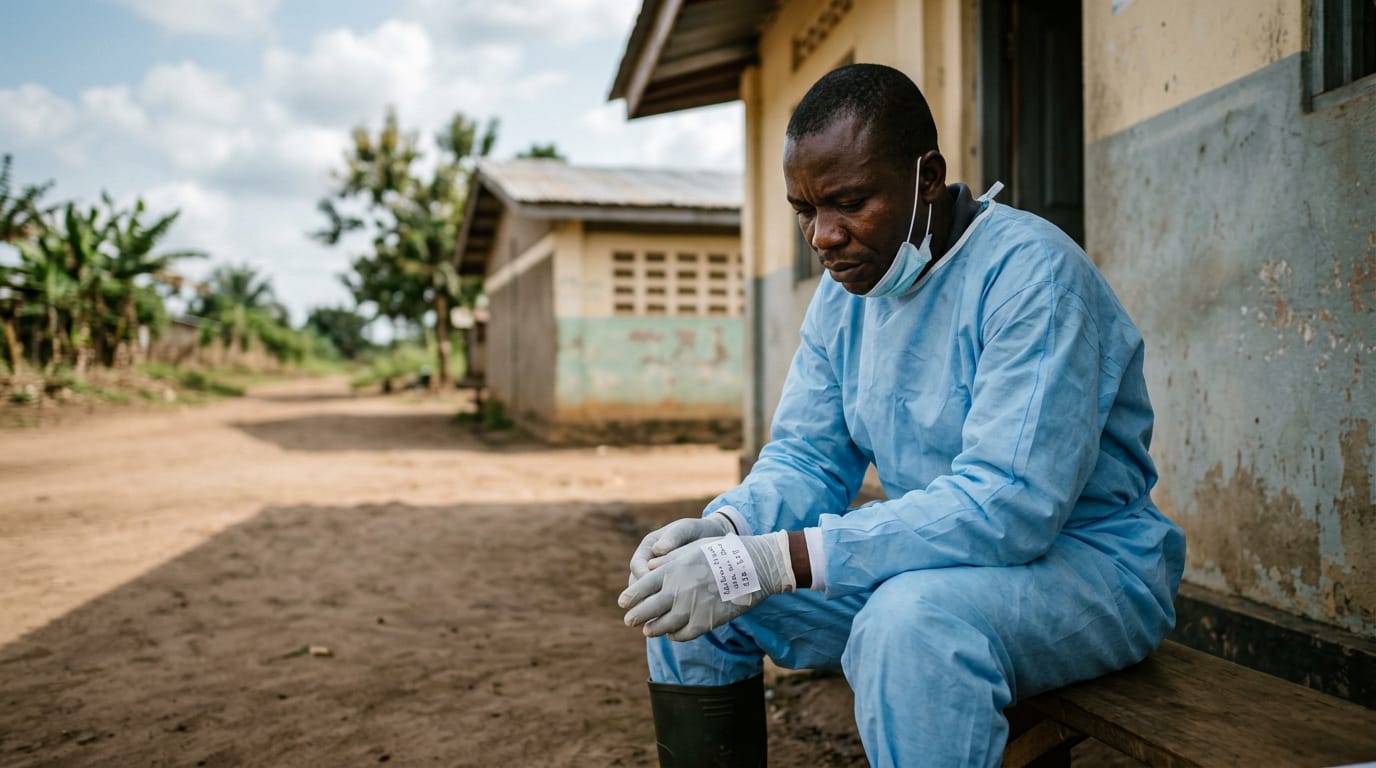
BUNIA, Democratic Republic of Congo – The Democratic Republic of Congo (DRC) is battling its most severe and rapidly escalating Ebola outbreak to date, with cases and deaths mounting at an unprecedented pace. The current epidemic, caused by the challenging Bundibugyo virus, has already claimed over 2,100 lives out of more than 4,500 confirmed cases across six provinces, threatening to surpass the 2014-2016 West Africa outbreak as the deadliest in history if current trends continue. This health crisis unfolds against a backdrop of deep-seated insecurity, population displacement, and community mistrust, severely complicating response efforts and pushing an already fragile health system to its limits.
The Alarming Scope of a Crisis Unfolding Rapidly
The current Ebola outbreak, the DRC's 17th since 1976, was officially declared in May 2026, though sequencing data suggests it may have begun as early as January or February. Initially confined to the Mongbwalu health zone in Ituri Province, the virus has now expanded its reach to 53 health zones across six provinces: Ituri, North Kivu, South Kivu, Haut-Uélé, Tshopo, and Bas-Uele. Ituri province remains the epicenter, accounting for roughly 90% of cases and 80% of deaths. As of August 14, 2026, Congolese authorities reported 4,665 confirmed cases and 2,184 deaths. This grim milestone was reached almost three times faster than in the 2014-2016 West Africa outbreak, which recorded 755 cases at a comparable point. The World Health Organization (WHO) has highlighted an "exceptional pace of transmission," with the highest weekly numbers of cases and deaths recorded in epidemiological week 30 of July 2026, underscoring the outbreak's rapid intensification. The fatality rate currently stands at 46%, with only 886 patients having recovered.
Compounding Factors Fueling the Crisis
The rapid expansion of this outbreak is inextricably linked to a confluence of complex factors unique to eastern DRC. Decades of violent conflict have plagued the region, leading to widespread insecurity and the operation of numerous armed groups. This instability directly impedes response teams, creating dangerous environments for healthcare workers and limiting access to affected communities. Mass displacement, with over five million people uprooted, further exacerbates the situation, as large, mobile populations in crowded camps become vulnerable to rapid transmission.
Moreover, community mistrust in authorities and healthcare providers remains a formidable barrier. Delays in detection and care-seeking are common, with between 60% and 70% of reported deaths occurring outside health facilities, often in communities. This means many infected individuals are dying at home, sustaining hidden chains of transmission and infecting others before they can be identified and isolated. Unpaid health workers, global aid cuts, and misinformation campaigns asserting that Ebola is not real further undermine response efforts and erode trust. The outbreak was able to circulate undetected for weeks or even months due to a delay in confirming the Bundibugyo strain, as local laboratories initially lacked specific tests for this rarer variant.
The Bundibugyo Challenge and Response Efforts
Unlike previous Ebola outbreaks, the current epidemic is caused by the Bundibugyo virus (BVD), a strain for which there are no approved vaccines or specific treatments. This presents a significant challenge to containment, relying heavily on fundamental public health measures such as early case detection, rigorous contact tracing, strict infection prevention and control protocols, and safe burial practices.
However, international and national efforts are underway to address this critical gap. Clinical trials for two possible treatments for the Bundibugyo strain began in Ituri province in July 2026. Additionally, two vaccines developed specifically for the Bundibugyo virus are now undergoing human trials for the first time in the UK and Canada. The WHO is also advancing a Phase 3 trial of the existing Ervebo vaccine, which targets the Zaire Ebola strain, as some studies suggest it may offer cross-protection against Bundibugyo. International organizations, including the WHO, UN agencies, and the Red Cross, are scaling up support, providing technical expertise, medical supplies, laboratory assistance, and strengthening emergency coordination systems. A key focus is on enhancing community engagement to build trust and encourage early care-seeking and safe practices. Despite these efforts, the WHO has warned that the virus is outpacing detection and isolation capabilities, with several treatment centers already overwhelmed.
Broader Humanitarian and Economic Impact
The escalating Ebola crisis is inflicting a heavy toll beyond direct infections and fatalities, severely disrupting essential health services and exacerbating humanitarian concerns. In Ituri Province, where the outbreak is concentrated, a sharp decline in the utilization of routine healthcare services for children and women has been observed. Between April and June 2026, the use of essential health services, including childhood immunizations and facility-assisted births, dropped by an alarming 42% in primary outbreak hotspots, and by an estimated 13% across the entire province. This regression means children are missing critical vaccinations, and maternal health is compromised, contributing to increased vulnerability to other treatable illnesses.
The economic consequences are also significant. An increase of 35% in the minimum expenditure basket value between May and June 2026 in Bunia indicates the outbreak's adverse impact on local markets and inflation, further straining already vulnerable households. The continued expansion of the outbreak, including cross-border cases reported in Uganda (though now declared over there) and the spread to Bas-Uele, underscores the regional risk and the urgent need for a cohesive, well-resourced international response to prevent wider destabilization.
The Democratic Republic of Congo faces an uphill battle against an Ebola outbreak of unparalleled speed and scale. The combination of a virulent strain without approved countermeasures, a volatile security landscape, and profound community distrust has created a perfect storm, challenging the most seasoned public health responders. While significant strides are being made in developing new vaccines and treatments, and international support is mobilized, the virus continues to outpace current containment efforts. A sustained, multifaceted approach that prioritizes community engagement, enhances security for health workers, and rapidly scales up both treatment capacity and robust surveillance will be critical to turning the tide against this relentless epidemic and averting an even greater humanitarian catastrophe.


