Conservative Wave Sweeps Costa Rica: Laura Fernandez Claims Presidency
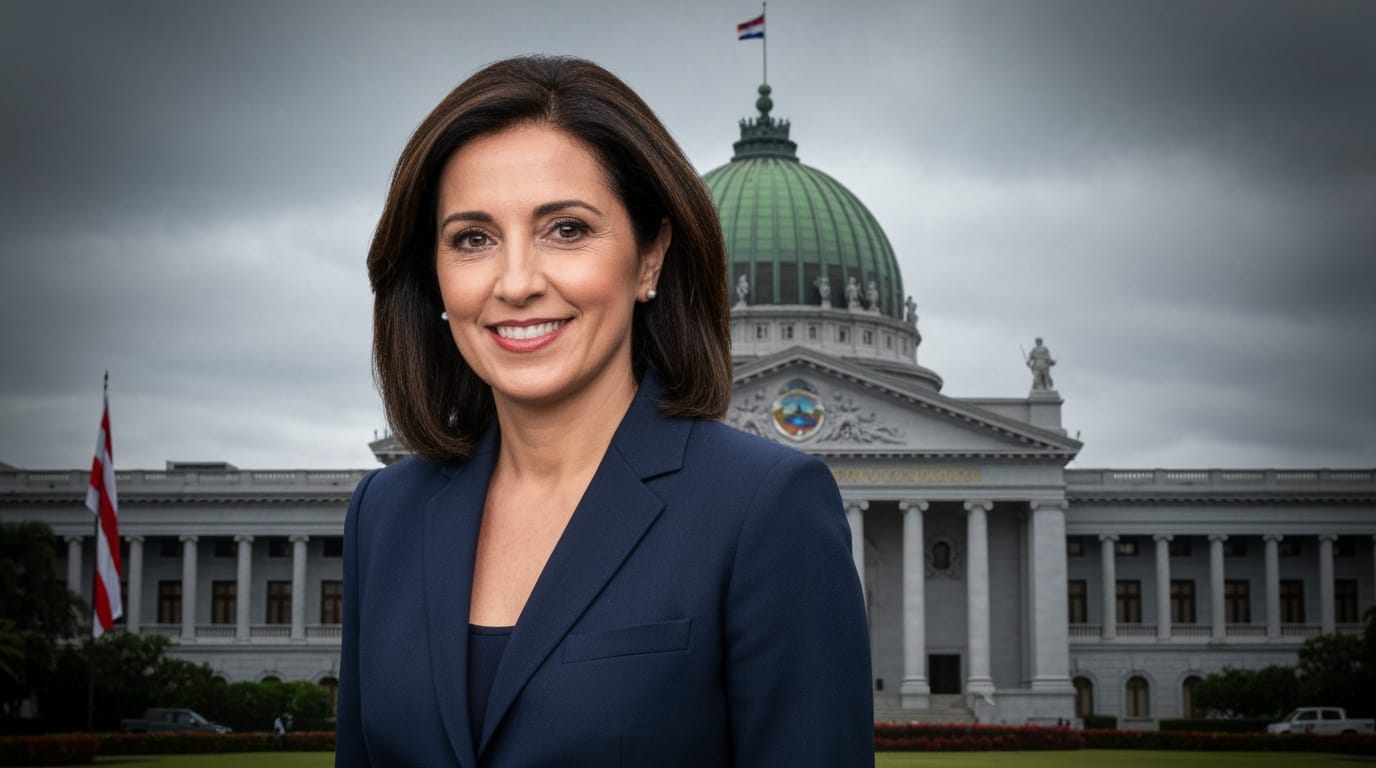
San José, Costa Rica – In a decisive first-round victory, conservative populist Laura Fernandez of the Sovereign People's Party (PPSO) has been elected the next president of Costa Rica. The election, held on February 1, 2026, saw Fernandez secure a commanding lead, signaling a clear mandate from voters eager for a robust response to the nation's escalating crime rates and a continuation of the previous administration's agenda.
Fernandez, 39, the handpicked successor of outgoing President Rodrigo Chaves Robles, garnered well over the 40 percent threshold required to avoid a runoff election, with preliminary results showing her support ranging from 48.51 percent to 53.01 percent of the vote. Her closest challenger, Álvaro Ramos of the center-left National Liberation Party (PLN), conceded the race after securing approximately 30 to 33 percent of the ballots cast. The swift conclusion to a crowded presidential field, which included 20 candidates, marks a significant shift in Costa Rican politics, reinforcing a conservative trajectory and emphasizing issues of national security and institutional reform.
A Resounding Mandate for Change
The victory of Laura Fernandez represents a powerful endorsement of her platform, which heavily mirrored the policies of her predecessor, President Rodrigo Chaves. Voters flocked to polling stations, resulting in a notable turnout of 69.10 percent, an increase of 9.1 percentage points from the 2022 first round. This high participation underscores the public's engagement with the election and their desire for decisive leadership. With 88.4 percent of polling stations tallied, Fernandez's lead proved unassailable, prompting Ramos to concede late Sunday night and pledge to lead a "constructive opposition."
Fernandez's success was not limited to the presidential race. Early indications suggest the PPSO is also performing strongly in the legislative elections, leading in all seven of the country's provinces. Should these trends hold, her administration could enjoy a significant majority, or even a supermajority, in the 57-seat Legislative Assembly, potentially streamlining the implementation of her policy agenda. This consolidation of power by a relatively new political force highlights a significant realignment within Costa Rican politics, moving away from more established parties that have traditionally dominated the political landscape.
The Rise of a Conservative Heir
Laura Fernandez's path to the presidency has been closely linked to President Rodrigo Chaves, under whom she served in several high-profile roles. A political scientist by training, Fernandez previously held the positions of Minister of National Planning and Economic Policy from 2022 to 2025 and Minister of the Presidency from 2024 to 2025, in addition to serving as Chaves' chief-of-staff. This background positioned her as a continuity candidate, promising to uphold and deepen the changes initiated by the popular, yet often controversial, outgoing president.
Her campaign frequently invoked Chaves' legacy, portraying herself as the individual best equipped to "continue the change" and "rescue and perfect our democratic institutions." Born on July 4, 1986, her relatively young age of 39 also resonated with a segment of the electorate looking for fresh leadership. Fernandez's political ascent reflects a broader trend in Latin America, where candidates emphasizing law and order and anti-establishment rhetoric have gained significant traction. Her alignment with Chaves, who himself tapped into public anger against perceived corrupt elites, allowed her to inherit a substantial portion of his support base.
Tackling Crime: A Central Pillar
The election unfolded against a backdrop of increasing public anxiety over crime, which emerged as the dominant issue for many voters. Costa Rica, long lauded for its peace and stability, has witnessed a concerning surge in drug-linked violence and homicides in recent years. This backdrop proved fertile ground for Fernandez's tough-on-crime platform. A cornerstone of her campaign was the pledge to continue and expand Chaves' strict security measures, including the controversial proposal to construct a high-security mega-prison modeled after El Salvador's Terrorism Confinement Center. She also advocated for mandatory prison labor and stricter sentencing for criminals.
The emphasis on security resonated deeply with citizens experiencing the direct impact of rising crime. While some international human rights groups have voiced concerns that emulating El Salvador's hardline approach could potentially undermine civil liberties, the immediate appeal to many Costa Ricans lies in the promise of a safer society. This focus on security, alongside promises of national institutional reform and combating corruption, formed the core of her agenda, distinguishing her from other candidates who offered more centrist or progressive approaches to the nation's challenges.
Implications for Costa Rica's Future
Laura Fernandez's presidency is poised to usher in a period of significant policy implementation and potential societal shifts in Costa Rica. Her commitment to continuing President Chaves' agenda suggests an administration focused on an assertive approach to governance. The proposed mega-prison and enhanced security measures, while popular among voters, will likely draw scrutiny from human rights organizations and international observers, raising questions about balancing public safety with civil liberties.
Economically, Fernandez has also highlighted job creation and infrastructure development as key priorities. These initiatives aim to foster economic recovery and stability following recent challenges. The legislative strength her party may command could enable swift passage of reforms and policies, potentially accelerating changes across various sectors. However, the consolidation of power could also face challenges from the opposition, even a "constructive" one as pledged by Álvaro Ramos, particularly if the proposed changes are perceived as infringing on democratic norms or individual rights.
The election outcome reflects a nation at a crossroads, choosing a path that prioritizes security and decisive leadership in the face of complex social and economic issues. Fernandez's leadership will define Costa Rica's direction for the next four years, shaping its domestic landscape and its standing on the international stage.
Looking Ahead
Laura Fernandez's victory marks a significant moment for Costa Rica, signaling a clear popular mandate for a continuation of conservative governance focused on security and institutional reform. As the country transitions to new leadership, the coming months will be crucial in observing how her administration translates campaign promises into actionable policies and navigates the delicate balance between public demand for order and the nation's long-standing democratic traditions and human rights commitments. The challenges are substantial, but the electorate has spoken, placing its trust in Fernandez to deliver on a vision of a more secure and prosperous future.


