Conservatives Gain Ground in German Federal Election Amidst Record Voter Turnout
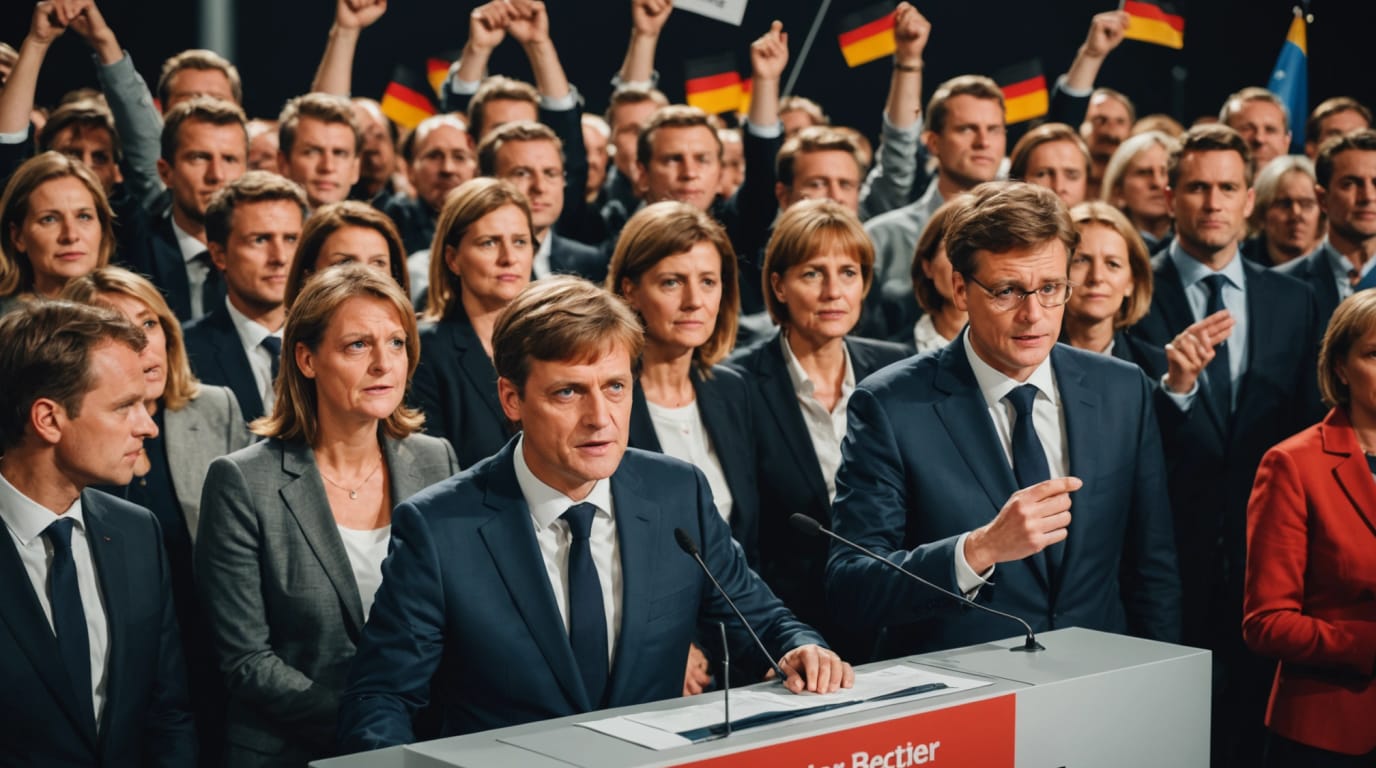
BERLIN – Germany's recent federal election saw a significant shift in the political landscape, with the conservative Christian Democratic Union (CDU) and its sister party, the Christian Social Union (CSU), emerging as the leading force. The election, triggered by the collapse of the previous coalition government, also witnessed a surge in support for the far-right Alternative for Germany (AfD) and a record-breaking voter turnout, signaling a period of considerable change and potential political realignment.
Record Turnout Reflects Deepening Political Engagement
The election on February 23, 2025, saw a voter turnout of 83.5%, the highest since German reunification in 1990. This surge in participation underscores the public's heightened interest in the nation's political direction following the disintegration of the Social Democrat (SPD), Green, and Free Democratic Party (FDP) coalition in late 2024. The high turnout suggests that voters were motivated to express their views on the future of Germany, leading to notable shifts in party affiliations and support.
CDU/CSU Lead, But Coalition Talks Loom
Led by chancellor candidate Friedrich Merz, the CDU/CSU secured the largest share of votes. Projections indicate the CDU/CSU will gain 208 seats in the Bundestag. However, falling short of an outright majority, the CDU/CSU now faces the complex task of forming a coalition government. The party has already ruled out any cooperation with the AfD, leaving a grand coalition with the SPD or a three-way alliance potentially involving the Greens as the most viable options. The final seat distribution will be critical in determining the composition and direction of the next German government.
AfD Gains Highlight Shifting Political Sentiments
One of the most striking outcomes of the election was the significant gains made by the AfD. The party experienced the largest increase in voter support compared to previous elections, reflecting a growing segment of the population drawn to its right-wing populist platform. While the CDU/CSU has publicly rejected any collaboration with the AfD, the party's increased presence in the Bundestag will undoubtedly shape the political discourse and influence policy debates. The AfD is projected to gain 152 seats in the Bundestag.
Generational Divide Emerges in Voting Patterns
An analysis of voter demographics reveals a notable generational divide in political preferences. Younger voters, particularly those between 18 and 24, showed a tendency to support more extreme parties, with increased votes for both the AfD and the Left Party. Conversely, the more traditional parties, the SPD and CDU, received their lowest levels of support from this age group. Voters over the age of 60, on the other hand, were more likely to vote for the SPD and CDU, highlighting a potential disconnect between the established parties and the younger generation. The Green party, traditionally popular with younger voters, saw a decrease in support from this demographic.
Education Level Influences Party Preference
Education level also played a significant role in shaping voter choices. Voters without a college education were more inclined to support conservative parties, with the CDU and AfD being their preferred options, followed by the SPD. Individuals with a basic education were twice as likely to vote for the AfD compared to those with higher education levels. Conversely, German voters with higher degrees were more than twice as likely to vote for the Green Party and the Left Party compared to those with basic education levels. These trends suggest that education level is a key factor in determining political alignment in Germany.
SPD Suffers Losses, Leadership Faces Scrutiny
The SPD, led by Chancellor Olaf Scholz, experienced its worst election result since World War II. This significant loss has prompted internal discussions about the party's future direction and leadership. The party is projected to gain 120 seats in the Bundestag. As the SPD grapples with the election outcome, it faces the challenge of redefining its platform and reconnecting with voters who have shifted their support to other parties. The party's ability to adapt and rejuvenate will be crucial in shaping its role in the next government and its long-term political prospects.
Conclusion: A New Era of Political Negotiation
The 2025 German federal election has ushered in a new era of political negotiation and potential realignment. The CDU/CSU's victory, coupled with the AfD's gains and the SPD's losses, has created a complex political landscape that will require careful maneuvering and compromise. As coalition talks begin, the parties must address the diverse needs and concerns of the German electorate, as reflected in the record voter turnout and the shifting demographics of party support. The outcome of these negotiations will not only determine the composition of the next government but also shape the future direction of Germany's political landscape.


