Controversial AI Image of Trump Sparks Outcry and Deletion on Truth Social
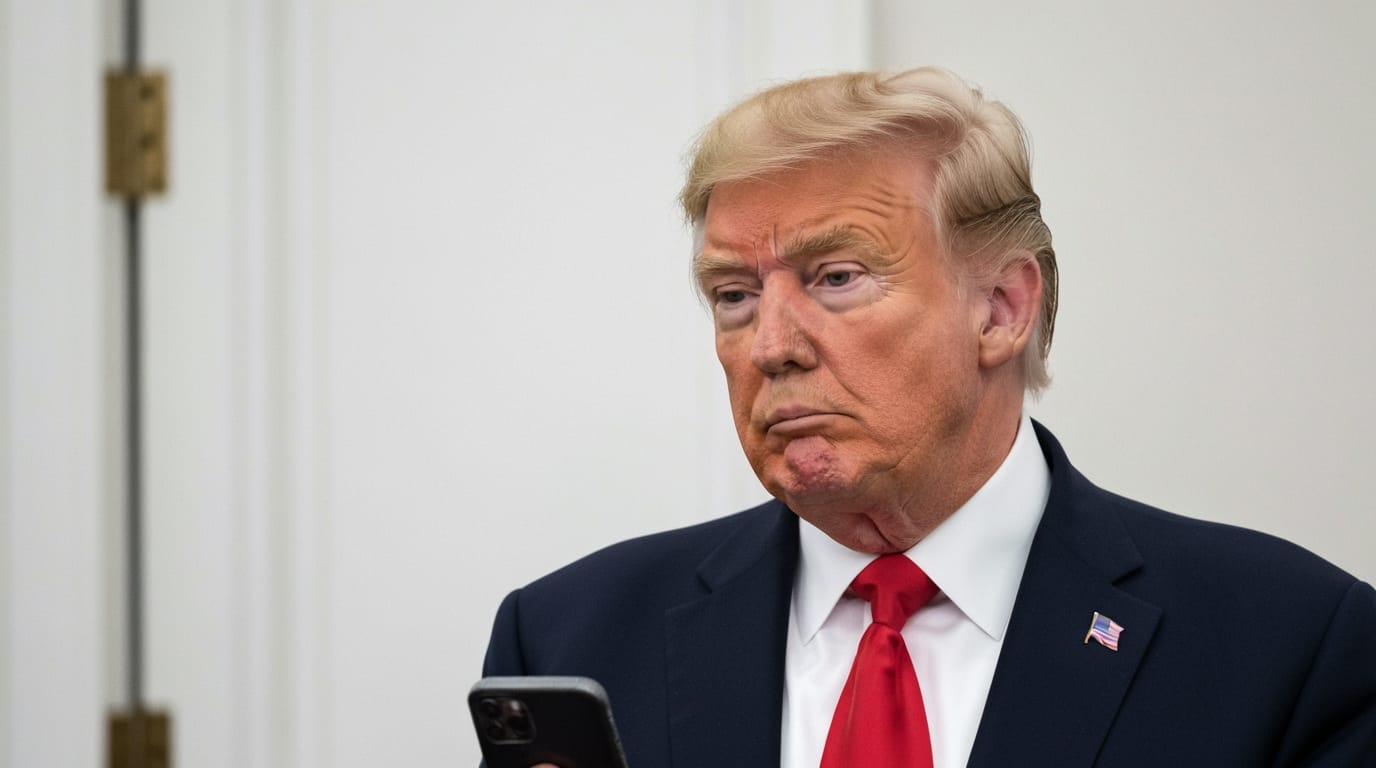
A highly contentious artificial intelligence-generated image depicting former President Donald Trump in a Jesus-like pose, seemingly healing a sick man, was briefly posted and then removed from his Truth Social account, igniting a firestorm of criticism across political and religious spectrums. The image, which fused religious iconography with patriotic symbolism, drew immediate and widespread condemnation, particularly from within Trump’s conservative Christian base, who decried it as blasphemous and inappropriate for political discourse. The incident unfolded amidst a public spat between Trump and Pope Leo XIV, adding another layer of complexity to the digital controversy.
The Digital Iconography and Its Swift Removal
The controversial image, an apparent AI-generated graphic, was shared on Truth Social on a Sunday night, coinciding with Orthodox Easter, a significant observance in the Christian calendar. It portrayed Trump adorned in a white robe, with a radiant light emanating from his hand as he appeared to touch and heal a figure lying in a hospital bed. The background was a tapestry of Americana, featuring elements such as the Statue of Liberty, the American flag, bald eagles, and even military aircraft, blending nationalistic fervor with messianic imagery. The post quickly garnered significant attention, not least for its striking visual content and the implications of its religious overtone. By Monday morning, the image had been quietly removed from Trump's platform, though no official statement or apology accompanied its deletion. When questioned about the image, Trump asserted that he believed it depicted him as a "doctor" or a "Red Cross worker" engaged in the act of "making people better," attributing the "Jesus" interpretation to "fake news" narratives. This explanation, however, did little to quell the brewing controversy or satisfy his critics.
A Firestorm of Faith and Politics
The reaction to the AI-generated image was swift and largely condemnatory, even among many of Trump's staunch supporters and prominent conservative Christian figures. Critics across social media platforms and in various media outlets labeled the depiction as "blasphemous," "disgusting," "offensive," and "inappropriate." Influential voices within the evangelical and conservative Catholic communities, many of whom have been pillars of Trump's political base, expressed profound disappointment and outrage. Commentators cautioned against trivializing religious imagery for political gain and warned of potential "spiritual and political consequences" for such a move. The timing of the post, specifically during Orthodox Easter, further inflamed the sensitivities of many religious observers who viewed it as disrespectful to sacred religious observances. The broad repudiation, especially from within his loyal base, underscored the perceived gravity of transgressing religious boundaries, even for a figure who has frequently leveraged religious rhetoric in his political campaigns.
AI's Shifting Landscape in Political Communication
This incident serves as a stark illustration of the escalating role and inherent risks of artificial intelligence in contemporary political communication. The ability of generative AI to create highly realistic yet entirely fabricated images, often referred to as deepfakes, presents significant challenges in distinguishing authentic content from manipulated visuals. In the fast-paced environment of social media, where content spreads rapidly and impressions are formed instantaneously, the potential for AI-generated imagery to mislead, misinform, or ignite controversy is substantial. Political campaigns are increasingly exploring and utilizing AI tools for various purposes, including generating text, images, and videos for advertisements and fundraising efforts. However, this burgeoning technology also raises profound ethical questions regarding transparency, authenticity, and the erosion of public trust in information. In response to these concerns, a growing number of states are enacting legislation to regulate the use of AI in political messaging, often requiring explicit disclosures when synthetic media is employed to influence voters. The episode on Truth Social underscores the urgent need for critical media literacy and robust mechanisms to identify and contextualize AI-generated content in the political sphere.
Contextualizing Trump's Religious Appeals
The controversy surrounding the AI image is not an isolated event but rather fits within a broader pattern of Trump's engagement with religious themes and his appeals to faith-based constituencies. Throughout his political career, Trump has consistently cultivated a strong relationship with conservative Christians, particularly evangelical voters, who have formed a significant component of his support base. His campaigns have often employed religious rhetoric, at times framing political contests as "righteous crusades" and emphasizing the notion of America as "one nation under God." Critics have frequently characterized his approach to faith as largely transactional, focused more on political utility and reinforcing his image as a strong leader rather than demonstrating deep theological adherence or personal spiritual struggle.
This particular AI image emerged against the backdrop of an intensifying verbal confrontation between Trump and Pope Leo XIV. The Pope had issued criticisms of U.S. military actions, specifically in relation to the conflict in Iran, which were widely interpreted as a rebuke of American foreign policy. Trump responded with sharp public attacks, accusing the Pontiff of being "WEAK on Crime, and terrible for Foreign Policy." In this context, the AI-generated image could be seen as an attempt to project an image of divinely-sanctioned authority and benevolent power, potentially as a counterpoint to the Pope's criticisms or to reinforce his standing among religious followers. The image itself bore a resemblance to earlier AI-generated, biblically-themed portrayals of Trump circulated by conservative commentators, indicating a pre-existing subculture of such imagery.
Conclusion: A Digital Echo in the Political Arena
The brief appearance and subsequent deletion of the AI-generated Jesus-like image on Donald Trump's Truth Social account represent more than a fleeting digital misstep; they offer a potent glimpse into the evolving dynamics of modern political communication. This incident crystallized the volatile intersection of political messaging, religious reverence, and advanced artificial intelligence, demonstrating the capacity of synthetic media to both provoke and polarize. The rapid and widespread backlash, especially from within Trump's core support base, underscores the enduring sensitivity around religious symbols and the limits of their appropriation, even in an increasingly irreverent digital age. The event further highlights the ethical quandaries posed by AI in shaping public perception, urging a more critical examination of the images and narratives consumed in the political arena. As AI technology continues to advance, the challenges of discerning reality from fabrication, and the implications for political integrity and public discourse, will undoubtedly remain central to the ongoing narrative of elections and governance.


