Coordinated Attacks Rock Balochistan, Reigniting Security Concerns Across Pakistan
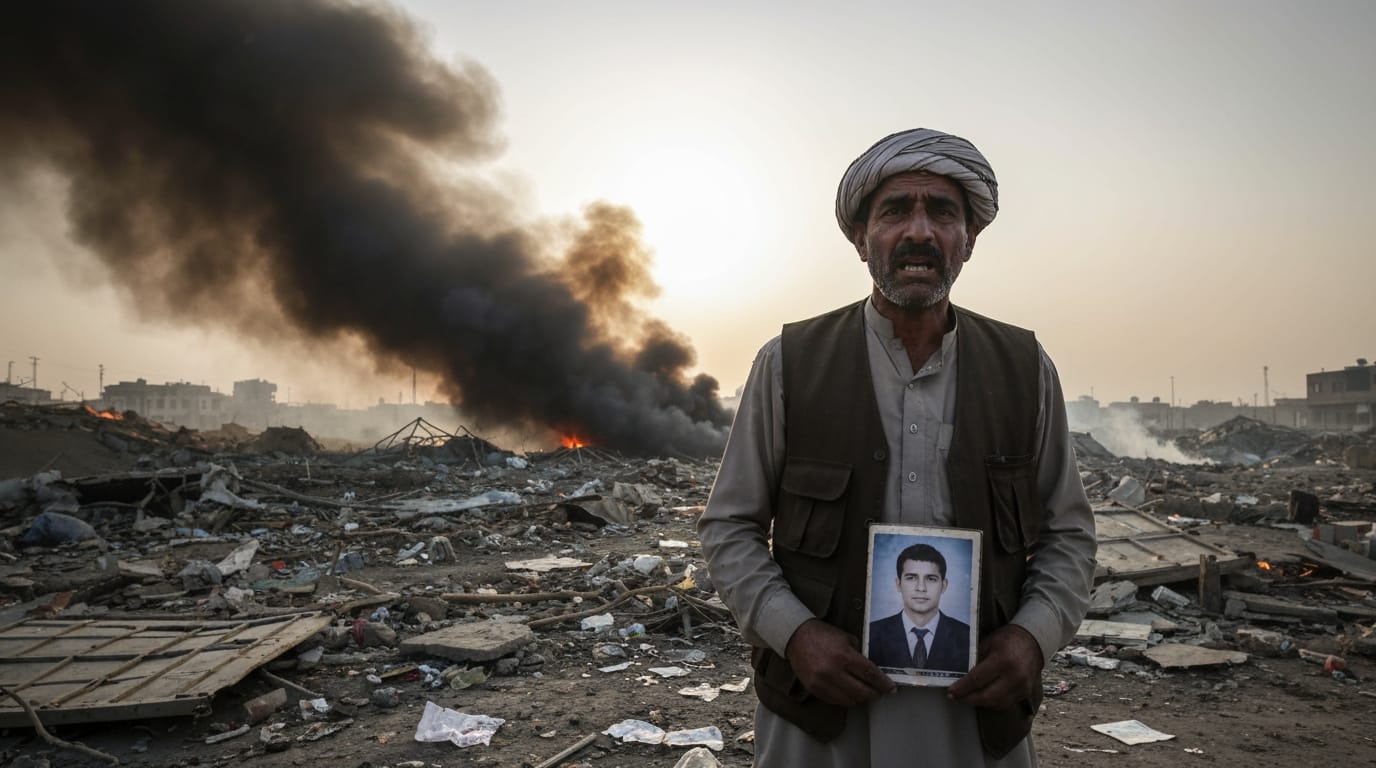
QUETTA, Pakistan – A series of meticulously planned and coordinated assaults, attributed to Baloch separatists, struck multiple districts across Pakistan's southwestern Balochistan province on Saturday, January 31, 2026. The widespread attacks resulted in the deaths of at least ten security officials and a significant number of militants, once again highlighting the volatile security landscape of the resource-rich but restive region. These latest incidents, which included gun battles and attempted suicide bombings, underscore the persistent challenges faced by Pakistani authorities in confronting a long-standing insurgency.
The Baloch Liberation Army (BLA), a prominent separatist organization, claimed responsibility for the synchronized operations, dubbed "Operation Herof 2.0." Security forces swiftly launched counter-operations to repel the assaults, which targeted police stations, paramilitary headquarters, government offices, and even civilian areas across at least five districts, including the provincial capital Quetta, Pasni, Mastung, Nushki, and Gwadar.
A New Wave of Coordinated Violence
The attacks unfolded in the early hours of Saturday, initiating a rapid and forceful response from Pakistani security forces. In Quetta, the provincial capital, at least four policemen were killed as militants targeted several police stations. Elsewhere, attempted fire raids on Frontier Corps (FC) headquarters in Nushki and Dalbandin were repelled, with explosions also reported in the latter. Militants also targeted the Deputy Commissioner’s office and police lines in Kalat, while Coast Guard facilities and a labor colony in Pasni and Gwadar were subjected to attempted attacks. Simultaneous grenade and distant fire raids were reported in Balicha, Tump, Mastung, and Kharan.
Officials confirmed that at least ten security officials were killed across the various incidents, while an estimated 37 to 58 militants were neutralized during the ensuing firefights. The government maintained that the attacks, despite their coordinated nature, were "poorly planned and executed," collapsing under the professional and rapid response of the security forces. As a precautionary measure, Pakistan Railways suspended train services from Balochistan to other parts of the country, impacting routes like the Quetta-Peshawar bound Jaffar Express and Quetta-Chaman passenger trains. Mobile services were also reportedly jammed in affected areas.
Echoes of Past Escalations
Saturday's assaults bear a striking resemblance to a series of coordinated attacks that transpired in August 2024, which were also attributed to the BLA. During those events, over 70 individuals were killed, or at least 51, after separatist militants targeted police stations, a railway bridge, and vehicles on a major highway. In one particularly egregious incident in August 2024, gunmen reportedly stopped multiple buses, trucks, and vans in the Musakal district, singling out and killing ethnic Punjabis, and setting ablaze as many as 35 vehicles. The BLA had also claimed responsibility for those attacks, stating they targeted military servicemen dressed in plain clothes, though civilians were also among the casualties. These recurrent, synchronized operations highlight a pattern of increasingly sophisticated and audacious militant activity by separatist groups in Balochistan.
The Deep Roots of Insurgency
The insurgency in Balochistan is deeply entrenched in historical grievances, marked by economic exploitation and political marginalization. Despite being Pakistan's largest province by land area and possessing vast natural resources such as natural gas, coal, gold, and copper, Balochistan remains its least populated and least developed region, with a significant portion of its population living in multidimensional poverty.
Baloch nationalists and separatist groups, including the BLA, contend that the central government unjustly exploits the province's resources without adequately benefiting the local populace. The BLA, designated as a terrorist organization by Pakistan, the United Kingdom, and the United States, has been at the forefront of the armed struggle, conducting numerous attacks targeting Pakistani military personnel, police, and civilians. Leaders of the BLA, including Bashir Zeb Baloch, Allah Nazar, and Harbiyar Marri, are reported to operate from safe havens outside Pakistan, primarily in Afghanistan. The China-Pakistan Economic Corridor (CPEC), a flagship infrastructure project traversing Balochistan, has also become a frequent target for these groups, who view it as a symbol of further exploitation.
A Protracted Conflict and its Implications
The latest coordinated attacks underscore the complex and enduring nature of the conflict in Balochistan. Pakistan's security forces have consistently engaged in counter-terrorism operations, and while they have neutralized many militants, the insurgency continues to pose a significant threat. Security analysts have pointed out that Baloch youth are often recruited into high-risk operations, and propaganda networks associated with these groups frequently misrepresent casualties as enforced disappearances, further fueling resentment.
The government of Pakistan maintains that it is committed to the uplift and development of local communities in Balochistan and denies allegations of resource theft. However, the ongoing violence and the BLA's continued capacity for coordinated attacks demonstrate the fragility of peace in the region. The conflict not only destabilizes internal security but also carries regional implications, impacting vital development projects and raising concerns about cross-border militant activity. Addressing the deep-seated socioeconomic grievances and pursuing political reforms alongside military operations remain crucial steps toward achieving lasting stability in Balochistan.


