Coral Bleaching Reaches Unprecedented Levels, Threatening Marine Ecosystems
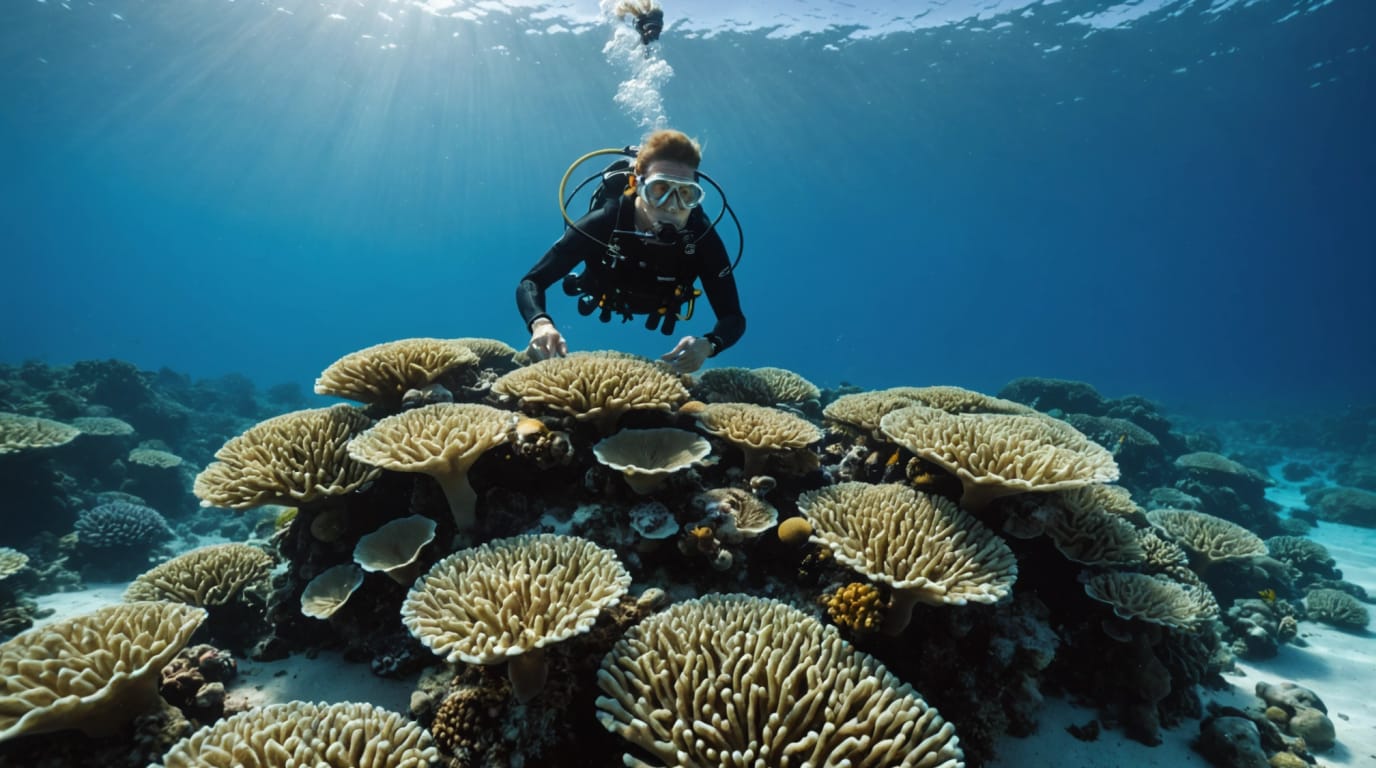
Coral reefs worldwide are experiencing the most extensive bleaching event ever recorded, raising alarms among scientists and conservationists about the future of these vital marine ecosystems. A recent report by the National Oceanic and Atmospheric Administration (NOAA) and the International Coral Reef Initiative (ICRI) indicates that over 80% of the world's reefs have been affected by bleaching-level heat stress since early 2023, driven by record-breaking ocean temperatures. This fourth global coral bleaching event, declared in April 2024, is surpassing previous records in both scope and severity, posing a significant threat to marine biodiversity and the livelihoods of millions who depend on healthy reefs.
Understanding Coral Bleaching
Coral bleaching is a stress response triggered by changes in the coral's environment, most notably rising ocean temperatures. Corals have a symbiotic relationship with microscopic algae called zooxanthellae, which live in their tissues. These algae provide the coral with essential nutrients and give them their vibrant colors. When corals are stressed by heat, pollution, or other factors, they expel the algae, causing them to turn pale or white – hence the term "bleaching."
While corals can recover from bleaching if conditions improve, prolonged or severe bleaching can lead to coral starvation and death. Repeated bleaching events also weaken corals, making them more susceptible to disease and less able to reproduce. The current global bleaching event is particularly concerning because of its widespread nature and the sustained high temperatures impacting reefs across the Indian, Pacific, and Atlantic oceans.
The Global Impact
The current mass coral bleaching is the fourth major global coral bleaching event after those that occurred in 1998, 2010 and from 2014 to 2017. The ongoing coral bleaching event is expected to exceed the 2014 to 2017 incidence which was the most widespread and severe having affected 65.7% of the world's reef area with bleaching-level heat stress. According to the ICRI, 84% of the world's reefs have experienced bleaching-level heat stress between January 1, 2023, and March 30, 2025, impacting 82 countries, territories, and economies. This surpasses the previous record set during the 2014-2017 event, which affected an estimated 65.7% of the world's reefs.
The Great Barrier Reef, one of the world's largest and most iconic reef systems, has been particularly hard hit. In March 2024, scientists confirmed a fifth mass bleaching event on the reef, with aerial surveys revealing prevalent bleaching in 73% of surveyed reefs within the Great Barrier Reef Marine Park. Some areas experienced the highest levels of heat stress ever recorded, leading to extreme bleaching where more than 90% of coral cover was affected.
The Role of Climate Change
The primary driver of this unprecedented coral bleaching is climate change, which is causing ocean temperatures to rise. NASA reports that 90% of global warming has occurred in the oceans where, between 1901 and 2020, temperatures have increased by 2.8 degrees Fahrenheit. As oceans absorb excess heat from the atmosphere, they exceed the thermal tolerance of many coral species.
The Intergovernmental Panel on Climate Change (IPCC) warns that even if global warming is limited to 1.5 degrees Celsius above pre-industrial levels, 70% to 90% of coral reefs could still be lost by 2050. If temperatures rise to 2 degrees Celsius, the IPCC predicts that 99% of corals will disappear. These projections underscore the urgent need for drastic reductions in greenhouse gas emissions to protect coral reefs and the countless species that depend on them.
Consequences for Ecosystems and People
Coral reefs are biodiversity hotspots, providing habitat, breeding grounds, and food sources for a vast array of marine organisms. The loss of coral reefs can trigger a cascade of ecological consequences, impacting fish populations, marine mammals, and other species that rely on the reef ecosystem.
Beyond their ecological importance, coral reefs also provide valuable ecosystem services to humans. They protect coastlines from erosion and storm surge, support tourism and recreation industries, and provide food and livelihoods for millions of people worldwide. The UN released research in 2020 that showed that in 10 years from 2009 about 14% of the world's corals were lost. This research was conducted in 12,000 sites in 73 countries by over 300 scientists. The loss was mostly attributed to rising sea surface temperatures. Climate change induced coral bleaching would increase poverty levels for the global coastline communities that rely on marine ecosystems for their livelihoods. The loss of coral reefs can have devastating economic and social consequences, particularly for coastal communities in developing countries.
Hope for the Future
Despite the grim outlook, there is still hope for the future of coral reefs. While the scale of the challenge is immense, scientists and conservationists are working on a variety of strategies to help reefs adapt to climate change and recover from bleaching events.
These strategies include:
- Reducing greenhouse gas emissions: The most critical step is to reduce greenhouse gas emissions to slow down and eventually reverse global warming.
- Local conservation efforts: Reducing local stressors such as pollution, overfishing, and destructive fishing practices can help make reefs more resilient to bleaching.
- Coral restoration: Efforts to restore damaged reefs by transplanting coral fragments or using innovative techniques to grow new corals are showing promise.
- Assisted evolution: Scientists are exploring ways to help corals adapt to warmer temperatures through selective breeding or genetic modification.
A Call to Action
The unprecedented coral bleaching event serves as a stark reminder of the urgent threat posed by climate change to marine ecosystems. While the challenges are significant, collective action is still possible. By reducing greenhouse gas emissions, implementing effective conservation measures, and investing in innovative solutions, we can help ensure that coral reefs continue to thrive for generations to come. The time to act is now, before these vibrant and vital ecosystems are lost forever.


