Crimea: A Peninsular Crucible at the Heart of the Ukraine War
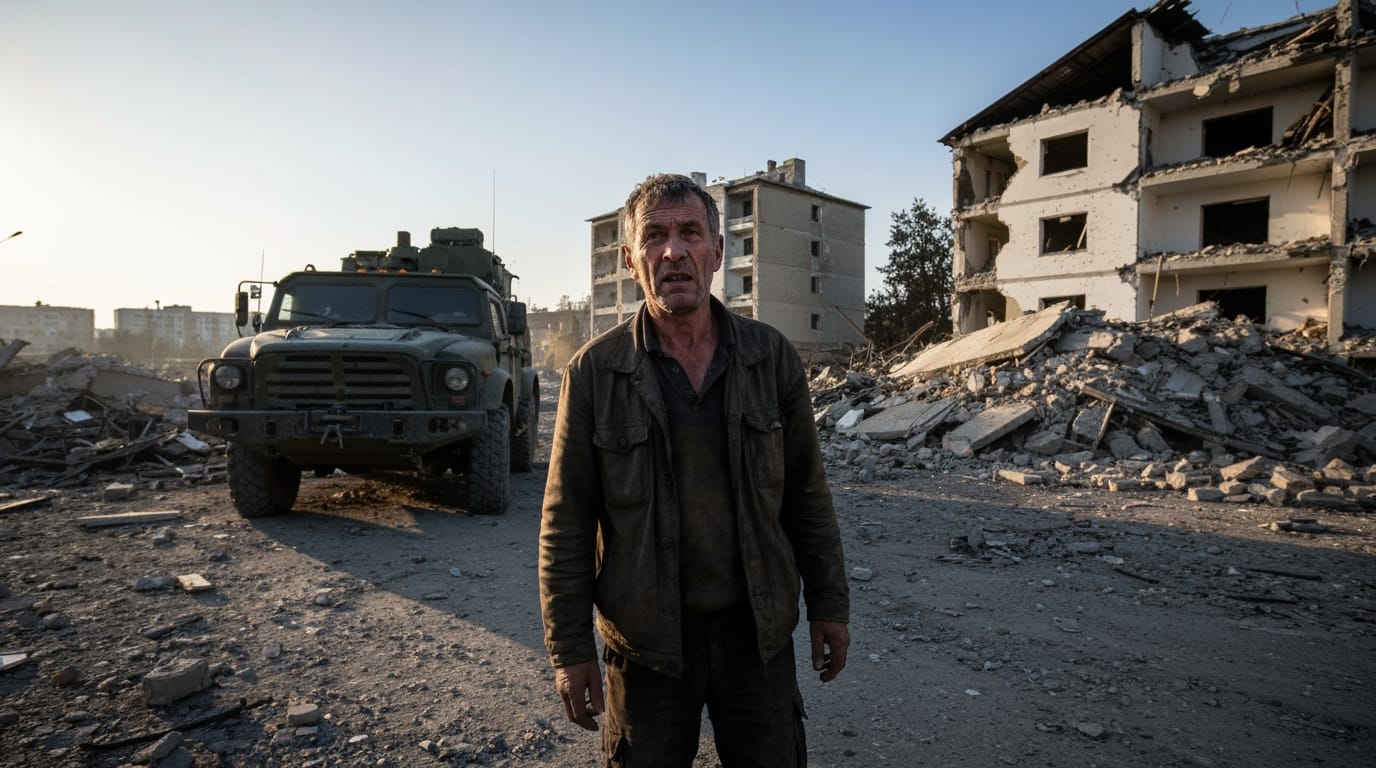
The Crimean Peninsula, a diamond-shaped landmass jutting into the Black Sea, has emerged as a central and increasingly volatile strategic target in the ongoing war in Ukraine. Far from a mere geographical prize, Crimea represents a complex tapestry of historical grievances, indispensable military assets, and profound geopolitical aspirations for both Kyiv and Moscow. Its control dictates the balance of power in the Black Sea region and significantly influences the trajectory of the wider conflict.
A Legacy of Contested Control and Annexation
The strategic significance of Crimea is rooted in centuries of contested control. Historically coveted by various empires, the peninsula became part of the Russian Empire in the 18th century. In 1954, Soviet leader Nikita Khrushchev transferred Crimea from Russia to Ukraine, both then part of the USSR, a move that gained immense significance following the Soviet Union's collapse in 1991 when Crimea became part of newly independent Ukraine. Despite this, Russia maintained its Black Sea Fleet base in Sevastopol under a lease agreement, keeping a strong foothold in the region.
The modern chapter of Crimea's contentious status began in February and March 2014. Amid a popular uprising in Ukraine that ousted its pro-Moscow president, Viktor Yanukovych, Russian President Vladimir Putin swiftly moved to annex the peninsula. Unmarked armed troops, dubbed "little green men," occupied key installations, including airports and military bases, before a hastily organized referendum, which Ukraine and the international community largely dismissed as illegal, claimed overwhelming support for joining Russia. Russia formally annexed Crimea on March 18, 2014, a move recognized only by a handful of states and condemned globally, leading to a downward spiral in Russia's relations with Western nations and the imposition of sanctions. For Russia, the annexation was framed as a "sacred" return, boosting Putin's domestic approval, while for Ukraine, it constituted a profound violation of its sovereignty and territorial integrity.
Crimea's Unrivaled Military Value
The primary driver behind Crimea's strategic importance is its unparalleled military utility, particularly for Russia. The peninsula serves as the permanent home of Russia's Black Sea Fleet in Sevastopol, providing warm-water port access and enabling significant naval power projection into the Black Sea, the Mediterranean, and beyond. Control over Crimea allows Russia to dominate the Black Sea coastline and the Sea of Azov, a critical waterway for Ukrainian exports and internal trade.
Since 2014, Russia has undertaken an extensive militarization of the peninsula, transforming it into a formidable military hub. This includes deploying advanced air defense systems like S-300s and S-400s, long-range cruise missiles, and ballistic missile systems, which can strike targets across most of the Black Sea and into southern Ukraine and NATO member states like Romania and Turkey. The number of Russian soldiers and military hardware stationed in Crimea has significantly increased, with the railway connection established in 2019 further facilitating rapid troop and equipment transfers from mainland Russia.
Furthermore, Crimea proved to be a pivotal launchpad for Russia's full-scale invasion of Ukraine in February 2022. Russian forces deployed from Crimea were instrumental in quickly seizing large parts of southern Ukraine, with securing a land corridor from Russia to Crimea by holding occupied regions like Zaporizhzhia and Kherson becoming a key goal of Moscow's "special military operation". The peninsula's airbases serve as critical centers for Russian air forces attacking targets across Ukraine and the Black Sea.
Economic Stakes and Geopolitical Leverage
Beyond its overt military functions, Crimea holds significant economic and geopolitical value for both nations. For Ukraine, the loss of Crimea in 2014 meant losing substantial offshore oil and gas resources in the Black Sea, as well as crucial port infrastructure vital for its economy and international trade. The peninsula's rich agricultural land and tourism potential also represented considerable economic assets for Ukraine.
For Russia, Crimea's economic integration into its federal structure, while costly due to massive subsidies (ranging from $1 billion to $2.7 billion annually) and infrastructure projects like the Kerch Bridge, reinforces its geopolitical stance in the region. The bridge, built at a cost of $4 billion, connects Crimea directly to Russia, bypassing Ukraine and solidifying Moscow's logistical control. Crimea also offers Russia a gateway for regional power projection, influencing trade routes and exerting leverage over neighboring states.
Ukraine's Unwavering Resolve and Counteroffensive Strategy
For Ukraine, the return of Crimea is not merely a territorial claim but a matter of national sovereignty, security, and identity. Kyiv has consistently stressed the need to regain Crimea and other illegally annexed territories, launching diplomatic initiatives like the "Crimea Platform" to maintain international focus on its status. Public opinion polls in Ukraine show widespread support for restoring the country's pre-2014 borders, including Crimea.
In the current conflict, Ukraine has intensified its efforts to weaken Russia's grip on the peninsula. Recognizing the impossibility of a direct amphibious assault, Kyiv has adopted a strategy of isolating Crimea and making it militarily untenable for Russia. This involves a sustained campaign of targeted strikes on Russian military infrastructure, naval assets, airfields, and supply lines within Crimea. Ukraine's use of drones and long-range missile systems has significantly disrupted Russian logistics, targeted the Kerch Bridge, and impacted fuel and other essential supplies to the peninsula. These actions aim to degrade Russia's military capabilities, force the reallocation of scarce resources, and ultimately create conditions for a potential future withdrawal without a costly direct ground assault.
International Implications and the Path Forward
The international community, largely led by the United States and the European Union, continues to regard Crimea as illegally occupied Ukrainian territory. Resolutions by the United Nations General Assembly have affirmed Ukraine's territorial integrity, and sanctions against Russia remain in place due to the annexation. The status of Crimea remains a major bargaining chip in any potential future negotiations, with Kyiv's constant reiteration of its claims aiming to cement international recognition.
The ongoing targeting of Crimea highlights its enduring importance. For Russia, losing Crimea would be a profound strategic and symbolic defeat, undermining its Black Sea dominance and challenging President Putin's political narrative. For Ukraine, regaining Crimea is an existential imperative, crucial for its long-term security, economic viability, and territorial integrity. The struggle for Crimea, therefore, is not merely a regional skirmish but a critical theater in a broader geopolitical contest, shaping the future of European security and international law.


