Crisis Engulfs France: Macron Convenes Emergency Talks as Wildfires Ravage Nation, Forcing Mass Evacuations
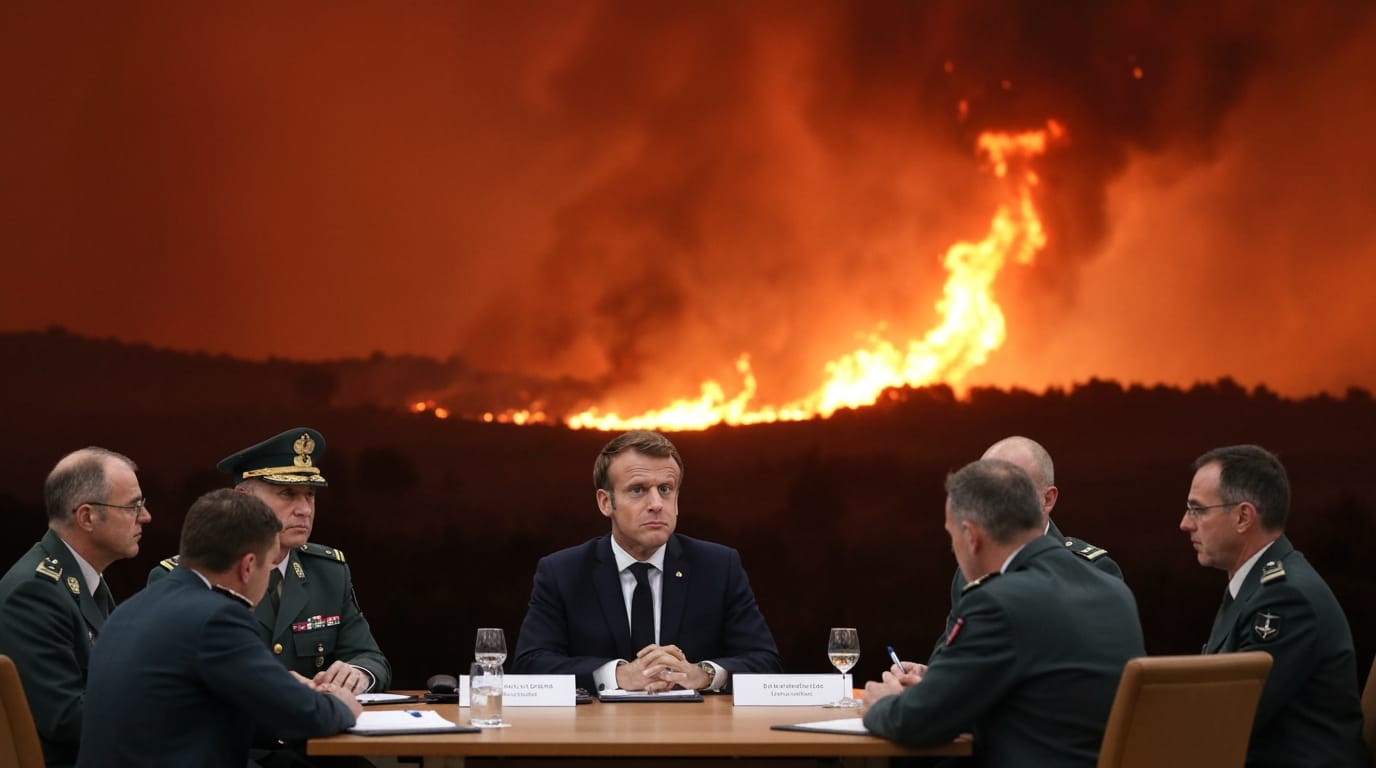
PARIS – French President Emmanuel Macron convened an urgent crisis meeting Monday as wildfires of unprecedented scale continued to tear through vast swathes of France, displacing over a quarter of a million people and devastating critical landscapes. The emergency talks underscore the grave challenge facing the nation, as relentless blazes, fueled by extreme heat and prolonged drought, mark 2026 as France's worst wildfire year on record.
The infernos have prompted a massive mobilization of national and international resources, with communities across the country, particularly in the southwest, grappling with the immediate threat to lives and property, alongside the escalating economic and ecological fallout. With a fourth heatwave forecast to sweep across France, the nation braces for a prolonged and arduous battle against a crisis increasingly shaped by a changing climate.
The Blazing Frontlines of Gironde
The southwestern Gironde department, home to the iconic city of Bordeaux, remains at the epicenter of France's wildfire catastrophe. A monstrous blaze originating in Saumos has consumed an estimated 42,000 hectares, an area roughly four times the size of Paris, since it ignited on July 22, 2026. This single fire alone has forced the evacuation of 220,000 people, joining thousands more displaced by concurrent blazes across the country.
Firefighters, numbering around 2,500, supported by 18 aircraft and military personnel, are battling tirelessly to contain the flames, which at one point advanced to within 15 to 20 kilometers of Bordeaux's metropolitan area. While city officials have indicated no immediate evacuation of Bordeaux is planned, the proximity of the inferno has raised alarm. The situation in Gironde was described as "globally stable" overnight before the presidential meeting, offering a slight glimmer of hope amidst days of relentless spread. However, firefighters battling the blaze have been met with exceptional challenges, including the phenomenon of "pyrocumulonimbus" – giant fire clouds that generate their own unpredictable winds and lightning, further complicating suppression efforts. Another significant fire in the adjacent Landes department near Biscarrosse also led to the evacuation of 30,000 people and ravaged thousands of hectares.
National Response and International Aid
In response to the escalating crisis, President Macron chaired a high-level government meeting this Monday morning at the Interior Ministry to coordinate the national strategy. This follows earlier crisis meetings convened by Prime Minister Sebastien Lecornu, which resulted in the deployment of additional troops and military water-dumping aircraft.
France has also activated the European Union's Civil Protection Mechanism, seeking and receiving crucial international assistance. Reinforcements, including two Canadair aircraft from Croatia, two Air Tractor planes from Portugal, and two heavy Black Hawk helicopters from the Czech Republic and Slovakia, have bolstered the firefighting fleet. On the ground, authorities in the Gironde region have taken decisive steps to mitigate risks and protect vulnerable populations, including banning holiday camps for children and individuals with disabilities and advising tourists to avoid affected areas. Macron has publicly pledged "long-term support" for fire-stricken communities, vowing that the government will assist in rebuilding and repairing for "as long as necessary."
A Season of Unprecedented Fires: Causes and Climate Context
The 2026 wildfire season has proven to be exceptionally severe, surpassing previous records and highlighting a disturbing trend of increased intensity and geographical reach. Over 115,000 hectares have burned across France this year, a stark figure that Interior Minister Laurent Nunez described as a "historic record."
Scientists and meteorological experts widely attribute the unprecedented scale and ferocity of these blazes to a confluence of factors exacerbated by climate change. France has endured successive heatwaves, with record temperatures and prolonged dry spells since May, turning forests and scrubland into tinderbox conditions. An unusually wet winter, while seemingly contradictory, contributed to an abundance of "fine fuels" – grass, pine needles, and undergrowth – which then dried out rapidly under the intense summer heat, providing ample material for fires to ignite and spread.
Moreover, new analysis indicates that the risk of wildfires is no longer confined to France's traditional Mediterranean regions but is expanding into central, western, and northern parts of the country. This geographical shift underscores how climate change is fundamentally reshaping the landscape of wildfire vulnerability across Europe, making extreme fire weather conditions more frequent. While approximately 90% of wildfires are typically ignited by human activity, the current weather conditions have made ignition far easier and spread more rapid and unpredictable.
The Human and Economic Toll
The human cost of the wildfires is profound. Beyond the quarter-million people forced to flee their homes, reports indicate 10 deaths and 84 firefighters injured in the 2026 blazes. Hundreds of homes have been destroyed, and vital infrastructure and natural habitats have suffered extensive damage. Smoke from the fires has led to a "marked deterioration" in air quality, prompting health authorities to issue warnings, particularly for vulnerable populations such as children, the elderly, and those with respiratory conditions.
The economic repercussions are also considerable. Economy Minister Roland Lescure stated that the wildfires have hit the country's economy like "a thunder," particularly affecting the agriculture and tourism sectors during the peak summer holiday season. In Gironde alone, over 13,000 businesses have been impacted. The government has introduced measures to support affected businesses, including eligibility for partial unemployment schemes, and insurers are covering temporary accommodation costs for evacuated residents, even if their homes are not directly damaged. The recurring nature of these disasters raises urgent questions about the long-term resilience and adaptation of the French economy.
A Long Battle Ahead
As France navigates this severe crisis, the outlook remains challenging. Weather forecasters anticipate a fourth heatwave from Tuesday, with temperatures expected to soar as high as 42 degrees Celsius in some areas, potentially reigniting and intensifying existing blazes. Firefighting officials warn that it could take "several weeks or months" to fully extinguish the most persistent fires, particularly the massive Gironde blaze.
The 2026 wildfire season serves as a stark reminder of the escalating consequences of climate change, not only for France but for Europe as a whole. The continuous cycle of heatwaves and droughts demands a fundamental rethinking of land management, prevention strategies, and climate adaptation measures to protect communities, economies, and invaluable natural environments from future catastrophic events. The ongoing battle is not just against the flames, but for a more resilient future.


