Cross-Border Clashes Erupt as Pakistan-Afghanistan Peace Talks Collapse
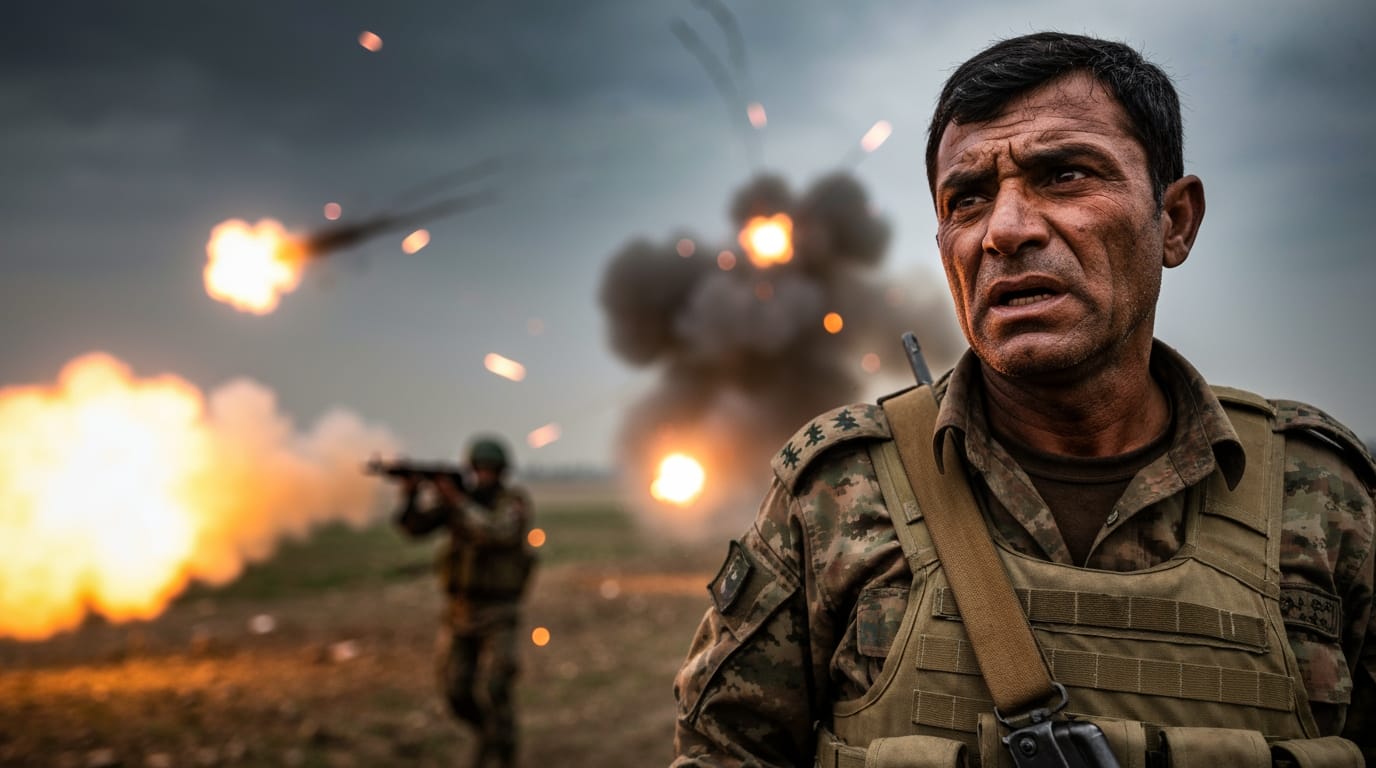
ISLAMABAD/KABUL – A fragile ceasefire between Pakistan and Afghanistan shattered late Friday as forces from both nations exchanged heavy fire along their disputed border, mere days after critical peace talks aimed at de-escalating tensions concluded without a breakthrough. The renewed hostilities underscore the intractable nature of their relationship, deeply strained by accusations of militant sanctuary and a long-standing border dispute.
The exchange of gunfire, which reportedly caused no immediate casualties, saw both Islamabad and the Taliban government in Kabul trade blame for initiating the violence. Afghan Taliban spokesman Zabihullah Mujahid accused Pakistan of launching strikes in the Spin Boldak area of Kandahar province, while Pakistan's government, through Prime Minister's spokesman Mosharraf Zaidi, countered that Afghan forces were responsible for "unprovoked firing" along the Chaman frontier. This latest flare-up follows a series of deadly confrontations in October and November that had already brought bilateral relations to a critical low.
Renewed Volatility on the Border
The recent cross-border firing marked a stark end to what had been a period of tenuous calm, maintained by a fragile ceasefire brokered by Qatar in October. The immediate trigger for Friday's violence came just two days after the latest round of high-level negotiations, held in Riyadh, Saudi Arabia, failed to yield any substantive progress. While both sides had reportedly agreed to uphold the existing ceasefire, the inability to address core grievances quickly led to a resumption of hostilities.
October had witnessed a significant escalation in violence, with a deadly ambush by the Tehrik-i-Taliban Pakistan (TTP) resulting in the deaths of 20 Pakistani soldiers. Pakistan responded with targeted airstrikes deep inside Afghanistan, striking suspected TTP leaders and bases. These retaliatory actions and subsequent heavy clashes between border forces and Afghan Taliban fighters throughout October and November constituted the most severe border violence since the Taliban's return to power in Afghanistan in 2021, leaving dozens dead.
Diplomacy's Deadlock: A Cycle of Failed Talks
The recent Riyadh meeting was the latest in a series of diplomatic efforts, including previous rounds mediated by Qatar and Turkey, all of which have ultimately collapsed. The core of the diplomatic deadlock remains Pakistan's insistence that the Afghan Taliban take verifiable action against TTP militants operating from Afghan soil. Pakistani officials have consistently accused the Afghan Taliban of actively sheltering, financing, and logistically supporting TTP leadership and fighters, presenting what they describe as mounting evidence of their impunity within Afghanistan. Furthermore, Pakistan has alleged that Afghan border forces have provided covering fire to facilitate TTP infiltrations and engaged in "unprovoked firing" on Pakistani border posts to divert attention from militant crossings.
Conversely, the Afghan Taliban government vehemently denies these accusations, asserting that it neither supports nor condones terrorist activities directed against Pakistan. During the failed talks, Kabul maintained that it could not be held responsible for Pakistan's internal security challenges and accused Islamabad of attempting to shift all responsibility for its own security onto the Afghan government. This fundamental disagreement over the presence and actions of militant groups has proven to be an insurmountable hurdle in all recent diplomatic engagements, leading to an environment of deep mistrust and mutual recrimination.
The Shadow of the Tehrik-i-Taliban Pakistan (TTP)
The Tehrik-i-Taliban Pakistan (TTP), a militant group separate from but ideologically aligned with the Afghan Taliban, lies at the heart of the current crisis. Pakistan contends that the TTP continues to orchestrate deadly attacks within its borders from sanctuaries in Afghanistan. This perspective is supported by official statements from Pakistani military and intelligence agencies, which cite a significant increase in fatalities among Pakistani security personnel, with 685 reported in 2024 and numbers nearly reaching that total by the end of the third quarter of 2025. The majority of these attacks are concentrated in Khyber Pakhtunkhwa and Balochistan, indicating a cross-border dimension.
Islamabad's frustration stems from the perceived inaction of the Afghan Taliban despite repeated calls for them to rein in the TTP. Pakistani officials now openly state that past goodwill gestures, including generous trade access and refugee hosting, were exploited by the Afghan Taliban while the TTP's infrastructure in Afghanistan remained untouched. Pakistan has adopted a stringent policy, linking trade reopening, transit facilitation, and border normalization to Kabul taking verifiable steps against TTP sanctuaries and cross-border attacks. The Afghan Taliban, however, dismisses Pakistan's claims as "shifting and inconsistent," maintaining that their focus is on their own internal governance and stability.
A Century-Old Fault Line: The Durand Line
Adding another layer of complexity to the volatile relationship is the unresolved dispute over the 2,640-kilometer (1,640-mile) Durand Line, the international border established in 1893 between British India and the Emirate of Afghanistan. This colonial-era demarcation arbitrarily divided Pashtun tribal lands, cutting through communities and families that had long existed without such artificial divisions.
Crucially, no Afghan government, including the current Taliban regime, has ever formally recognized the Durand Line as a permanent international border, viewing it as an imposition from a colonial power. Afghanistan famously voted against Pakistan's admission to the United Nations in 1947, citing the border dispute. This historical grievance fuels Afghan complaints of incursions and heavy-handed Pakistani policies in Pashtun borderlands, while Pakistan fears that a non-recognizing Kabul will perpetually allow sanctuaries for anti-Pakistan militants. The construction of border fencing by Pakistan in recent years has only exacerbated this long-standing point of contention.
Broader Implications and Regional Instability
The escalating tensions between Pakistan and Afghanistan carry significant implications for regional stability. The lack of credible security cooperation and the persistent cross-border violence risk pushing both states into a prolonged cycle of confrontation. This instability has broader consequences, affecting trade, movement across major border posts, and exacerbating humanitarian concerns. Pakistan's recent decision to deport undocumented Afghan refugees, estimated at 1.7 million individuals, further strains relations and highlights the human cost of the deteriorating diplomatic environment.
The ongoing crisis demonstrates a deep schism and distrust that now necessitates external mediation, as evidenced by the involvement of Saudi Arabia, Qatar, and Turkey in previous peace efforts. Without a fundamental shift in approach and a willingness from both sides to genuinely address each other's security concerns, the cycle of accusation, cross-border violence, and failed diplomacy is likely to persist, further destabilizing an already volatile region.
Conclusion
The recent exchange of fire and the collapse of peace talks between Pakistan and Afghanistan underscore a deeply entrenched and complex crisis. At its core, the conflict is fueled by Pakistan's security concerns over militant groups operating from Afghan soil and Afghanistan's historical non-recognition of the Durand Line, coupled with its refusal to be held responsible for Pakistan's internal security. While external mediation has attempted to bridge the divide, a lack of substantive compromise from both sides has consistently led to diplomatic stalemates and renewed border hostilities. Until a pathway for genuine security cooperation and mutual recognition of sovereign concerns is forged, the region risks prolonged instability, with significant human and geopolitical consequences.


