Cross-Border Firing Resumes in Kashmir Amidst Rising Tensions
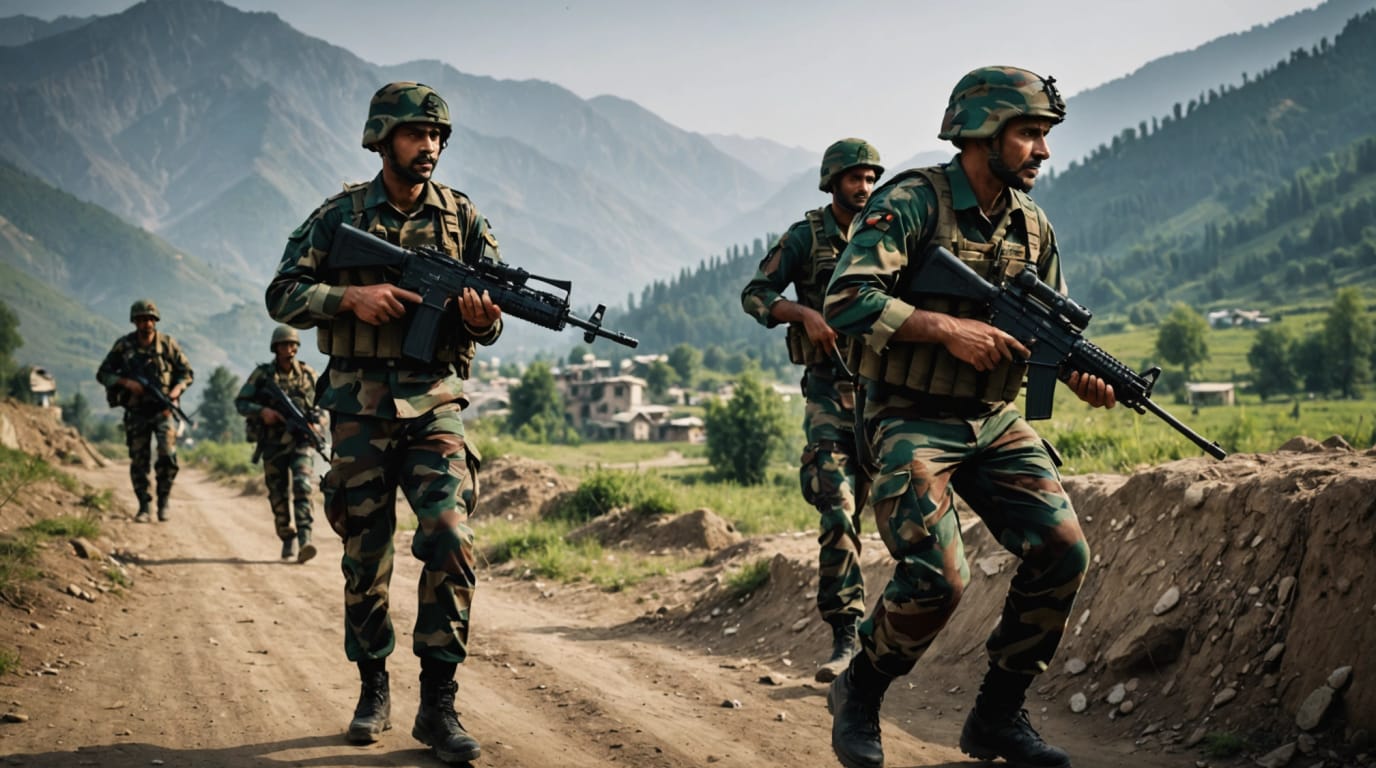
Tensions between India and Pakistan have escalated once again as reports emerge of renewed firing across the Line of Control (LoC) in Jammu and Kashmir. The exchange of fire follows closely on the heels of a deadly terrorist attack in Pahalgam that claimed the lives of 26 people, further straining relations between the two nuclear-armed neighbors.
The Indian Army has confirmed that it retaliated to what it described as "speculative firing" initiated by Pakistani troops on multiple Indian posts along the LoC. Sources indicate that the Indian security forces responded "effectively," and there have been no reports of casualties on the Indian side.
Escalation Following Pahalgam Attack
The recent exchange of fire is occurring against a backdrop of heightened tensions following the Pahalgam terror attack. The attack, which targeted civilians, has been widely condemned internationally and has led to a series of strong measures by India against Pakistan.
In the wake of the Pahalgam attack, New Delhi has taken several steps, including advising its nationals to avoid traveling to Pakistan and urging those currently in Pakistan to return. India has also formally notified Pakistan of its decision to suspend the Indus Waters Treaty, citing Pakistan's alleged support for cross-border terrorism.
India Suspends Indus Waters Treaty
India has formally notified Pakistan that it is suspending the Indus Waters Treaty, a more than six-decade-old agreement on water sharing. The decision comes into effect immediately. A letter from the Union Ministry of Water Resources to Syed Ali Murtuza, Secretary in the Ministry of Water Resources of Pakistan, stated that the obligation to honor a treaty in good faith is fundamental, but that India has instead witnessed sustained cross-border terrorism by Pakistan targeting Jammu and Kashmir.
Security Measures and Responses
Following the Pahalgam attack, security measures have been heightened across Jammu and Kashmir. Army Chief General Upendra Dwivedi has arrived in the Kashmir Valley to review the security situation and meet with senior Army commanders and officials from other security agencies.
Meanwhile, an encounter broke out between terrorists and security forces in the Bandipora district of Jammu and Kashmir. Security forces launched a cordon and search operation in the Kulnar Bazipora area following information about the presence of militants.
International Reactions and Concerns
The international community is closely watching the escalating tensions between India and Pakistan. The United Nations has called for both sides to resolve their issues peacefully through meaningful engagement.
The High Commission of India in London organized a tribute at India House to honor the victims of the Pahalgam terrorist attack. High Commissioner Vikram Doraiswami condemned the attack, stating that it was intended to create terror and undermine the ongoing normalization in Jammu and Kashmir.
Conclusion: A Precarious Situation
The renewed firing across the Line of Control, coupled with the aftermath of the Pahalgam terror attack, has created a precarious situation in the region. The suspension of the Indus Waters Treaty and other measures taken by India signal a significant deterioration in bilateral relations. While both sides have expressed a commitment to maintaining peace, the current climate of distrust and heightened security measures suggests that the situation remains volatile and requires careful management to prevent further escalation.


