Cuba Unveils Sweeping Economic Reforms Amid Escalating U.S. Pressure
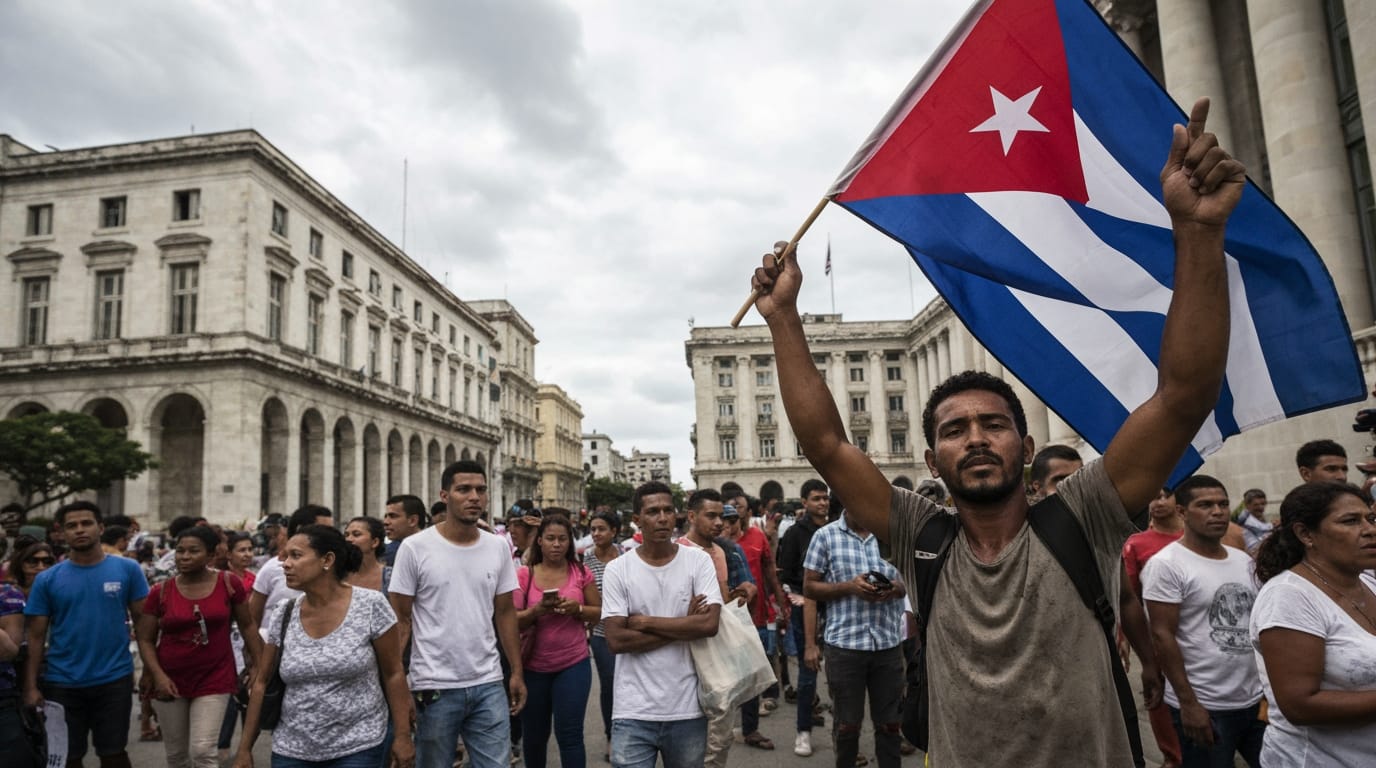
HAVANA – Facing its most severe economic crisis in decades and intensified pressure from the United States, Cuba's government has announced a comprehensive package of economic reforms designed to liberalize key sectors, boost productivity, and attract much-needed investment. The measures, unveiled unexpectedly by President Miguel Díaz-Canel, signal a pragmatic shift in the centrally planned economy, drawing inspiration from market models in countries like China and Vietnam. This strategic pivot comes as the island grapples with chronic shortages, high inflation, and a crippling energy crisis exacerbated by persistent U.S. sanctions.
Reforming a Strained Economy
President Díaz-Canel, speaking on Friday, June 12, outlined the "Economic and Social Program for 2026," a bold initiative targeting tourism, foreign trade, investment, and the private sector. The reforms aim to streamline and energize the economy, with a stated goal of balancing planning objectives with market incentives. A significant facet of the new plan involves granting greater autonomy to state enterprises, allowing them to operate more independently without bureaucratic interference, determine their own salary structures, and manage profits. These entities will also gain the power to engage directly in import and export activities and retain a portion of foreign currency earnings.
In a move towards decentralization, municipal governments will now possess greater authority to manage foreign currency revenues and approve investment projects, fostering local economic development. The reforms also address the long-standing issue of state monopolies in foreign trade by progressively eliminating the mandatory intermediary role of state import companies, which is expected to facilitate greater openness and responsiveness. Similarly, restrictions on vehicle imports are set to be lifted.
The private sector, a growing yet often constrained segment of Cuba's economy, is poised for significant expansion under the new measures. The government plans to limit the list of prohibited activities, thereby broadening the scope for private businesses. Since 2021, private businesses, permitted to employ up to 100 people, have become an increasingly vital component of the Cuban economy, contributing to job creation and representing a notable share of the country's GDP. These enterprises were recently granted permission to import fuel, a sector previously exclusively controlled by the state.
Opening Doors to Investment
A critical element of Cuba's reform package is the renewed emphasis on attracting foreign investment. The government intends to simplify approval procedures, reduce evaluation periods, and establish a more predictable legal framework to instill confidence among investors. Notably, the reforms will allow Cubans residing on the island and abroad to invest and participate in the country's economy on equal footing with foreign investors. This measure is particularly significant given the large Cuban diaspora, potentially unlocking a new source of capital.
The tourism sector, a traditional economic pillar that has been severely impacted by the COVID-19 pandemic and subsequent U.S. sanctions, is slated for a major overhaul. The reforms will reopen the sector to new players and modalities, including the use of state-owned hotel stock, to reverse the trend of declining visitors and the withdrawal of international hotel chains. The agricultural sector will also receive direct access to inputs and participate in the foreign exchange market, alongside a reduction in bureaucratic hurdles, to boost food production.
Further streamlining government operations, the plan includes a reform of the state apparatus aimed at reducing the number of ministries from 27 to 20 and trimming the state workforce. Universal subsidies will be gradually phased out, with social assistance redirected to focus specifically on the most vulnerable groups.
The Weight of U.S. Sanctions
These ambitious reforms unfold against a backdrop of heightened U.S. economic pressure, which Cuban officials frequently cite as a primary driver for the island's economic woes. The United States' economic embargo against Cuba, initiated in 1960 and considered the most enduring trade embargo in modern history, has profoundly affected every sector of the Cuban economy. The sanctions not only block Cuba's access to U.S. markets but also interfere with its trade with third countries, international financial transactions, and access to foreign investment, making it expensive and risky for other nations to do business with the island.
The Trump administration notably re-enforced restrictions in 2017 and further tightened them in 2019, limiting U.S. remittances to Cuba and restricting access to the U.S. financial system. A recent fuel blockade imposed by Washington in January has aggravated the energy crisis, contributing to widespread supply shortages and power outages across the island. Cuban leaders describe Washington's policy as "maximum pressure" and a "multidimensional aggression" in a "hostile environment." The U.S. has consistently linked the easing of sanctions to demands for Cuba to open its state-run economy and implement political changes.
Internal Economic Imperatives and Challenges
Beyond external pressures, Cuba's economy has long grappled with deep-seated internal issues. The island faces one of its most severe economic crises, characterized by a significant contraction in Gross Domestic Product, elevated inflation, and mounting external debt. The inefficient central planning model, coupled with a decline in Venezuelan aid and the global economic fallout from the COVID-19 pandemic, led to an 11% drop in GDP in 2020. Chronic shortages of basic goods, energy limitations, and a dramatic decrease in tourism revenue have further compounded the crisis. President Díaz-Canel himself acknowledged that "these are times when change is necessary," recognizing that the country could not continue its previous economic trajectory. The reforms are designed to resolve "old contradictions" between central planning and market incentives.
Despite the urgency, the path forward is fraught with challenges. While the private sector has shown resilience and efficiency, its growth remains vulnerable to political decisions and limited access to formal financing. The state's historical reluctance to allow unchecked private expansion could also present hurdles. Though the Cuban government insists these reforms are not a reaction to external pressure but rather designed to strengthen its economic model, the persistent U.S. embargo continues to cast a long shadow, disrupting Cuba's international economic relations and impeding infrastructure investment.
A Precarious Balance
Cuba's latest economic reforms represent a critical juncture for the island nation. Under severe internal and external strain, the government is attempting to navigate a delicate balance: fostering economic dynamism and attracting investment through market-oriented measures while maintaining its socialist political system. The success of these reforms hinges on their effective implementation, the ability to overcome ingrained bureaucratic obstacles, and the unpredictable trajectory of U.S.-Cuban relations. While some measures, such as the expansion of the private sector and increased foreign investment, offer rays of hope for revitalizing the struggling economy, the enduring impact of the U.S. embargo and internal structural challenges mean Cuba's economic future remains a complex and uncertain endeavor.


