Custard Chaos at the Tower: Four Arrested After Crown Jewels Incident
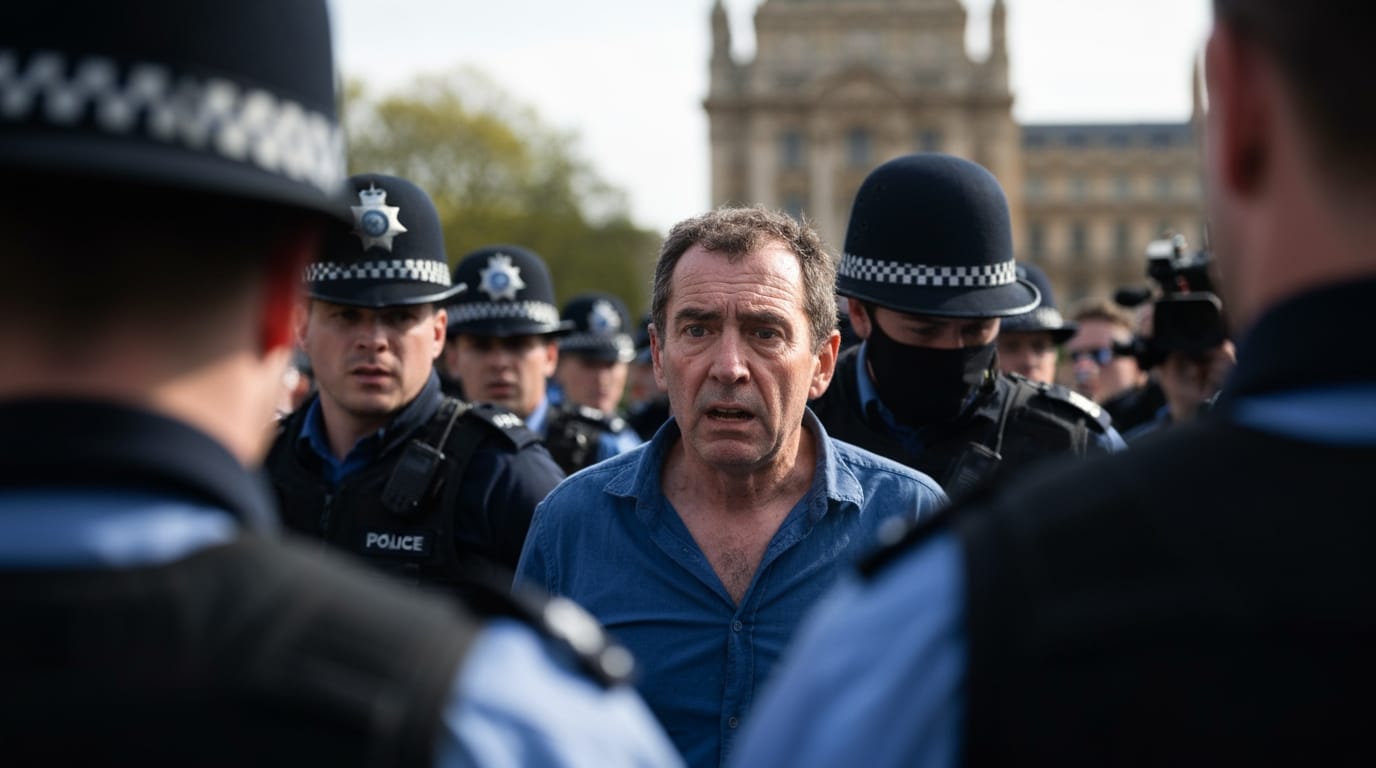
London, UK – Four individuals were arrested Saturday after a protest at the Tower of London saw apple crumble and custard thrown at the display case housing Britain's priceless Crown Jewels. The incident, carried out by a new civil disobedience group named "Take Back Power," temporarily closed the iconic Jewel House and highlighted escalating tactics employed by activists seeking to draw attention to political demands.
The startling act of vandalism occurred shortly before 10 a.m. local time, as tourists visited the historic site. Two protesters allegedly splattered the Imperial State Crown's protective casing with the dessert, while two others were also taken into custody, all facing suspicion of criminal damage. The group claimed responsibility, stating their actions were a call for a permanent citizens' assembly to address economic inequality and "fix Britain."
The Incident Unfolds: A "Crumbling" Democracy Message
Eyewitnesses at the Tower of London described a scene of immediate shock and confusion as the protesters initiated their demonstration. Video footage released by "Take Back Power" showed one individual forcibly pressing a tray of apple crumble against the bombproof glass protecting the Imperial State Crown, while another poured bright yellow custard over the front of the display. Following the food-throwing, the demonstrators unveiled T-shirts bearing the slogan "Take Back Power" and unfurled a banner proclaiming, "Democracy has crumbled. Tax the rich." Shouts of "Britain is broken" were also heard. An employee quickly intervened, radioing for assistance as stunned visitors looked on.
The Metropolitan Police were called at 9:48 a.m. and swiftly responded. Four individuals were arrested and taken into custody on suspicion of criminal damage. Among those identified by the group were Miriam Cranch, 21, a retail worker, and Zahra Ali, 19, a student from London. Historic Royal Palaces, which manages the Tower of London, confirmed that while the display case was soiled, the Crown Jewels themselves remained unharmed due to their robust protection.
The Imperial State Crown: A Symbol Targeted
The target of the protest, the Imperial State Crown, is a central piece of the British monarchy's regalia. It is regularly worn by the monarch, including by King Charles III during his coronation in 2023 and for the State Opening of Parliament in 2024. Crafted in 1937 for King George VI, the crown is an opulent symbol of royal authority, featuring 2,868 diamonds, 17 sapphires, 11 emeralds, four rubies, and 269 pearls. Its immense value and historical significance make it a powerful symbol, drawing millions of visitors annually to the Tower of London where it is kept under armed guard in the Jewel House.
Security around the Crown Jewels is notoriously stringent, involving bombproof glass, over 100 hidden cameras, a dedicated Tower Guard from the British Army, and Yeomen Warders. This multi-layered defense was successful in preventing any direct damage to the artifacts themselves during Saturday's incident. The Jewel House was closed for investigation following the event, causing temporary disruption to public access to one of the UK's most popular tourist attractions.
"Take Back Power" and the Broader Context of Art Protests
"Take Back Power" presented the protest as a necessary step to highlight their demands for a "permanent citizens' assembly" to tackle issues like extreme wealth and national systemic failures. In a statement, Zahra Ali, one of the arrested protesters, linked the action to social inequalities, remarking, "Our country is crumbling before our eyes... We have homeless people dying on the very streets that King Charles passed on his way to the coronation, whilst there are more empty homes than unhoused people in this country."
This incident is not an isolated event but rather aligns with a recent surge in high-profile acts of civil disobedience targeting cultural treasures and artworks. In the past year, various activist groups have drawn global attention by defacing famous pieces, such as the tossing of tomato soup onto Van Gogh's "Sunflowers" at London's National Gallery by petroleum protesters. Just days before the Tower of London incident, "Take Back Power" also gained notoriety for dumping bags of manure near the Christmas tree at London's Ritz Hotel, signaling a pattern of escalating direct action aimed at disrupting symbols of wealth and power. These tactics often involve non-violent damage to protective casings or surrounding areas, designed to maximize media attention for their political messages without harming the irreplaceable artifacts themselves.
Implications for Security and Public Discourse
The incident at the Tower of London raises questions regarding the balance between public access to national treasures and the imperative of robust security, particularly in an era of heightened activist actions. While the Crown Jewels remained undamaged, the temporary closure of the Jewel House and the swift police response underscore the serious nature of such disruptions. The event also reignites public debate about the effectiveness and ethical implications of these protest methods, as activists aim to leverage media attention to force political change.
The demonstration by "Take Back Power" underscores a growing frustration among certain segments of the population concerning wealth disparities and governmental responsiveness. By targeting a prominent symbol of British heritage and power, the group sought to amplify its message about a "broken" Britain and the need for fundamental societal reform, particularly concerning taxation of the wealthy. The arrests and subsequent legal proceedings will likely contribute to a broader discussion on the boundaries of protest and civil disobedience in a democratic society.


