Czech Prime Minister Reaffirms NATO Alliance While Resisting Demands for Faster Defense Spending Increases
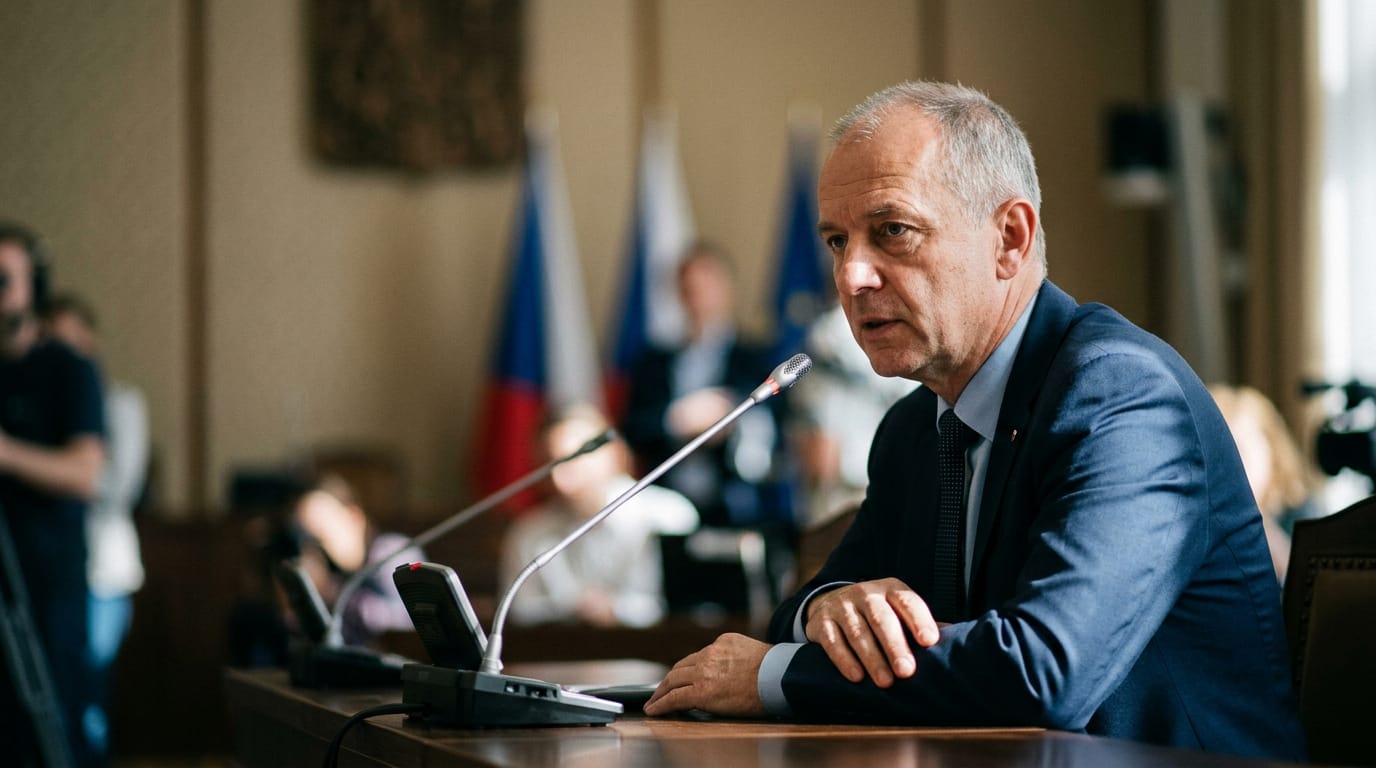
PRAGUE — Czech Prime Minister Andrej Babis has reaffirmed the vital importance of the North Atlantic Treaty Organization for his country's national security, even as his administration firmly resists escalating pressure from Western allies to accelerate military spending beyond current fiscal plans. The stance highlights a widening rift between the populist leader’s domestic economic agenda and the defense benchmarks championed by international partners and the Czech presidency.
The Czech Republic, an alliance member since 1999, finds itself navigating complex diplomatic crosscurrents. While Babis maintains that collective defense under NATO remains an irreplaceable pillar of Czech sovereignty, he insists that domestic fiscal health, public services, and infrastructure must take precedence over rapid increases in the military budget. The position has sparked sharp debate in Prague and drawn scrutiny from allied capitals seeking unified, robust military commitments across Europe.
Fiscal Realities and Competing Domestic Priorities
The central disagreement centers on spending thresholds established by the military alliance. Alliance guidelines historically called for members to allocate a minimum of 2 percent of gross domestic product to defense. In the approved national budget, lawmakers loyal to the governing coalition allocated nearly 155 billion Czech koruna, or approximately $7.4 billion, to the Defense Ministry.
That figure translates to just over 1.7 percent of the nation’s gross domestic product, falling short of core alliance expectations unless specialized funding spread across other ministries is added. Alliance assessments have projected Czech defense spending at around 1.78 percent of GDP, placing the country among a minority of members that have not met the basic threshold.
Babis has defended these budget decisions by pointing to domestic economic constraints. According to the prime minister, the national budget inherited from the previous administration left little room for expansive spending programs. Government officials have maintained that funding public health care, social programs, and essential state infrastructure must not be sacrificed to achieve arbitrary numerical spending goals on an accelerated timetable. The administration has argued that the primary focus should be on practical capability and efficiency rather than rigid accounting targets that can be easily inflated on paper.
Rising Friction With Allied Capitals
The hesitation to rapidly expand military spending has generated frustration among allied partners, most notably the United States. Western diplomats have consistently urged all members along the eastern flank to step up their investments, especially in light of the protracted conflict in Ukraine and broader regional security threats.
Allied representatives have warned that failing to reach the baseline benchmark creates negative momentum, signaling potential reluctance to shoulder an equitable share of the common defense burden. At recent alliance gatherings, discussions have increasingly turned toward long-term defense expansion, with broader proposals pushing for 3.5 percent of GDP on core defense requirements and additional allocations for security-related infrastructure over the next decade.
In response to international calls for higher spending, the Czech government has noted that defense appropriations will rise steadily in upcoming fiscal cycles, aiming to hit the 2 percent mark in future budgets. Nevertheless, Prague has resisted adopting sudden budget jumps or committing billions of koruna to new procurement initiatives without clear long-term funding plans in place.
Deep Political Divisions at Home
The defense debate has also exposed deep political divisions inside the Czech Republic. President Petr Pavel, a retired army general who previously served as chairman of the NATO Military Committee, has been an outspoken critic of spending restraint. Pavel has argued that the regional security landscape offers no justifiable reason to hold back investment in modern weaponry, troop readiness, and military logistics.
The discord between the presidential palace and the prime minister’s office has created visible friction on the international stage. While the head of state represents the nation at diplomatic summits and advocates for strict adherence to alliance guidelines, executive authority over the state budget and defense outlays rests with the cabinet and parliament.
Opposition lawmakers have echoed the president’s warnings, accusing the government of reversing hard-won progress made during earlier administrations. Leaders of the parliamentary opposition maintain that earlier budgets had put the Czech Republic on a stable trajectory to fulfill all multilateral commitments. They contend that trimming or postponing planned defense acquisitions risks undermining relations with major Western partners and leaves national armed forces underfunded at a delicate moment in European history.
Strategic Balancing in an Unsettled Era
The standoff in Prague mirrors broader challenges faced by several European capitals trying to balance welfare commitments against the demands of collective security. For decades, many European members operated under the assumption that large-scale ground conflict on the continent was a relic of the past, allowing public spending to drift away from military readiness and into domestic welfare programs.
The revival of large-scale geopolitical tensions has upended that consensus, forcing governments to make difficult tradeoffs. In the Czech Republic, where public opinion remains divided over foreign military assistance and internal spending priorities, the debate touches directly on everyday concerns, including inflation, public debt, and the quality of state services.
The Babis administration contends that its deliberate approach protects taxpayers while preserving the essential framework of national defense. By framing the issue as one of prudent financial management rather than a rejection of international alliances, the government hopes to maintain voter support at home while avoiding open breaches with partner states abroad.
Conclusion
The debate over Czech military expenditures underscores the delicate balance between international obligations and sovereign economic management. By affirming unwavering political support for the Western alliance while resisting steep defense budget hikes, Prime Minister Andrej Babis is testing the flexibility of collective security pacts in an era of constrained domestic budgets. As discussions continue among European capitals and within the halls of parliament in Prague, the Czech Republic's spending trajectory will serve as a bellwether for how medium-sized European states reconcile the costly demands of defense readiness with the persistent needs of their citizens at home.


