Czech Republic Rocked by Massive Protests Over 'Foreign Agent' Law Proposal
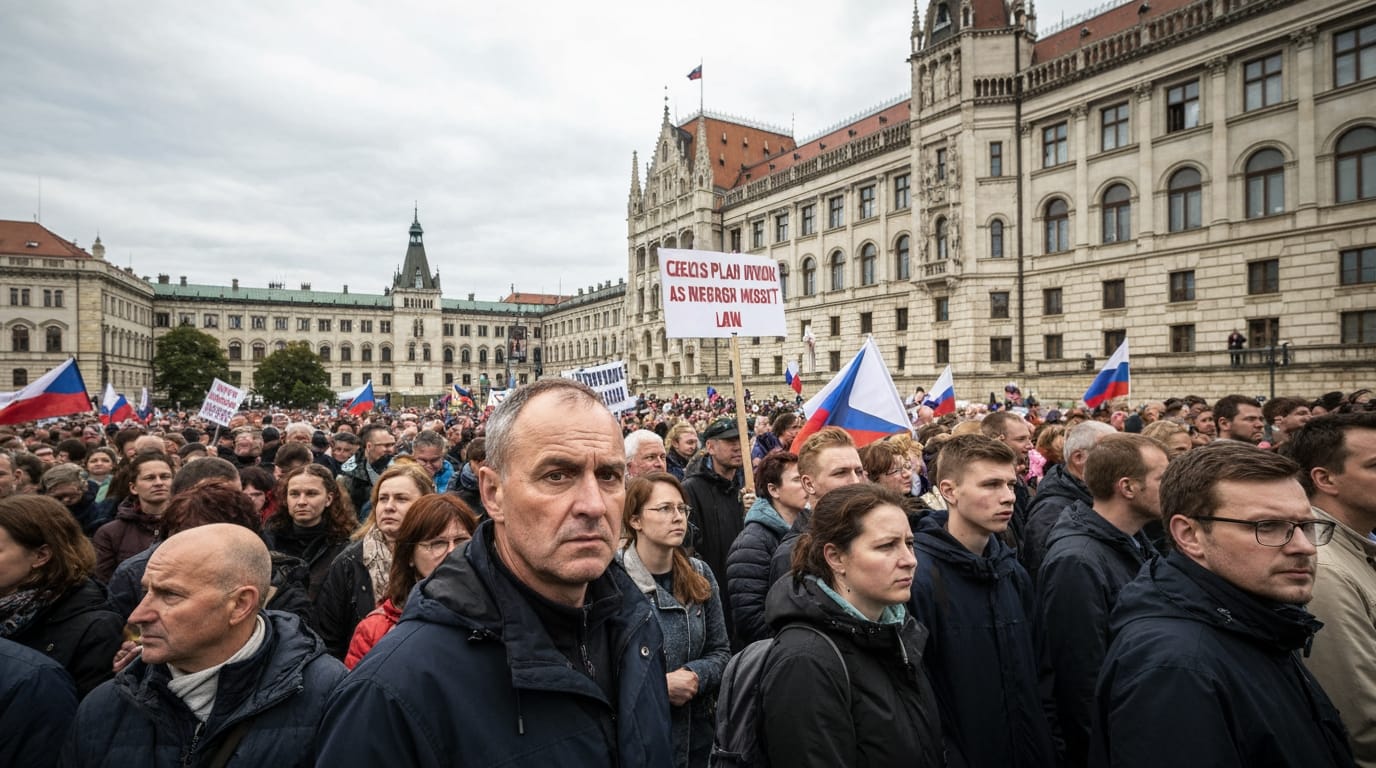
PRAGUE, Czech Republic – Hundreds of thousands of Czech citizens took to the streets of Prague last week in one of the largest anti-government demonstrations since the 1989 Velvet Revolution, protesting a proposed "foreign agent" law and expressing deep concerns over the erosion of democratic freedoms and media independence. The monumental gathering at Letná Plane underscored a growing public apprehension that the current government's policies are steering the nation toward models seen in less democratic Eastern European countries.
The March 21 rally, organized by the civic movement Million Moments for Democracy, drew an estimated 150,000 to 250,000 participants, who voiced widespread discontent with a range of government actions. While the "foreign agent" law served as a primary catalyst, concerns over the manipulation of public media, a perceived withdrawal of military support for Ukraine, and a broader shift towards populism fueled the massive turnout. Protesters, many waving Czech and European Union flags, highlighted fears that the country's democratic institutions are under threat, echoing sentiments of previous mass demonstrations against former Prime Minister Andrej Babiš.
Proposed 'Foreign Agent' Law Sparks Outcry
At the heart of the recent protests lies a controversial legislative proposal commonly referred to as the "foreign agent" law. Critics argue this bill, still under consideration by Members of Parliament, closely mirrors restrictive laws enacted in countries like Russia and Hungary, designed to stigmatize and curb the activities of non-governmental organizations (NGOs) that receive foreign funding. Opponents contend that such legislation would severely limit civil society, impede international cooperation, and grant the state extensive oversight powers without adequate judicial safeguards.
The European Union's stance on similar legislation provides significant background to these concerns. The European Court of Justice, for instance, deemed Hungary's "foreign agent" law illegal in 2020, ruling it violated fundamental rights and the free movement of capital. More recently, a comparable law proposed in Slovakia by Robert Fico's government was suspended by that nation's Constitutional Court in late 2025. These precedents amplify the anxieties of Czech civil society groups, who fear the proposed law could isolate the country from its Western allies and undermine its democratic values.
The Battle for Media Independence
Beyond the "foreign agent" law, demonstrators passionately defended the independence of public media, specifically Czech Television and Czech Radio. Protesters expressed alarm over proposed changes to public media financing, which many believe are designed to exert political influence and compromise journalistic integrity. Concerns about media freedom resonated strongly throughout the rally, with participants decrying any attempts to manipulate or suppress independent reporting. The rally's organizers and attendees emphasized that a free and independent press is a cornerstone of any functioning democracy, calling for greater transparency and accountability from the government regarding its media policies.
The perceived threat to media independence is not new in the Czech Republic. Public broadcasters have often found themselves at the center of political debates, with successive governments attempting to influence their editorial direction or funding structures. The current wave of protests suggests that the public remains highly sensitive to these issues, viewing any encroachment on media freedom as a direct assault on democratic principles.
Broader Discontent and Democratic Backsliding Fears
The recent demonstrations reflect a broader dissatisfaction with the current government, described by some as populist, ultra-nationalist, and Eurosceptic. Protesters highlighted concerns over the government's stance on various domestic and international issues, including a perceived withdrawal of military support for Ukraine. These cumulative grievances contribute to a pervasive fear among a significant portion of the population that the Czech Republic is gradually drifting away from liberal democratic norms and aligning itself with countries that have faced criticism for authoritarian tendencies.
The comparison to Hungary and Slovakia frequently arose during the rally, underscoring a profound worry that the Czech Republic could follow a similar trajectory regarding rule of law and civil liberties. Such analogies serve as potent warnings, given the ongoing tensions between the European Union and these nations over democratic standards. The large-scale public outpouring suggests a deep-seated commitment among many Czechs to safeguard the democratic achievements of the post-communist era.
A Historic Echo at Letná Plane
The choice of Letná Plane as the rallying point carried significant historical weight, evoking memories of the massive demonstrations that took place there in 1989 during the Velvet Revolution. That pivotal moment saw hundreds of thousands of Czechs gather to demand an end to communist rule, fundamentally reshaping the nation's future. By convening at the same iconic location, the organizers and participants consciously drew a parallel between the current struggle and the fight for democracy over three decades ago.
This historical resonance underscored the gravity of the situation in the eyes of the protesters, signaling that they perceive the current legislative and political developments as a critical threat to the nation's democratic foundations. The sheer scale of the turnout reinforced the message that a substantial segment of Czech society is prepared to actively resist what they view as a rollback of hard-won freedoms.
The Road Ahead
The Million Moments for Democracy movement, a prominent civic organization, has a history of mobilizing large-scale protests, particularly against former Prime Minister Andrej Babiš. Their success in galvanizing such a significant portion of the populace suggests continued vigilance and potential for further action should the government proceed with the proposed "foreign agent" law or other contentious policies.
The demonstrations place considerable pressure on Members of Parliament and the ruling coalition to reconsider the controversial legislation and address the widespread public anxieties. The outcome of this legislative debate and the government's response to the public outcry will likely shape the Czech Republic's political landscape and its standing within the European Union for the foreseeable future. The massive rally serves as a powerful reminder of the active role civil society continues to play in upholding democratic principles in the nation.


