Daniel Libeskind at 80: Architect of Memory, Sculptor of Hope
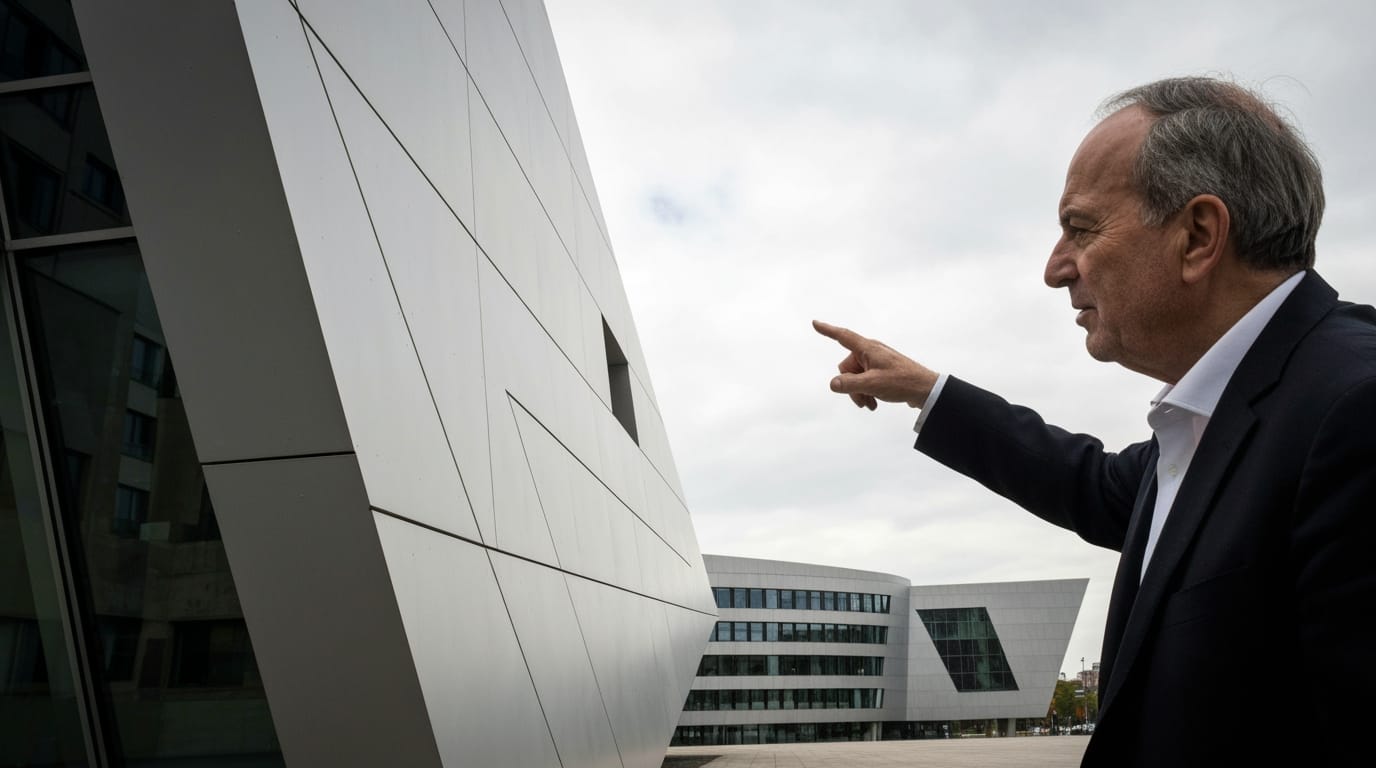
As Daniel Libeskind approaches his 80th birthday on May 12, 2026, the architectural world reflects on the profound and often challenging legacy of a master builder who has redefined how structures can embody history, memory, and an enduring sense of hope. Born to Holocaust survivors in Łódź, Poland, Libeskind’s personal narrative is deeply interwoven with his professional philosophy, creating buildings that are not merely physical spaces but powerful narratives etched in steel, glass, and concrete. His work stands as a testament to architecture’s capacity to confront traumatic pasts while simultaneously envisioning resilient futures.
Shaping a Vision: Early Life and Influences
Born in 1946, Libeskind's childhood was marked by the shadows of World War II and his parents' experiences as Holocaust survivors. This background profoundly influenced his understanding of existence and memory, shaping a unique perspective that would later define his architectural practice. Before finding his calling in architecture, Libeskind was an accomplished musician, displaying prodigious talent as an accordion virtuoso. He performed on Polish television in 1953 and later, after immigrating with his family first to Israel in 1957 and then to the United States in 1959, he won an America Israel Cultural Foundation scholarship, even playing alongside a young Itzhak Perlman.
His academic journey led him to the Cooper Union in New York, where he earned his Bachelor of Architecture in 1970, and subsequently to the University of Essex in England, where he received a postgraduate degree in architectural history and theory in 1972. Initially, Libeskind primarily engaged as an architectural theorist and professor, holding positions at various institutions globally. It was not until the age of 52 that his first major architectural project, the Felix Nussbaum Haus, was completed in 1998, marking the beginning of his prolific building career and demonstrating his shift from theory to tangible creation.
The Architecture of Remembrance: Challenging Narratives
Libeskind's most recognized works are often those that directly engage with difficult historical events, transforming sites of suffering into spaces of profound reflection. His designs are characterized by sharp angles, fragmented forms, and unconventional geometries, which together create spatial narratives that evoke emotion and encourage introspection.
The Jewish Museum Berlin, completed in 1999 and opened in 2001, stands as a seminal example of his approach. It was Libeskind's first major building commission and brought him international prominence. The museum's striking zigzag form and titanium-zinc facade, pierced by seemingly unsystematic window slits, are often likened to a shattered Star of David. Internally, the building features bare concrete voids that cut through its floors, serving as powerful architectural representations of absence and loss, directly addressing the Holocaust. Libeskind conceptualized the design, titled "Between the Lines," not merely as a museum building, but as a means to recount German-Jewish history and integrate the Holocaust's meaning into Berlin's collective consciousness. Three intersecting underground axes symbolize the complex paths of Jewish life in Germany: continuity, emigration, and the Holocaust, leading visitors through an emotional and historical journey.
Following the tragic events of September 11, 2001, Libeskind was selected in 2003 to develop the master plan for the reconstruction of the World Trade Center site in Lower Manhattan, a project that further solidified his reputation. His vision for "Ground Zero" aimed to balance the memory of the tragedy with the necessity for a vibrant, forward-looking neighborhood. Libeskind's plan emphasized creating a civic space, dedicating half of the 16-acre site to public areas, including the memorial and museum, rather than focusing solely on commercial development. This approach aimed to make the site a place of collective healing, reflecting the resilience of America.
Sculpting Hope: Bridging Past and Future
Central to Libeskind's philosophy is the belief that architecture must look to the future while honoring the past, transmitting the hopes of what is to come even when grappling with difficult histories. His designs, even when rooted in tragedy, invariably contain elements that symbolize renewal and the human spirit's capacity for progress. This dual commitment to remembrance and optimism defines his unique contribution to the field.
Beyond memorials, Libeskind's portfolio includes a diverse array of cultural institutions that embody this forward-looking perspective. Projects like the Imperial War Museum North in Manchester, with its fragmented forms representing the effects of war, or the Royal Ontario Museum's Michael Lee-Chin Crystal in Toronto, a faceted glass and steel extension, exemplify how his designs can acknowledge disruption while fostering cultural rebirth and engagement. Similarly, the Frederic C. Hamilton Building at the Denver Art Museum, with its titanium-clad, angular extension, serves as a dynamic and inspiring space for art, pointing towards innovation and creative expression.
His work at Ground Zero, in particular, was not just about mourning but about providing a framework for a new, revitalized urban center. He envisioned it as a "healing of New York" and a testament to resilience, aiming to lift the city out of its depressed state. This ability to infuse new projects with meaning that transcends their immediate function, connecting them to broader human experiences and aspirations, is a hallmark of his enduring influence.
A Global Legacy: Storytelling Through Form
Studio Daniel Libeskind, founded in 1989 with his wife Nina, has since grown into a globally recognized practice with its headquarters in New York City. Libeskind's work spans museums, concert halls, convention centers, universities, residential buildings, and commercial projects across continents. His distinctive deconstructivist style, characterized by its sharp edges, unconventional geometries, and spatial narratives, has left an indelible mark on contemporary architecture.
He firmly believes that architecture is a humanistic discipline that must engage with history, philosophy, and art to tell a story and evoke cultural memories. This commitment to storytelling and dialogue through design has earned him numerous accolades, including the Jan Kaplický Lifetime Achievement Award and the Dresden International Peace Prize, both in 2023, and the AIA New York Medal of Honor in 2011. These awards underscore his impact not just as an architect, but as a cultural figure whose work promotes understanding and peace.
As Daniel Libeskind celebrates his 80th birthday, his career remains a powerful illustration of how architecture can serve as a potent medium for expressing human emotion, commemorating history, and inspiring hope. His buildings are not static monuments but dynamic spaces that compel engagement, ensuring that memory informs the present and illuminates the path toward a more resilient and meaningful future. Through his unique vision, Libeskind continues to shape public consciousness globally, proving that even the most profound losses can be acknowledged and transformed into catalysts for renewal.