Danube's Dry Grip Threatens Europe's Nuclear Lifeline
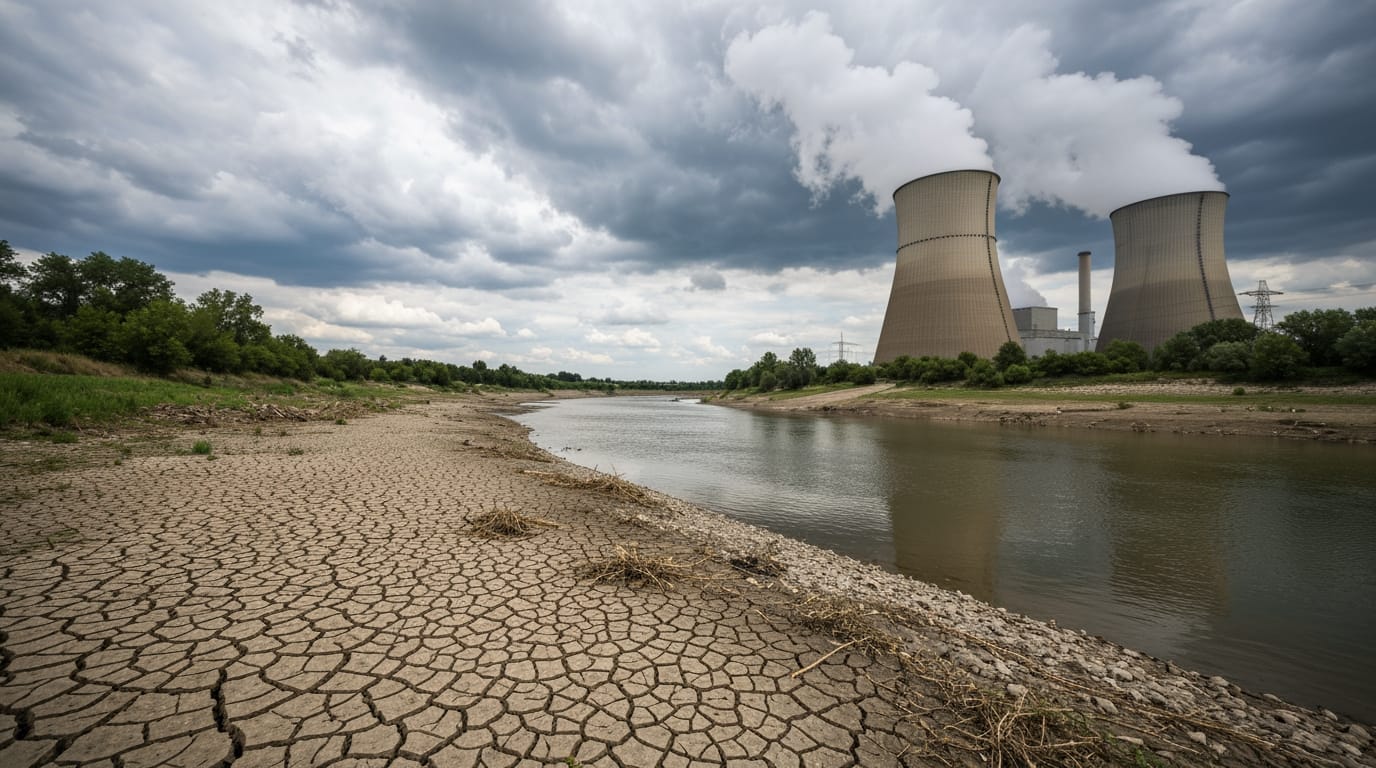
BUDAPEST/BUCHAREST – Europe's critical energy infrastructure faces unprecedented challenges as record-low water levels in the Danube River, exacerbated by persistent drought and heatwaves, compel Romania and Hungary to scale back or halt operations at their vital nuclear power plants. The shrinking waterway, a consequence of intensifying climate change, has thrust the region into an escalating energy crisis, prompting emergency measures and raising concerns about long-term power stability.
The crisis intensified in late July and early August 2026, as the Danube, Europe's second-longest river, receded to historic lows, disrupting not only energy production but also crucial cargo transport and river tourism. The ramifications are profound, forcing governments to consider power rationing and highlighting the continent's vulnerability to climate-induced environmental shifts.
Unprecedented Cuts at Nuclear Hubs
Both Romania's Cernavoda Nuclear Power Plant and Hungary's Paks Nuclear Power Plant rely heavily on the Danube for cooling their reactors. As water levels plummeted, the capacity to draw sufficient cooling water became critically compromised, leading to significant reductions in output or complete shutdowns.
In Romania, the Cernavoda plant, responsible for approximately 20% of the nation's electricity, faced severe operational constraints. One of its two reactors was initially taken offline, with the second also under threat due to insufficient cooling water. To maintain operations, Romanian naval forces undertook an extraordinary measure: a controlled explosion to clear a large rock obstructing water flow and redirect it towards the Cernavoda facility. This desperate intervention was aimed at ensuring continued cooling for the remaining active reactor. Authorities had initially considered shutting down the second reactor but opted for the redirection strategy, hoping to keep it online. Romania subsequently declared a nationwide state of alert in the energy sector for the entire month of August, urging citizens to voluntarily reduce power consumption, especially during peak evening hours.
Hungary's situation at the Paks Nuclear Power Plant, which generates nearly half of the country's electricity, proved equally dire. The plant drastically cut its output, at one point operating at just over 10% capacity, down from its normal 2,000 megawatts. Hungarian Prime Minister Peter Magyar warned that the plant, for the first time in its 44-year history, could face a complete shutdown if Danube water levels continued to fall below a critical threshold of -134 centimeters at Paks. With forecasts indicating levels could drop as low as -144 centimeters, significantly below the previous record of -98 centimeters set in 2018, a full shutdown became a stark possibility. Prime Minister Magyar issued a strong plea for citizens and large industrial users to limit electricity consumption to avert a more severe energy crisis.
The Danube's Retreat: A Stark Reality
The dramatic decline in the Danube's water levels underscores the severity of the ongoing drought. In Budapest, the river registered a mere 23 centimeters, well below the previous all-time low of 33 centimeters recorded in 2018. In the Romanian section, the Danube's flow rate decreased to an alarming 1,630-1,650 cubic meters per second, a mere third of the typical July average of approximately 4,750 cubic meters per second.
These historically low levels are not isolated incidents but rather part of a troubling pattern. Climate change studies indicate an overall decreasing trend in summer streamflow across the Danube River basin, with projections for increased summer temperatures and decreased precipitation in the region. Experts warn that extreme heat and droughts are becoming more frequent, transforming what were once rare occurrences into seasonal risks. The consequences extend beyond nuclear power, impacting agriculture, ecosystems, and urban water supply.
Economic Ripple Effects and Future Imperatives
The energy disruptions in Romania and Hungary are creating a cascade of economic challenges. Reduced domestic power generation necessitates increased reliance on electricity imports, a costly measure, especially when regional demand is high due to heatwaves. This situation could lead to higher electricity prices and potential supply shortages, placing an additional burden on households and industries already grappling with inflationary pressures.
Beyond energy, the low water levels have crippled navigation along significant stretches of the Danube. Cargo ships, unable to carry full loads or even navigate shallow sections, have been stranded, disrupting supply chains for essential goods like grain, fuel, coal, and fertilizers. The tourism sector has also suffered, with river cruises forced to alter itineraries, dock in alternative locations, or cancel altogether, impacting an industry that draws hundreds of thousands of visitors annually.
In response to the escalating crisis, both nations are exploring various mitigation strategies. Romania is actively seeking emergency electricity imports from neighboring Ukraine, Bulgaria, and Greece. Hungary, recognizing the long-term vulnerability, announced plans to develop 4 gigawatts of wind energy capacity by 2030, aiming to reduce its grid's dependence on the Danube River. Collaborative efforts across the Danube region are also underway to enhance climate-resilient water management, including basin-wide water balance models and improved data sharing, to better anticipate and adapt to future hydrological extremes.
Adapting to a Changing Climate
The unfolding energy crisis along the Danube serves as a stark reminder of the urgent need for robust climate change adaptation strategies. While the immediate focus is on restoring power and mitigating economic losses, the long-term implications are clear: European nations must accelerate investments in diversified energy sources, enhance water management infrastructure, and foster greater regional cooperation to build resilience against the growing frequency and intensity of extreme weather events. The Danube, a historical artery of commerce and culture, is now a front line in the battle against climate change, with its fluctuating waters dictating the energy security of millions.


