Deadly Blast in Syria Kills At Least 16, Suspected to Be Caused by Old Bomb
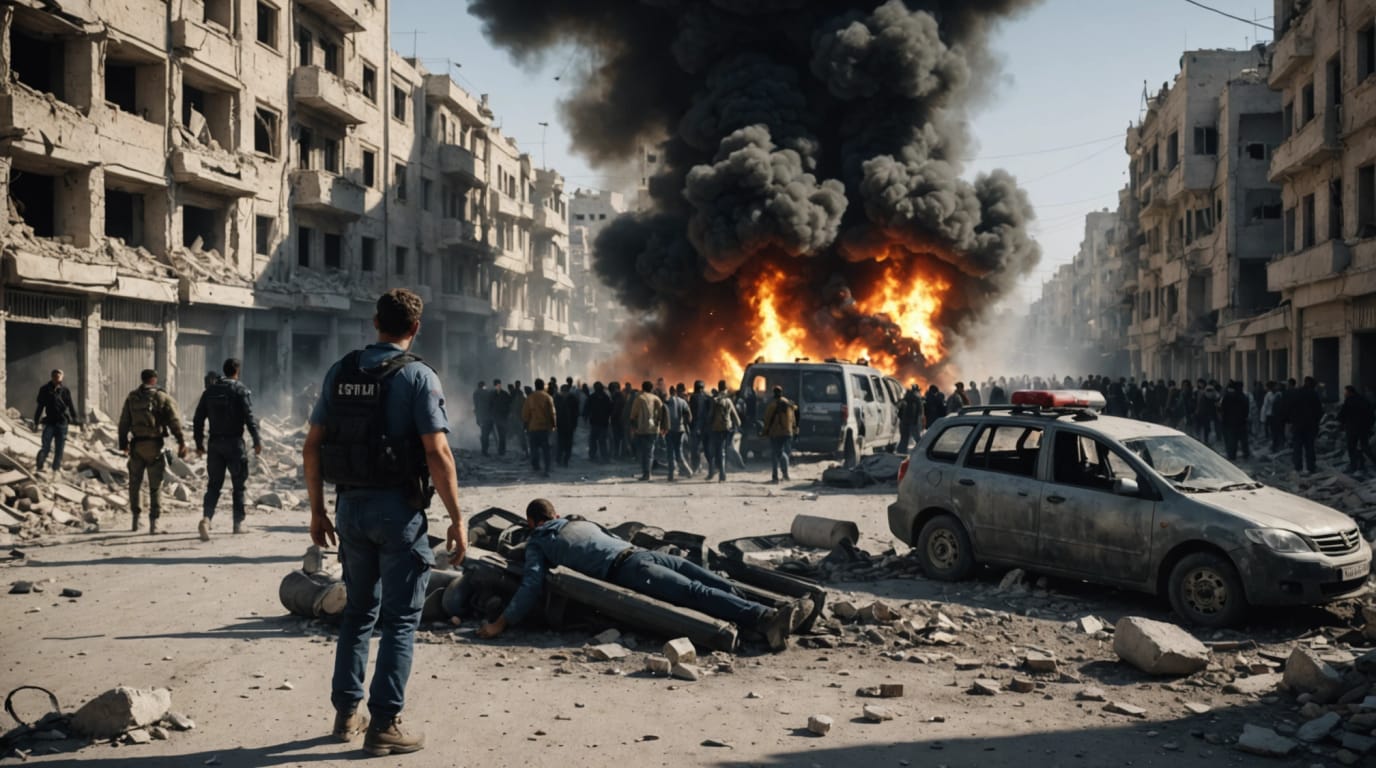
LATAKIA, Syria – A massive explosion ripped through a residential area in the Syrian coastal city of Latakia on Sunday, killing at least 16 people, including children, and injuring several others. Civil defense officials suspect the blast was triggered by a scrap metal dealer mishandling an old, unexploded bomb. The incident highlights the ongoing dangers posed by unexploded ordnance in the war-torn country.
The explosion occurred in a hardware store located within a four-story building in the Al-Rimal neighborhood, a densely populated suburb in southern Latakia. The force of the blast caused the building to partially collapse, trapping residents beneath the rubble. Rescue workers have been working tirelessly to recover bodies and search for any remaining survivors.
Rescue Efforts and Casualties
Syria’s civil defense force reported that at least 16 people were killed in the explosion. Initial reports indicated that several children were among the dead. Rescue operations are still underway, and the number of casualties is expected to rise as more bodies are recovered from the debris.
Images from the scene show a chaotic scene of destruction, with concrete slabs and twisted metal scattered across the area. A large plume of smoke rose above the neighborhood as emergency responders rushed to the scene.
Cause of the Explosion
According to initial reports, the explosion was caused by a scrap metal dealer who was handling an unexploded munition. The Syrian Arab News Agency (SANA) reported that the individual was attempting to salvage metal from the device when it detonated. The Britain-based war monitor, the Syrian Observatory for Human Rights, also described the incident as an accident.
Unexploded ordnance poses a significant threat in Syria, where years of conflict have left behind a legacy of landmines, bombs, and other explosive remnants of war. These devices can remain active for years, posing a deadly risk to civilians, especially in areas that have seen heavy fighting.
The Danger of Unexploded Ordnance in Syria
Humanity & Inclusion, a non-governmental organization, issued a report last month warning about the dangers of unexploded munitions in Syria. Experts estimate that between 100,000 and 300,000 of the roughly one million munitions used during the war never detonated. These unexploded devices are often difficult to locate and can be triggered by even the slightest disturbance.
The presence of unexploded ordnance not only poses a direct threat to human life but also hinders reconstruction and development efforts. It prevents farmers from cultivating their land, obstructs the delivery of humanitarian aid, and makes it difficult to rebuild infrastructure.
Latakia's Recent History
While Damascus has been largely spared from the worst of the violence in recent years, Latakia and the surrounding coastal region have experienced periods of intense fighting. The Syrian Observatory for Human Rights reported widespread violence in the region last week, resulting in at least 1,500 deaths.
In 2019, a blast in Damascus near a military intelligence office resulted in multiple deaths and injuries. While the city has been relatively insulated from violence compared to other parts of the country, bombings have occurred. In March 2017, a double suicide attack claimed by Al-Qaeda's former affiliate killed 74 people.
International Response and Future Outlook
The international community has repeatedly called for increased efforts to clear unexploded ordnance in Syria and provide assistance to victims of explosive remnants of war. However, the scale of the problem is immense, and resources are limited.
The blast in Latakia serves as a stark reminder of the ongoing dangers faced by civilians in Syria. As long as unexploded ordnance remains scattered across the country, the threat of further accidents and casualties will persist. Increased efforts are needed to clear these deadly devices and educate the public about the risks they pose. The road to recovery in Syria will be long and arduous, but addressing the threat of unexploded ordnance is a crucial step towards building a safer and more secure future for the Syrian people.


