Deadly Crane Collapse Derails Thai Passenger Train, Killing Dozens
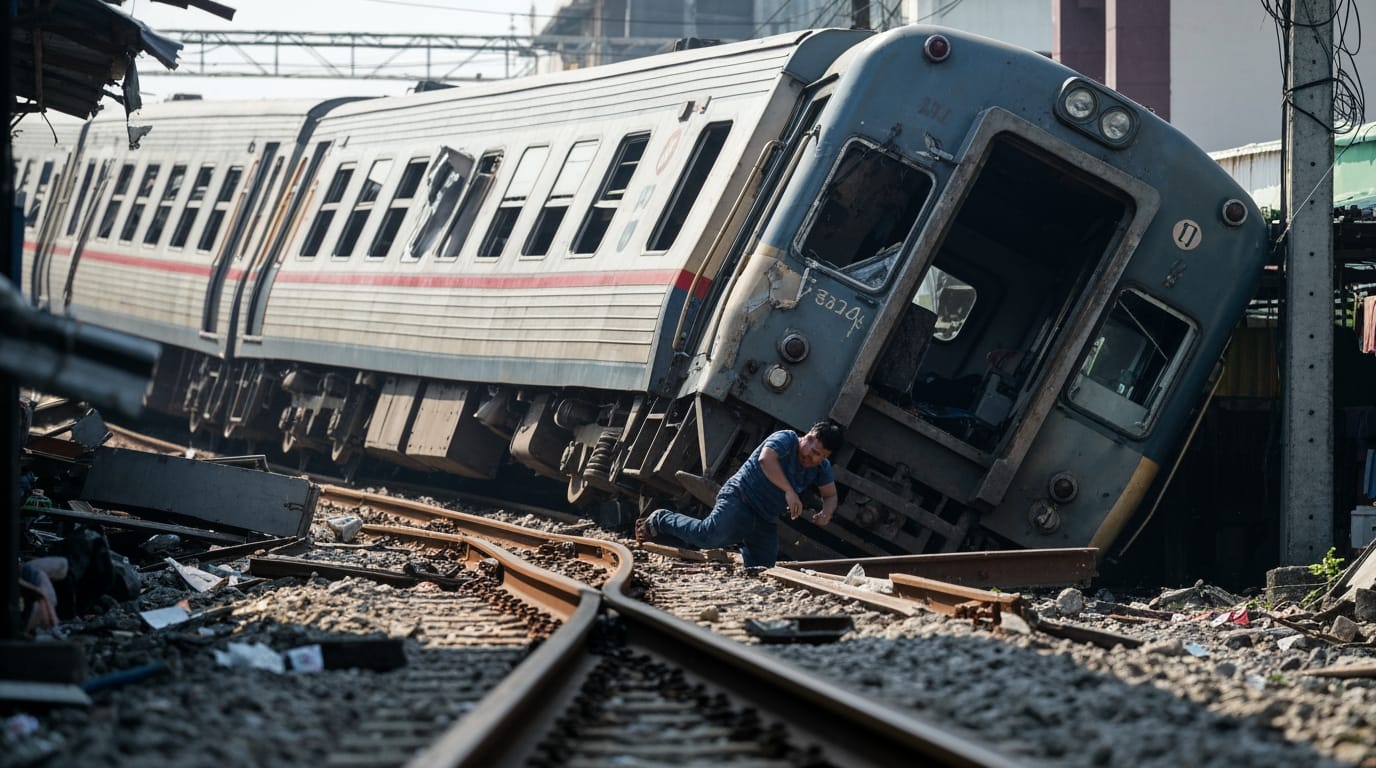
A passenger train traveling through Thailand's northeastern Nakhon Ratchasima province was catastrophically derailed Wednesday morning after a construction crane collapsed onto its carriages, resulting in the deaths of at least 22 individuals and injuring over 30 others. The devastating incident, which saw parts of the train briefly catch fire and left rescue workers scrambling amidst the wreckage, has cast a somber shadow over the nation's ambitious high-speed rail development and reignited critical concerns about safety standards in large-scale infrastructure projects.
Catastrophe Strikes: A Morning Commute Turned Deadly
The tragedy unfolded on Wednesday, January 14, 2026, in the Sikhio district of Nakhon Ratchasima province, approximately 230 kilometers (143 miles) northeast of the capital, Bangkok. The ill-fated train, carrying 195 passengers, was en route from Bangkok to Ubon Ratchathani province when the massive construction crane, reportedly operating as part of a high-speed rail project, toppled directly onto its path. The sudden impact caused the train to derail, with several carriages overturning, and a brief fire erupting, intensifying the chaos and danger for those on board.
Local police chief Thatchapon Chinnawong confirmed the grim casualty figures, stating that 22 people were killed and more than 30 sustained injuries. Initial reports varied, with some accounts mentioning 12 fatalities, but the higher toll was later confirmed by authorities as rescue efforts progressed. Live footage from local media depicted a scene of frantic activity, with rescue workers rushing to the site, smoke billowing from the derailed carriages, and the brightly colored train lying on its side. The fire was eventually brought under control, allowing emergency teams to intensify their search and rescue operations amidst the mangled metal and debris. The focus quickly shifted to identifying the deceased and providing immediate medical attention to the injured, many of whom were transported to nearby hospitals.
High-Speed Ambition Encounters a Fatal Obstacle
The crane involved in the accident was part of a significant ongoing infrastructure endeavor: a China-backed, $5.4-billion high-speed rail project. This ambitious undertaking aims to establish a high-speed rail network connecting Bangkok to Kunming in China via Laos by 2028, forming a crucial link in China's vast "Belt and Road" infrastructure initiative. The incident highlights the inherent risks associated with such large-scale construction, particularly when operations are conducted in close proximity to active transportation lines. While the specific cause of the crane's collapse remains under investigation, the disaster immediately draws attention to the safety protocols and oversight mechanisms in place for these massive and complex projects.
This is not the first time a project of this nature in Nakhon Ratchasima has faced critical safety issues. Just over a year prior, in August 2024, a rail tunnel collapse in the same province, also part of a Thai-Chinese high-speed railway project, resulted in the deaths of three workers, including one from Myanmar and two from China. That incident was attributed by some reports to heavy rainfall destabilizing the earth above the tunnel. The recurrence of serious accidents on projects of such national importance underscores a pattern that warrants rigorous examination and immediate corrective action to prevent further loss of life.
A Lingering Shadow: Thailand's Construction and Rail Safety Record
The incident is a stark reminder of the persistent challenges Thailand faces in maintaining stringent safety standards across its industrial and construction sectors. Reports indicate that lax enforcement of safety regulations has long contributed to deadly incidents in the country. While Thailand has seen numerous rail accidents throughout its history, with one of the worst occurring in 1979 killing 51 people, crane-related incidents on active rail lines, especially those connected to major infrastructure development, add another layer of concern.
The urgency of safety reform is underscored by other recent railway incidents. As recently as December 2025, 18 tourists were injured in Kanchanaburi province when a shunting locomotive collided with a stationary passenger train due to suspected brake failure, triggering an urgent safety review. These events collectively paint a picture of a transportation system grappling with modernizing its infrastructure while simultaneously ensuring the safety of its workers and passengers. The current tragedy calls for an immediate and thorough investigation not only into the direct cause of the crane collapse but also into the broader systemic issues that may contribute to such catastrophic failures.
Conclusion: A Call for Renewed Scrutiny and Unwavering Commitment to Safety
The deadly derailment in Nakhon Ratchasima represents a profound tragedy for Thailand, resulting in significant loss of life and injury, and disrupting vital transportation networks. Beyond the immediate human toll, the incident raises critical questions about the safety culture, regulatory oversight, and execution of large-scale infrastructure projects, particularly those involving advanced technology and international partnerships. The high-speed rail network, envisioned as a symbol of progress and connectivity, has now become the backdrop for a devastating accident that demands comprehensive accountability and immediate preventative measures.
As rescue and recovery operations transition into detailed investigations, authorities face the immense task of determining fault, supporting victims and their families, and, most importantly, implementing reforms to prevent such a calamity from recurring. The eyes of the nation, and indeed international observers, will be on Thailand to ensure that the pursuit of modernization does not come at the cost of human lives and that robust safety standards become an unwavering cornerstone of all future development.


