Deadly Drone Strike on Black Sea Resort Claims Civilian Lives Amid Escalating Conflict
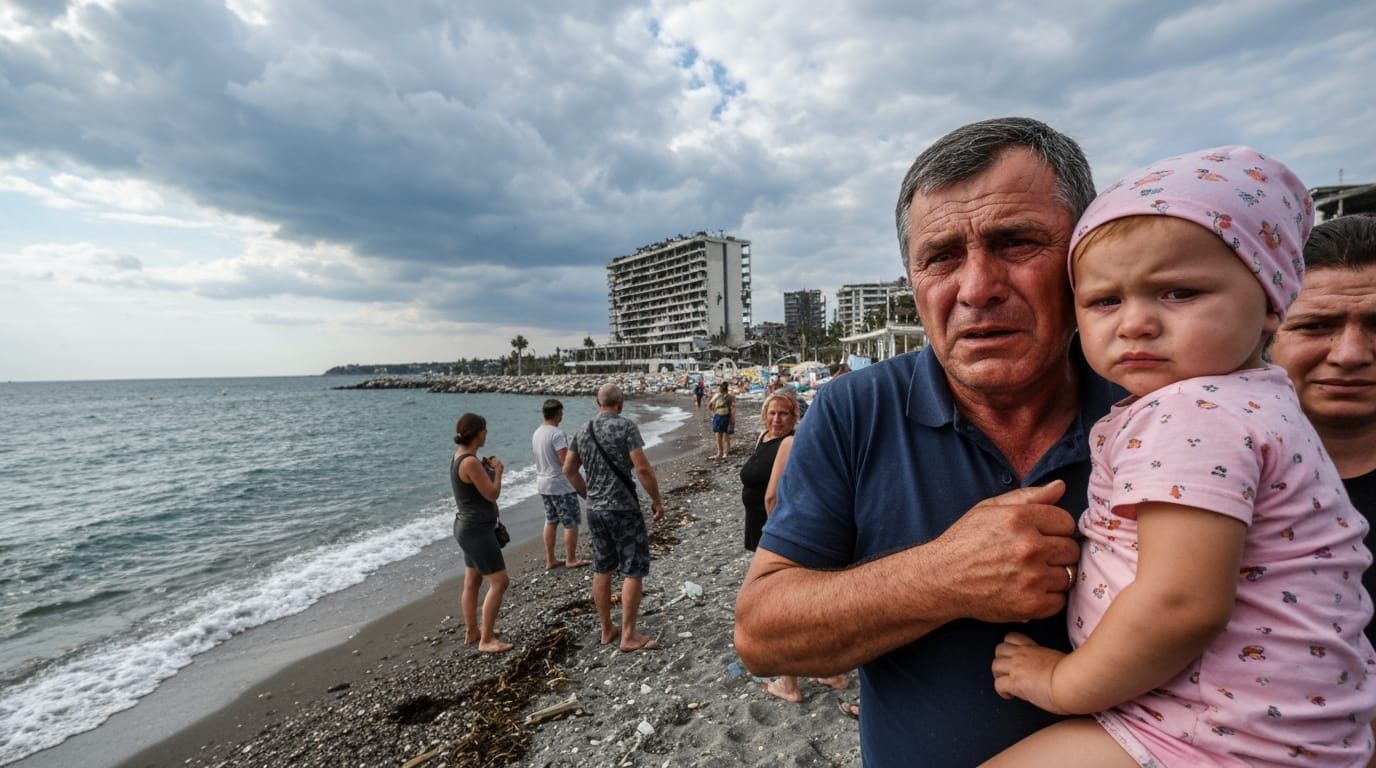
A Ukrainian drone strike on Monday, August 3, 2026, on the Russian Black Sea resort village of Arkhipo-Osipovka resulted in significant civilian casualties, including children, according to Russian officials. The attack, which struck a popular tourist area, marks a dramatic escalation in the ongoing conflict, drawing swift condemnation from Moscow and highlighting the increasing human cost of the protracted war. Russian authorities reported multiple fatalities and dozens injured, describing the incident as a deliberate act of aggression against civilian populations.
The Devastating Attack on Arkhipo-Osipovka
The resort village of Arkhipo-Osipovka, part of the wider Gelendzhik resort area in Russia's southern Krasnodar region, was the scene of a Ukrainian drone attack that shattered the relative peace of a summer day. Initial reports indicated three deaths and 13 injuries, but Krasnodar Governor Venyamin Kondratyev later updated the toll, stating that six people, including three children, had been killed and at least 40 others wounded. Other reports cited seven fatalities and 40 injuries, with three children among the deceased. Unverified social media footage depicted a drone impacting a busy beach, with tourists observing from the shoreline and in the water, followed by a loud explosion. Emergency services, including a specialist medical disaster team, were promptly dispatched to the site to assist the injured and manage the aftermath. In a separate but concurrent incident, four additional individuals were killed in a Ukrainian strike on the Russian-annexed Crimean peninsula, a region that has become a frequent target for Ukrainian forces.
Accusations and the Fog of War
Russian officials vehemently denounced the strike on Arkhipo-Osipovka, characterizing it as a direct and deliberate attack on civilians and civilian infrastructure. Governor Kondratyev issued a statement calling the event a "tragedy" and unequivocally blamed the "Kyiv regime" for a strike he claimed had "no connection whatsoever to military infrastructure." Maria Zakharova, a spokesperson for the Russian Foreign Ministry, reportedly accused Ukraine of "resorting to terrorism," a charge often leveled by Moscow in response to attacks on Russian territory. The proximity of Arkhipo-Osipovka to a luxury estate widely known as "Putin's Palace" also drew attention, though Russian authorities maintained the drone targeted civilian areas. A Ukrainian Telegram channel, however, reportedly suggested the drone might have been intercepted roughly 300 meters short of a facility linked to a Russian missile producer.
Ukraine did not immediately issue a comment regarding the specific incident in Arkhipo-Osipovka. Kyiv has consistently maintained that it does not deliberately target civilians in the conflict. However, Ukrainian officials have also stated that military sites and logistics infrastructure in Russian-occupied Crimea and other Russian-held territories are considered legitimate targets in their defense efforts. This stance reflects the broader, often contested, narrative surrounding targeting practices in the conflict, with both sides frequently accusing the other of violating international humanitarian law by striking non-military objectives.
Escalating Conflict and a Rising Civilian Toll
The deadly strike on the Black Sea resort underscores the intensifying and increasingly brutal nature of the four-and-a-half-year conflict between Russia and Ukraine. The United Nations has reported a notable increase in civilian deaths throughout 2026, a grim indicator of the war's broadening impact beyond conventional battlefields. The Black Sea region, a critical strategic and economic artery, has become a hotbed of reciprocal attacks. Russia initiated its full-scale offensive against Ukraine in February 2022, consistently launching strikes against its neighbor, often from the Crimean peninsula. In turn, Ukraine has significantly intensified its long-range counter-strikes on Crimea, which Russia annexed in 2014, and targets deep within Russian territory.
These counter-strikes have aimed at disrupting Russian logistics and military assets, leading to reported electricity and fuel shortages in Crimea during the current summer. Ukrainian forces have also conducted drone and missile attacks on various Russian targets, including oil refineries and port infrastructure. Concurrently, Russia has continued its aerial assaults on Ukrainian cities, including critical port facilities and civilian infrastructure, such as a recent attack on Kryvyi Rih, President Volodymyr Zelenskyy's hometown, which killed three people. This cycle of strikes and counter-strikes illustrates a conflict without clear boundaries, where both military and civilian areas face persistent threats, and the line between legitimate military objectives and collateral damage often blurs.
The Enduring Human Cost
The recent attack on Arkhipo-Osipovka serves as a stark reminder of the tragic human cost of the ongoing hostilities. As the conflict grinds on with no sign of a peace deal, ordinary citizens on both sides find themselves increasingly vulnerable to the escalating violence. The presence of children among the casualties in a popular holiday destination highlights the pervasive reach of the war and its indiscriminate impact on the lives of non-combatants. The incident further exacerbates tensions and complicates any potential pathways to de-escalation, as both nations remain entrenched in a cycle of reciprocal violence that continues to claim innocent lives and inflict profound suffering across the region. The lack of independent verification for such incidents often leaves narratives contested, yet the tangible loss of life remains an undeniable and devastating consequence of the sustained conflict.


