Deadly Drone Strikes Rock Moscow Region, Escalating Cross-Border Conflict
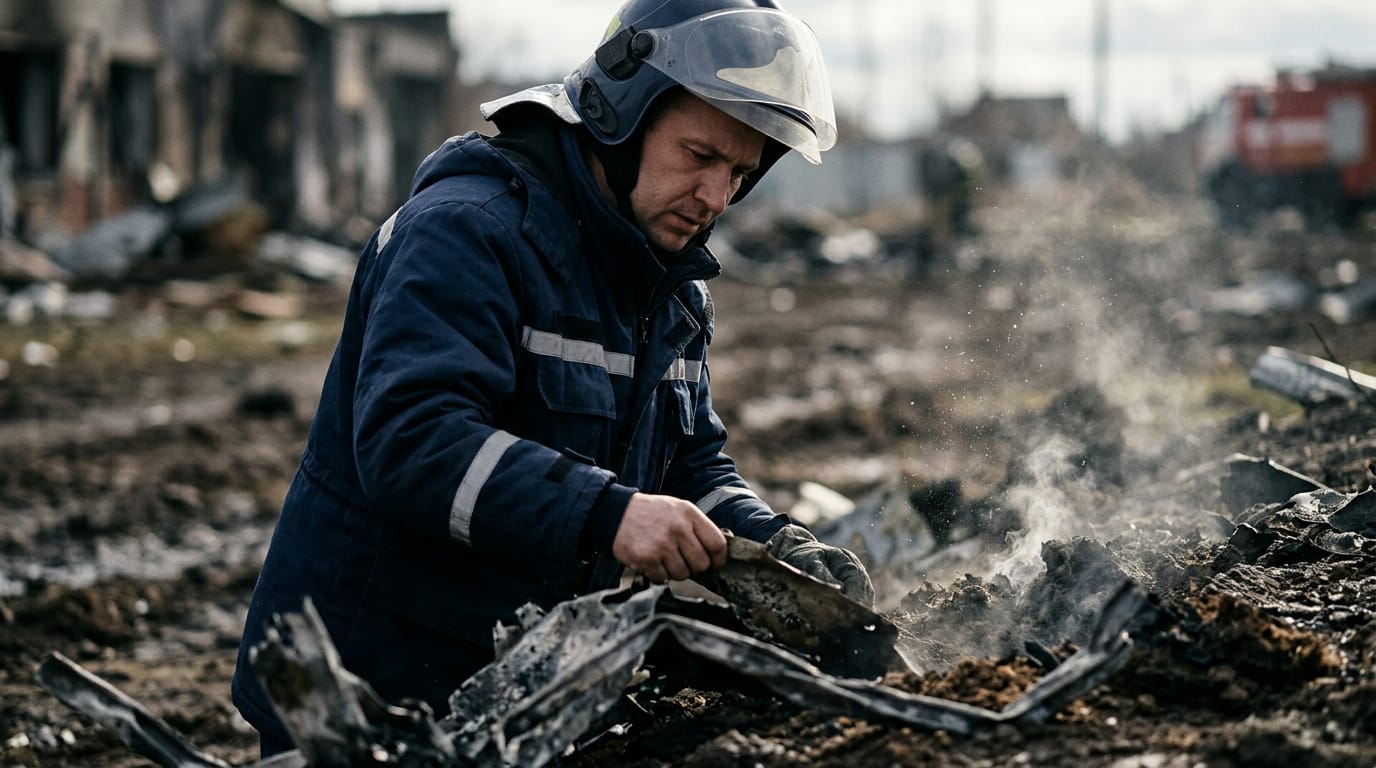
MOSCOW, Russia – Five people were killed and 10 others wounded early Tuesday in a Ukrainian drone attack on an industrial zone near the Russian capital, Moscow, Russian authorities reported, marking a significant escalation in the ongoing conflict. The assault targeted the Novoselki industrial zone within the Chekhov municipal district, situated in the Moscow region, which encircles but does not include the capital city itself. The deadly strike is the latest in a series of increasingly frequent and far-reaching drone incursions into Russian territory, signaling a deepening phase of the more than four-year-old conflict.
The attack unfolded in the pre-dawn hours, with Moscow regional governor Andrey Vorobyov confirming the casualties via Telegram. Emergency services swiftly responded to multiple fires that erupted across the industrial site, including a large warehouse blaze. In addition to the fatalities and injuries, an electrical substation and an administrative building sustained damage. Falling drone debris also reportedly struck a private residence and a vehicle in the nearby village of Solnyshkovo, though no additional casualties were reported there. Russian air defense systems were reportedly active, engaging incoming targets over several districts, including Volokolamsk, Klin, Chekhov, and Serebryano-Prudsky.
Expanding Reach and Civilian Casualties
The Tuesday attack near Moscow is part of a broader pattern of Ukrainian drone operations extending deep into Russian territory. While the immediate target appeared to be industrial infrastructure, the growing civilian toll associated with these strikes is becoming a prominent concern. On Monday, a drone incident at the Russian Black Sea resort of Arkhipo-Osipovka in the Krasnodar region resulted in seven fatalities, including three children, and left 58 people wounded, with 21 requiring hospitalization. Footage circulating online purported to show a drone striking a crowded beach, highlighting the potential for devastating civilian impact. Ukraine has not issued a formal statement regarding this particular incident.
Just the previous day, on August 3, a Ukrainian drone strike ignited a fire at a Wildberries warehouse in Russia's Vladimir region, approximately 180 kilometers east of Moscow, injuring one person. This incident is one of many targeting the e-commerce giant, often described as Russia's equivalent of Amazon. Kyiv has publicly accused Wildberries of storing drone components and providing support to the Russian military, allegations that both Wildberries and the Kremlin deny. Other Wildberries facilities have been hit recently, including one in the Leningrad region, which caught fire, and another in the Tver region's village of Emmaus, which sustained damage from drone debris.
These incidents are illustrative of a concerted effort by Ukraine to target Russian logistics and infrastructure. Since mid-July, there has been a noticeable increase in strikes against Wildberries facilities across Russia and Crimea. Beyond these, a fire was sparked at the Kirishi oil refinery in northwest Russia on August 3, following the fall of debris from a shot-down drone. Earlier, on July 27, a large-scale drone attack in the Rostov region, bordering Ukraine, resulted in five deaths, including a married couple and a child, and caused fires in an apartment complex and multiple warehouses. Ukrainian President Volodymyr Zelenskyy had then claimed that Ukrainian forces attacked an export terminal in Rostov, as well as oil facilities in the Yaroslavl and Udmurtia regions, located far from the border.
Strategic Motivations and Retaliation Cycle
The persistent and expanding drone campaign by Ukraine underscores a strategic shift aimed at disrupting Russia's war machine and increasing domestic pressure within Russia. Ukraine has developed long-range drones capable of striking targets deep inside Russian territory, including critical oil facilities, major storage depots, and other key infrastructure. Ukrainian President Volodymyr Zelenskyy has articulated that the use of these long-range drones is intended to compel Russian President Vladimir Putin to seek a peace settlement.
Russian officials consistently report intercepting a significant number of these drones. The Russian Defense Ministry claimed its air defenses shot down 320 drones on Tuesday morning alone. Despite these claims of successful interceptions, the sheer volume and geographical spread of the attacks indicate a sustained effort by Kyiv to penetrate Russian airspace and strike targets previously considered secure. The attacks are frequently framed by Ukraine as retaliatory measures for Russia's relentless aerial bombardments of Ukrainian cities and towns.
The increasing intensity of drone warfare highlights the evolving nature of the conflict. While Russia continues to launch hundreds of its own drones and missiles at Ukrainian targets, Ukraine has effectively utilized asymmetric drone capabilities to bring the war onto Russian soil. This tit-for-tat dynamic creates a perilous cycle of escalation, with both sides reporting civilian casualties from the opposing forces' aerial attacks. On the same day as the Moscow region drone strike, authorities in Ukraine reported that Russian aerial strikes also caused at least five civilian deaths within Ukraine.
Economic Impact and Verification Challenges
The targeting of commercial and industrial sites, particularly facilities belonging to Wildberries, has implications for the Russian economy. Wildberries, as Russia's largest online retailer, plays a crucial role in the country's logistics and retail network, accounting for a significant portion of its retail turnover. Disruptions to its operations, whether through direct damage or the need for evacuations, introduce economic friction and potential supply chain issues. The accusations leveled against Wildberries by Kyiv, though denied by Russia, further politicize civilian enterprises within the context of the war.
Independent verification of claims from both sides remains a significant challenge due to the ongoing conflict. Casualty figures, the nature of targets, and the extent of damage are often reported by the respective national authorities and cannot always be immediately corroborated by neutral third parties. This information vacuum contributes to an environment where narratives are highly controlled, and the true scope of events can be difficult to ascertain.
The drone war has become a defining feature of the conflict, with far-reaching consequences for civilians and infrastructure in both nations. As Ukraine continues to demonstrate its capacity for long-range strikes and Russia reinforces its air defenses, the strategic importance of unmanned aerial vehicles is undeniable. The recent deadly attack near Moscow underscores the conflict's expansion beyond traditional front lines, bringing the immediate dangers of war closer to civilian populations and further complicating prospects for de-escalation.


