Deadly Earthquake Claims Eight Lives in Afghanistan
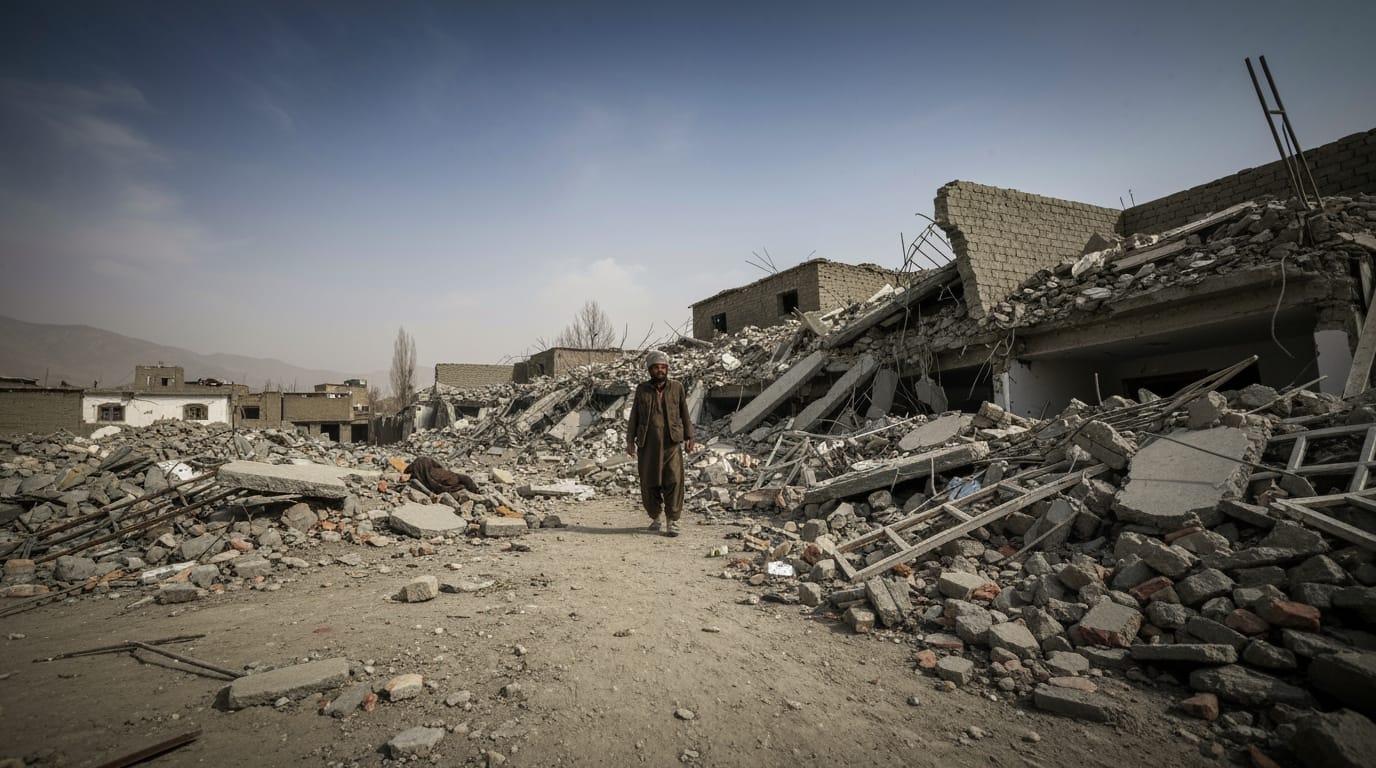
A magnitude 5.9 earthquake struck Afghanistan's seismically active Hindu Kush region late Friday, April 3, 2026, claiming the lives of at least eight people, all members of the same family, when their home collapsed on the outskirts of the capital, Kabul. The tremor, initially reported at 5.9 and later downgraded by some to 5.8, sent shockwaves across a wide expanse of Afghanistan and neighboring Pakistan, with distant vibrations felt as far as the Indian capital, New Delhi. This latest tragedy underscores Afghanistan's profound vulnerability to natural disasters, particularly in its remote, mountainous terrain where fragile infrastructure often succumbs to seismic forces.
The Tremor and Its Immediate Aftermath
The earthquake occurred around 4:12 PM UTC (8:42 PM local time in Afghanistan) on Friday, with its epicenter located in the Hindu Kush mountain range, approximately 150 kilometers (90 miles) east of the Afghan city of Kunduz, or near the Afghanistan-Tajikistan border region. Geophysical agencies, including the German Research Centre for Geosciences (GFZ), reported the quake at a significant depth, ranging from 175 to 177 kilometers (110-112 miles). Despite its considerable depth, which often mitigates surface damage, the seismic energy was powerful enough to cause widespread shaking across the region.
Hafizullah Basharat, a spokesman for the Kabul governor, confirmed that all eight fatalities and one injured child resulted from a single house collapse in Bagrami district, a central part of Kabul province. The victims were tragically members of the same family. While tremors were felt strongly in Kabul, located about 290 kilometers (180 miles) southwest of the epicenter, as well as in Pakistani cities like Islamabad, Peshawar, Chitral, Swat, and Shangla, and even in Jammu and Kashmir, initial reports indicated no immediate damage or casualties from areas closer to the epicenter. This lack of early reports from the epicentral region is often attributed to its remote and inaccessible nature, where communication and assessment can be severely hindered. Following the event, Afghanistan's Health Ministry and provincial health authorities were placed on high alert to coordinate potential response efforts.
Afghanistan's Perilous Seismic Landscape
Afghanistan is situated within one of the world's most seismically active regions, lying at the complex junction of the Eurasian and Indian tectonic plates, with the Hindu Kush mountain range being a particularly volatile zone. This geological reality means the country experiences frequent and often destructive earthquakes. Over the past few years alone, Afghanistan has endured several devastating quakes that have claimed thousands of lives. In June 2022, a 5.9 magnitude earthquake in Khost and Paktika provinces killed over 1,000 people and injured 1,500, destroying an estimated 2,000 homes. August 2025 saw a 6.0 magnitude earthquake in eastern Afghanistan kill more than 2,200 people, primarily in Kunar province, with another 6.3 magnitude quake in November 2025 striking Samangan province, killing at least 27 and injuring over 950. Additionally, in October 2023, a series of 6.3 magnitude quakes and powerful aftershocks in western Afghanistan resulted in thousands of fatalities and widespread destruction in Herat.
The recurrent high casualty figures from Afghan earthquakes are not solely due to magnitude but are exacerbated by critical vulnerabilities. The prevalence of poorly constructed homes, often made from mud bricks and wood, especially in rural and mountainous areas, renders them highly susceptible to collapse even during moderate tremors. The rugged, inaccessible terrain further complicates rescue and relief operations, making it difficult for aid to reach affected communities promptly.
Humanitarian Challenges and Lingering Impact
The 2026 earthquake comes at a time when Afghanistan is grappling with a severe and ongoing humanitarian crisis. Decades of conflict, compounded by drought, a struggling economy, and significant cuts in international aid, have left millions in dire need of assistance. The country's limited resources and strained healthcare infrastructure make it exceptionally challenging to respond effectively to natural disasters, particularly in remote regions where medical facilities are sparse.
While the death toll from this latest 5.9 magnitude earthquake is thankfully lower than some of the more catastrophic events in recent years, the loss of an entire family in Kabul is a poignant reminder of the personal devastation wrought by these geological forces. For those living in areas prone to seismic activity, every tremor carries the threat of profound loss and displacement. The international community, often a crucial support system, faces the dilemma of balancing aid with geopolitical complexities. As Afghanistan continues to navigate its precarious existence, the constant threat of earthquakes remains a deadly and unpredictable variable, adding another layer of suffering to an already beleaguered population.
In conclusion, the April 3, 2026, earthquake, while moderate in magnitude, delivered a tragic blow to a family in Kabul and served as a stark reminder of Afghanistan's enduring susceptibility to seismic events. The combination of its geological setting, vulnerable housing, and existing humanitarian crises ensures that even a seemingly lesser tremor can have devastating consequences, leaving an already struggling nation to contend with yet another layer of hardship.


