Deadly Landslide Engulfs West Java Villages, Dozens Still Missing
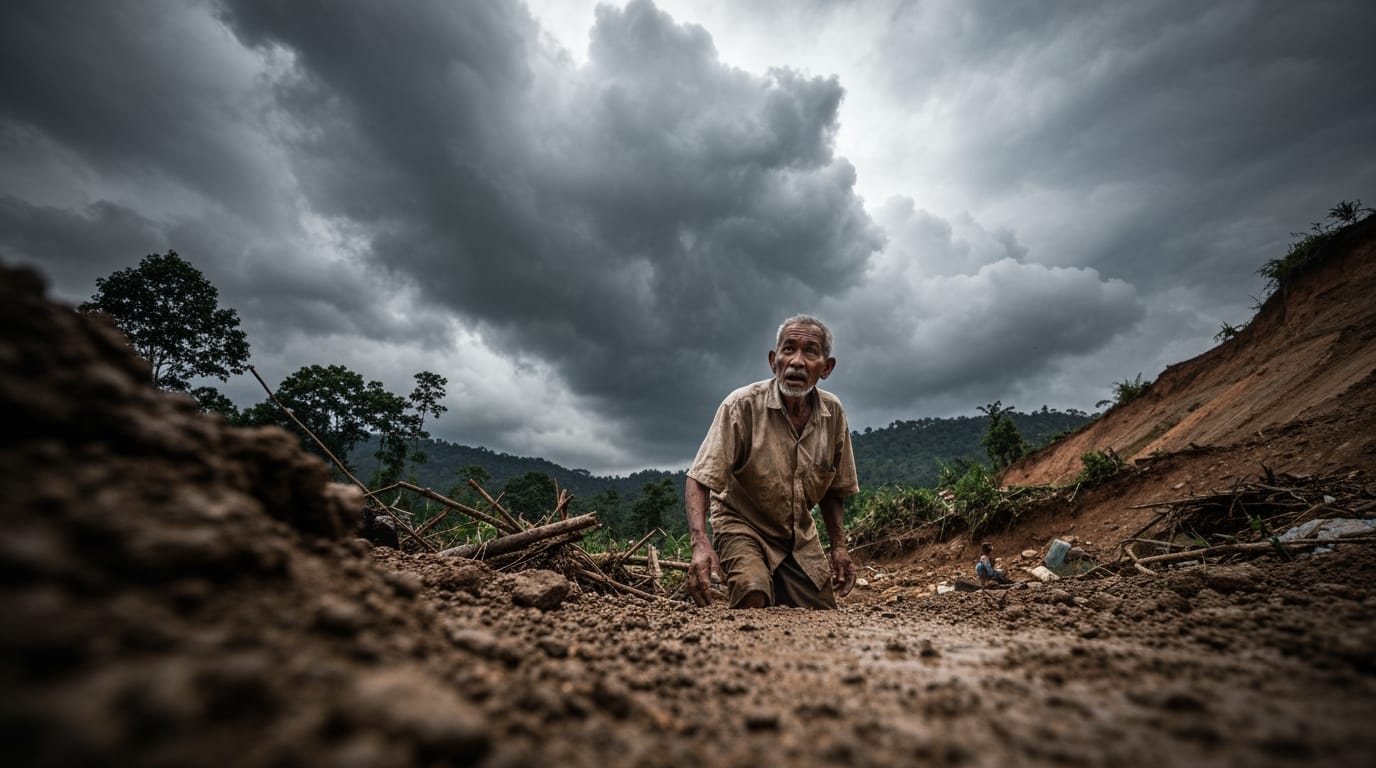
WEST BANDUNG, Indonesia – A predawn landslide, triggered by incessant heavy rainfall, tore through two villages in Indonesia's West Bandung region on Saturday, January 24, 2026, burying homes and leaving at least 17 people dead and 73 still missing. The devastating event, which struck around 2:30 AM local time, highlights Indonesia's persistent vulnerability to natural disasters, often exacerbated by environmental degradation.
Rescue efforts are intensely underway in the affected Pasirlangu village, Cisarua district, as teams navigate treacherous and unstable terrain in a desperate search for survivors. The incident has prompted a local disaster emergency declaration and drawn pledges for preventative action from high-ranking officials.
The Devastation Unfolds in Pasirlangu
The landslide, originating from the slopes of Mount Burangrang, unleashed a torrent of mud, rocks, and uprooted trees into the unsuspecting community of Pasirlangu village. The sheer force of the earth movement buried an estimated 34 to 35 houses, with some homes submerged up to their roofs. Residents reported hearing a loud rumbling sound, akin to thunder, just before the disaster struck, allowing little time for escape for many who were asleep.
Initial reports indicated at least eight fatalities and 82 missing persons shortly after the event. By Sunday, January 25, the grim count had risen, with 25 bodies recovered and 72 individuals still unaccounted for. As of Monday, January 26, the official death toll from the West Bandung landslide reached 17, with 73 people officially reported missing. Approximately 230 residents from the area have been evacuated to government shelters, fearing further instability.
Grueling Search and Rescue Operations Underway
A multi-agency rescue effort, involving military personnel, police, volunteers, and the National Search and Rescue Agency (BASARNAS), is battling challenging conditions to locate those trapped beneath meters of debris. The difficult terrain, characterized by steep slopes and loose ground, has severely hampered operations. Mud deposits in some areas are estimated to be up to 5 meters (16 feet) high, preventing the immediate deployment of heavy machinery. Rescuers are therefore relying on manual excavation, using farm tools and their bare hands, to sift through the heavy earth and rock.
Adding to the complexity, the ground remains unstable, posing a constant threat of secondary landslides, which necessitates extreme caution from search teams. Drones and K-9 units have been deployed to aid in the search for victims across the more than 2-kilometer (1.2 miles) stretch of the landslide. Abdul Muhari, a spokesperson for the National Disaster Management Agency (BNPB), has been providing regular updates on the evolving situation.
Geologists from the Bandung Institute of Technology (ITB) have indicated that the landslide was not an "ordinary" one, but rather triggered by the collapse of a natural dam upstream, leading to a destructive mudflow. This mechanism, where landslide material blocks a river channel and then bursts, carrying a heavy load of mud, sand, and boulders, is described as far more destructive than typical local landslides. Experts warn of a potential for recurrence, underscoring the ongoing danger to the affected region.
A Cycle of Disaster: Environment and Human Impact
This recent tragedy in West Java is part of a disturbing pattern of floods and landslides that frequently plague Indonesia during its rainy season, which typically runs from October to March. Environmental experts and government officials increasingly point to widespread forest loss as a significant contributing factor to the escalating severity of these events. Forests play a critical role in absorbing rainfall and stabilizing soil with their root systems, and their absence makes areas far more susceptible to flash flooding and landslides.
Indonesia has faced substantial deforestation in recent decades, with over 240,000 hectares of primary forest lost in 2024 alone, according to analyses. Mining, agricultural expansion, and plantations are cited as primary drivers of this extensive forest clearance. This loss of forest cover compromises the soil's ability to absorb water, increases surface runoff, and destabilizes slopes, especially in hilly and mountainous regions.
The West Bandung disaster follows closely on the heels of other major natural calamities across the archipelago. Just weeks prior, deadly floods and landslides in Sumatra in late 2025 resulted in an estimated 1,200 fatalities and displaced over 240,000 people. This recurring pattern underscores the urgent need for a more robust approach to environmental protection and disaster mitigation.
Calls for Action and Environmental Accountability
Indonesian Vice President Gibran Rakabuming Raka visited the disaster site, pledging governmental measures to prevent similar tragedies. He specifically urged local authorities in West Bandung to address "land conversion in disaster-prone areas" and implement strategies to reduce risks.
In a move signaling increased environmental accountability, the Indonesian government recently revoked the permits of 28 companies found to have committed environmental violations. This action came after an audit following the devastating Sumatra floods and landslides in late 2025, which highlighted how corporate activities contributed to environmental damage and worsened the disasters. The Ministry of Environment has also tightened its Strategic Environmental Assessment as a prerequisite for issuing corporate permits in Sumatra, aiming to ensure better environmental carrying capacity. Environmental groups, such as Greenpeace, have long advocated for broader moratoriums on extractive activities in critical watersheds and large-scale reforestation to rebuild ecological infrastructure. They emphasize that without these measures, such catastrophic events are likely to recur.
Lingering Questions Amidst the Rubble
As rescue teams continue their painstaking work, the human toll of the West Bandung landslide remains at the forefront. Families gather near the site, anxiously awaiting news of their loved ones, many resigned to finding only remains. The cries for accountability and effective preventative measures resonate beyond the immediate disaster zone. The events in West Bandung serve as a stark reminder of the interconnectedness of human activities, environmental health, and the devastating impact of natural phenomena on vulnerable communities. The ongoing challenge for Indonesia lies not only in responding to these crises but in implementing sustainable solutions to break the cycle of recurring tragedy.


