Deadly Suicide Attacks Shatter Maiduguri's Relative Calm, Claiming At Least 23 Lives
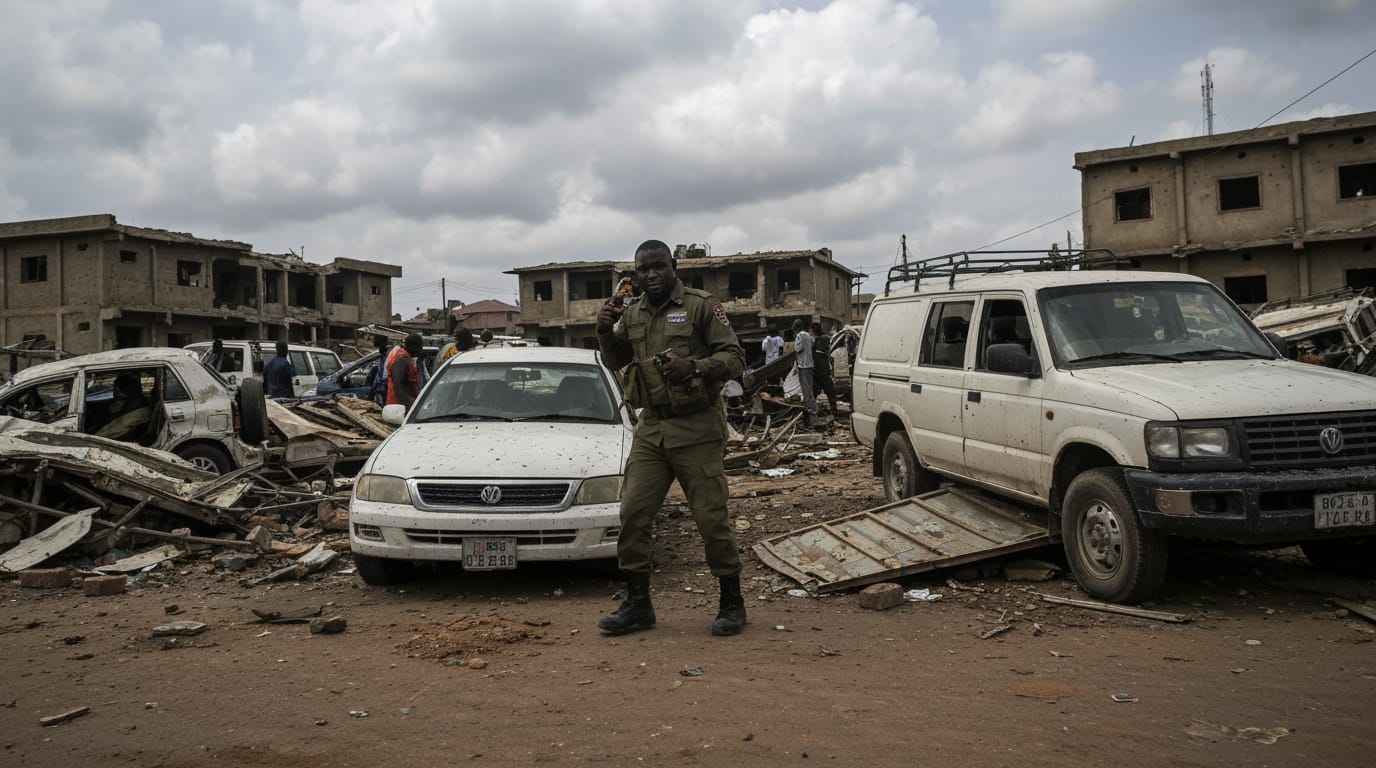
MAIDUGURI, Nigeria – Multiple suspected suicide bombings rocked Maiduguri, the capital of Nigeria's Borno State, on Monday night, March 16, 2026, shattering a period of relative peace and leaving at least 23 people dead and over 100 injured. The coordinated assaults targeted crowded public areas, marking one of the deadliest attacks in the conflict-battered city in recent history and reigniting fears of a resurgence of extremist violence in Nigeria's volatile northeast.
The explosions, which occurred at a major market, the entrance of the University of Maiduguri Teaching Hospital, and near the Post Office, plunged the city into chaos and highlighted the persistent threat posed by insurgent groups, despite years of military operations aimed at quelling the unrest. While no group immediately claimed responsibility, local authorities and security analysts quickly attributed blame to Boko Haram and its splinter faction, the Islamic State West Africa Province (ISWAP), groups notorious for employing suicide bombers to inflict mass casualties.
A Night of Terror: The Attacks Unfold
The tranquility of Maiduguri was abruptly broken by a series of powerful blasts on Monday evening. Reports from residents and emergency services indicated three explosions ripped through different parts of the city. One blast struck the bustling Monday Market, a hub of daily commerce that has historically been a frequent target for extremists. Another occurred at the entrance of the University of Maiduguri Teaching Hospital, a critical healthcare facility, while a third detonation was reported near the Post Office. The eastern neighborhood of Kaleri was also mentioned as a blast site.
The attacks followed an overnight assault on a military post, indicating a broader, coordinated campaign by the militants. Police spokesperson Nahum Kenneth Daso confirmed the tragic toll, stating that "a total of twenty three (23) persons lost their lives, while one hundred and eight (108) others sustained varying degrees of injuries." Emergency responders and volunteer groups immediately rushed to the scenes, initiating frantic rescue efforts. Mohammed Hassan, a member of a volunteer group, recounted evacuating ten bodies from the Post Office and Monday Markets. He described the scene as disheartening, noting that many victims died immediately, while others succumbed to their injuries at hospitals, underscoring a critical need for blood. Eyewitness Bagoni Alkali, who helped transport the wounded, reported that over 200 people were receiving care in the accident and emergency department. The sheer scale of casualties underscored the devastating impact of the bombings.
Maiduguri: A City Forged in Conflict
Maiduguri, the capital of Borno State, holds a somber distinction as the birthplace and enduring epicenter of Nigeria's nearly two-decade-long struggle against Islamist militancy. The city has borne the brunt of the insurgency launched by Boko Haram in 2009, an extremist group that seeks to impose a radical interpretation of Shariah law across northeastern Nigeria. Over the years, Maiduguri has faced countless ambushes, bombings, and attacks, transforming its landscape and the lives of its inhabitants. The use of suicide bombers, often women and young girls, in crowded public spaces like markets and mosques, has been a hallmark tactic of these groups, designed to instill terror and destabilize communities.
The insurgency has exacted a horrific human cost across the Lake Chad Basin region. More than 40,000 people have been killed, and an estimated two million have been displaced from their homes as a direct consequence of the violence. Other estimates place the death toll at over 35,000 with 2.6 million displaced, or more than 20,000 killed and 2.1 million displaced. Maiduguri, home to many who fled violence in surrounding areas, has consistently grappled with the humanitarian fallout of the conflict, with its infrastructure and social fabric repeatedly tested.
The Shifting Sands of Insurgency
For several years leading up to these latest attacks, Maiduguri had experienced a period of relative calm, with major incidents becoming less frequent following sustained military operations. This had fostered a sense of hope that the insurgency was waning, leading many to perceive the threat as largely extinguished. However, this recent wave of violence suggests a dangerous tactical resurgence by insurgent groups.
Concerns about a Boko Haram comeback intensified in April 2025 when Borno State Governor Babagana Zulum issued a stark warning about renewed attacks and kidnappings occurring "almost on a daily basis without confrontation." This was followed by a December 2025 suicide bombing at a mosque in Maiduguri's Gamboru Market, which killed five people and injured 35, signaling the first such attack in the city in five years. Security analysts viewed this as an alarming indicator of escalating militant activity and a shift back to targeting civilian locations.
The insurgency itself has grown more complex, with Boko Haram fragmenting into different factions. The Islamic State West Africa Province (ISWAP), backed by the Islamic State group, has emerged as a significant force. While ISWAP has sometimes adopted a strategy of targeting security agencies and military installations, another faction, Jama'atu Ahlis Sunna Lidda'awati wal-Jihad (JAS), is more frequently associated with indiscriminate attacks against civilians. The current attacks bear the hallmarks of such indiscriminate targeting, underscoring the ongoing threat from these groups. Borno's Governor Zulum suggested that the recent surge in attacks might be connected to intensified military operations in the Sambisa forest, a known jihadist stronghold, possibly provoking a retaliatory offensive.
A Call for Vigilance and Resilience
The Borno State Governor, Babagana Umara Zulum, condemned the March 2026 attacks in the strongest terms, labeling them "barbaric and inhumane." He extended his condolences to the victims' families and urged residents to remain calm, continue with their daily activities, and report any suspicious movements to security agencies. In the immediate aftermath, security forces tightened patrols across the city to prevent further incidents, and an investigation into the attacks is underway.
Despite claims from some officials that the extremist groups have been "largely dissipated," the recent attacks serve as a grim reminder that the fight against insurgency in northeastern Nigeria is far from over. The constant threat of violence forces residents of Maiduguri to live with an omnipresent sense of fear, yet they have consistently demonstrated remarkable resilience in the face of relentless adversity. The latest bombings underscore the urgent need for continued, robust efforts to address the multifaceted security challenges and protect civilian populations in a region that has endured unimaginable suffering for far too long.


