Deadly U.S. Strike in Caribbean Marks Escalation in Anti-Narcotics Campaign
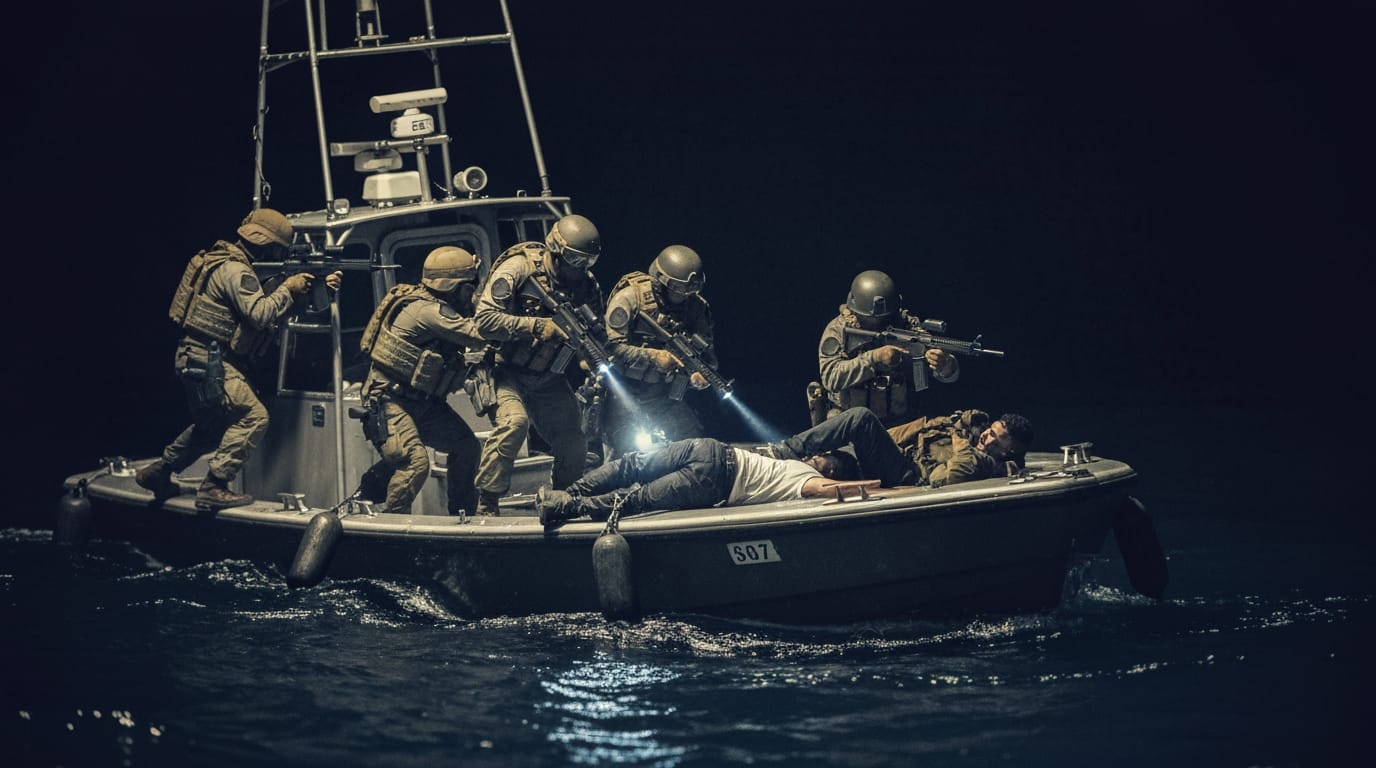
Caribbean Sea, April 20, 2026 – A recent U.S. military strike in the Caribbean Sea resulted in the deaths of three individuals aboard an alleged drug-trafficking vessel on Sunday, April 19, 2026, marking another significant and controversial incident in the Trump administration's aggressive campaign against narcotics in the Western Hemisphere. The U.S. Southern Command (USSOUTHCOM) confirmed the strike, which involved military forces targeting what it described as "narcoterrorists" along established smuggling routes. The incident is part of an ongoing strategy that has seen a dramatic increase in lethal engagements against suspected drug boats, drawing both staunch support from the administration and sharp criticism from human rights advocates and some lawmakers.
The Sunday strike, which USSOUTHCOM documented with a video posted on X (formerly Twitter) showing a vessel engulfed in flames after a massive explosion, brings the total fatalities from such operations to at least 181 people since early September of the previous year. This militarized approach diverges sharply from traditional drug interdiction methods, raising profound questions about international law, human rights, and the efficacy of lethal force in the complex battle against drug trafficking.
Intensified Operations and a Shifting Paradigm
The latest fatal incident underscores the Trump administration's escalated counter-narcotics policy in the Caribbean and Eastern Pacific, which began in earnest in early September 2025. This campaign involves the U.S. military directly targeting and destroying suspected drug-carrying vessels rather than adhering solely to the conventional law enforcement model of interception, boarding, and arrest. President Donald Trump has frequently characterized these efforts as an "armed conflict" against cartels, which his administration has designated as "Foreign Terrorist Organizations." This reclassification, according to critics, grants broader authorities for the use of lethal force, typically reserved for combat zones, against individuals who have not been charged with a crime.
The scale of the U.S. presence in the region has expanded considerably as part of this initiative. In August 2025, USSOUTHCOM deployed more than 4,500 Marines and Navy personnel, alongside naval assets including the Iwo Jima Amphibious Ready Group and missile destroyers, under operations such as "Southern Spear." This buildup has been described as the largest unrelated to disaster relief in decades, representing a significant militarization of anti-drug efforts in the Western Hemisphere. While official statements emphasize disrupting illicit activities and denying safe havens to traffickers, the shift from a law enforcement paradigm to a military one has become a central point of contention.
Controversies Surround Legality and Evidence
The administration's aggressive tactics have ignited a fierce debate concerning their legality and ethical implications. Human rights organizations and a bipartisan group of senators have voiced strong concerns, questioning whether these strikes amount to extrajudicial killings. Critics argue that the military has not consistently provided public evidence that the targeted vessels were indeed carrying drugs, or that those killed posed an immediate threat justifying lethal force.
For instance, following an earlier strike in September 2025, the Dominican Republic's National Directorate for Drug Control (DNCD) reported recovering 377 packages of cocaine, weighing approximately 1,000 kilograms, from a speedboat destroyed 80 nautical miles south of Isla Beata, Dominican Republic. This specific recovery provided some corroboration of drug activity in that instance. However, in many other cases, evidence linking the destroyed vessels directly to drug trafficking, beyond intelligence assessments, remains undisclosed to the public for "operational security reasons," as stated by a USSOUTHCOM spokesperson.
This lack of transparent evidence and due process is at the heart of the legal objections. International humanitarian law, according to United Nations officials and legal experts, does not generally permit the killing of individuals accused of drug trafficking unless it occurs within a genuine armed conflict. The designation of cartels as terrorist organizations, while enabling a military response, has been scrutinized as potentially blurring the lines between criminal enterprises and armed groups, thus eroding safeguards against summary killings.
Broader Implications and Regional Dynamics
The intensified U.S. counter-narcotics operations have multi-faceted implications for regional stability and international cooperation. While the U.S. has engaged in joint operations with partner nations like the Dominican Republic to seize drugs and apprehend suspects, the unilateral use of kinetic strikes by the U.S. military adds a layer of complexity to these relationships. The strategy aims to disrupt the flow of illegal narcotics, particularly cocaine, from South America through the Caribbean to the United States and Europe.
However, the effectiveness of a purely kinetic approach is debated. Experts suggest that while strikes can temporarily disrupt specific routes, drug trafficking organizations are highly adaptable and frequently shift their methods and pathways. Furthermore, the administration's stated rationale for the campaign, which often links it to the opioid crisis and fentanyl overdoses in the U.S., faces scrutiny. Fentanyl, the primary driver of U.S. overdose deaths, largely enters the country overland from Mexico, rather than through maritime routes in the Caribbean. This disconnect raises questions about whether the current military strategy directly addresses the most pressing aspects of the U.S. drug crisis.
A Campaign Under Scrutiny
The campaign in the Caribbean represents a significant departure in U.S. counter-narcotics policy, emphasizing military force and lethal engagements over traditional law enforcement interdiction. While President Trump defends these actions as a necessary escalation in an "armed conflict" to protect American lives, the human cost and the legal ambiguities continue to draw considerable scrutiny.
As the total number of fatalities from these strikes continues to climb, the debate surrounding their long-term efficacy, adherence to international norms, and the balance between national security interests and human rights is likely to intensify. The international community, along with lawmakers and civil liberties advocates, remains watchful, urging for greater transparency and accountability in these increasingly militarized anti-narcotics efforts in the Caribbean Sea.


