Deadly Ukrainian Drone Barrage Rocks Russian Logistics and Industry, Killing Seven
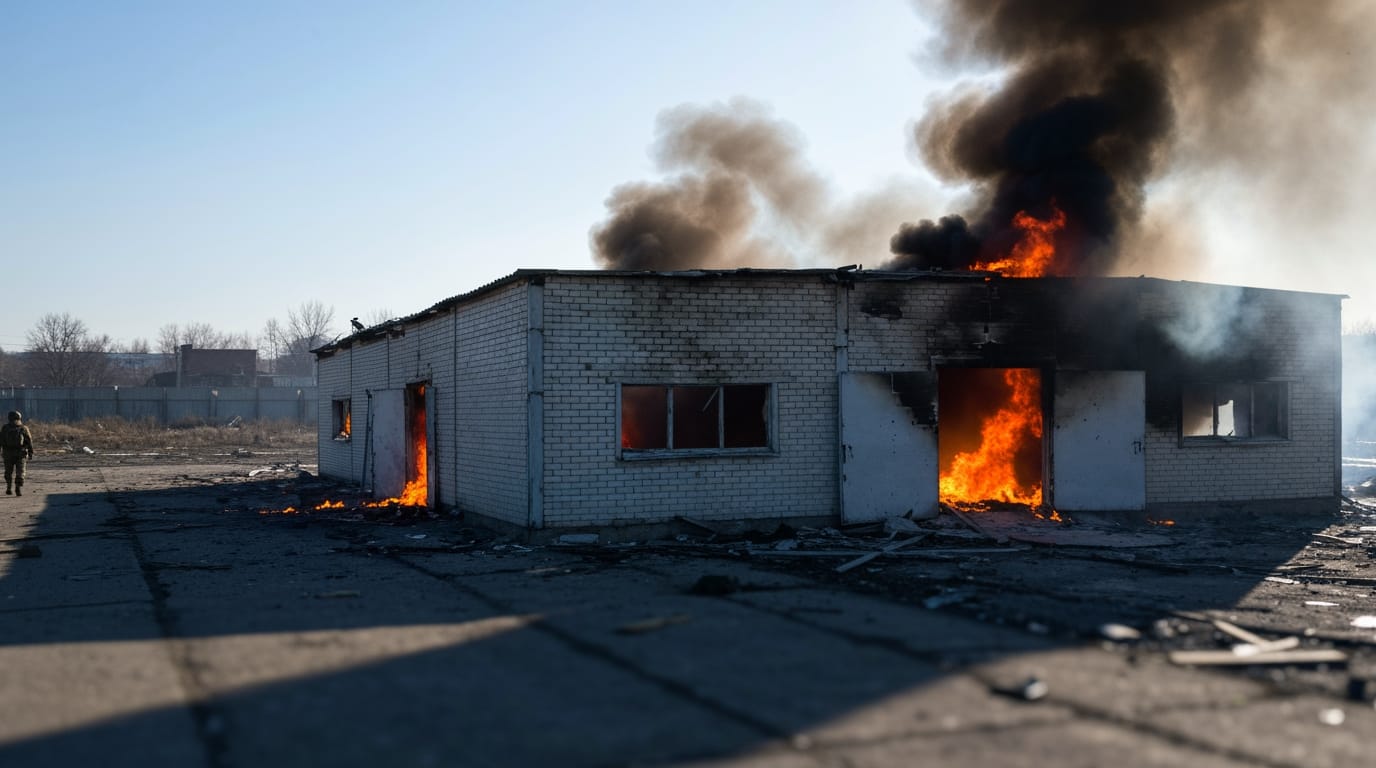
In a significant escalation of the ongoing conflict, a wave of Ukrainian drone attacks struck deep into Russian territory overnight, resulting in the deaths of at least seven people and wounding dozens more. The coordinated strikes on Saturday, July 18, 2026, targeted critical logistical infrastructure, including two large warehouses belonging to Russia's largest online retailer, Wildberries, and an oil depot, underscoring Kyiv's persistent strategy to disrupt Moscow's war machine and bring the realities of the conflict to the Russian heartland.
The attacks mark a somber development in the nearly five-year-long conflict, highlighting the increasing lethality and reach of Ukraine's unmanned aerial vehicle capabilities. Russian officials confirmed the fatalities occurred at a warehouse in the Tambov region, approximately 360 kilometers from the Ukrainian border, where night shift workers were caught in the crossfire.
Coordinated Strikes Pierce Russian Defenses
The pre-dawn assaults unfolded across several regions, demonstrating a concerted effort to hit diverse targets crucial to Russia's logistics and industrial capacity. The primary impact occurred in Kotovsk, located in the Tambov region, where a Wildberries logistics center was struck. Seven night shift employees were killed, and 25 others were wounded at this facility, according to Tambov regional governor Yevgeny Pervyshov. The extensive damage to the warehouse, a key distribution hub, points to a strategic aim of disrupting supply chains.
Further afield, another Wildberries warehouse was hit in Elektrostal, a city roughly 50 kilometers east of Moscow, injuring 24 individuals. The strikes extended to Noginsk, just north of Elektrostal, where an oil depot ignited after a drone impact, causing injuries to two people. The ensuing fire necessitated the precautionary evacuation of a nearby maternity hospital and a residential building. In the city of Vladimir, approximately 180 kilometers east of Moscow, a Ukrainian drone also struck a residential building, sparking a brief fire, though no casualties were reported in that incident.
Ukrainian President Volodymyr Zelenskyy, in a Telegram post, acknowledged that Ukrainian long-range strikes had targeted two "significant logistical facilities" in the Moscow and Tambov regions. He asserted these facilities were being utilized by Russia to procure sanctioned components vital for drone production and navigation equipment. Zelenskyy also confirmed that an oil facility was among the targets. These statements suggest a calculated effort by Ukraine to cripple Russia's ability to sustain its military operations, particularly its drone manufacturing capabilities.
The Evolving Landscape of Drone Warfare
These latest attacks are indicative of a significant evolution in the tactics employed by both sides in the protracted conflict. Ukraine has increasingly relied on drone technology to conduct deep strikes into Russian territory, compensating for limitations in conventional long-range weaponry and bringing the war closer to the Russian populace. This strategy aims to exert pressure on Moscow, demonstrate Kyiv's capacity for retaliation, and disrupt military and economic infrastructure that supports the invasion.
Drone warfare has become a defining characteristic of the conflict, with both uncrewed aerial vehicles (UAVs) and unmanned surface vessels (USVs) playing critical roles in reconnaissance, targeting, and direct attacks. Ukrainian officials have frequently highlighted the effectiveness of their drone programs, with some reports earlier this year claiming that drones were responsible for a substantial majority of Russian military targets destroyed or damaged in 2025. The ability of these drones to penetrate Russian airspace, often hundreds of kilometers from the border, poses a considerable challenge to Moscow's air defense systems. The Russian Defense Ministry reported intercepting 379 Ukrainian drones overnight across 19 Russian regions, as well as over Crimea, the Sea of Azov, and the Black Sea, figures that, if accurate, underscore the sheer scale of the Ukrainian aerial assault.
The psychological impact of such strikes cannot be overstated. By targeting facilities deep within Russia, Ukraine aims to erode public morale and increase domestic pressure on the Kremlin. While Russian state media often downplays the effectiveness of these attacks, the repeated breaches of Russian airspace and the resulting damage and casualties serve as tangible evidence of the conflict's expansion beyond the front lines.
Human Cost Amidst Strategic Objectives
The deaths of seven night shift workers at the Wildberries warehouse in Kotovsk underscore the tragic human cost of this escalating drone campaign. These individuals, engaged in civilian work, became unintended casualties in a conflict that continues to spill over national borders. The incident serves as a stark reminder that even targets perceived as logistical or industrial can have direct and devastating consequences for civilian lives.
The incident in Noginsk, where a maternity hospital and residential building were evacuated due to the oil depot fire, further illustrates the inherent risks of such strikes in populated areas. While Ukraine asserts that its targets are chosen for their strategic military or dual-use value, the proximity of these facilities to civilian centers inevitably raises concerns about collateral damage and the safety of non-combatants. The global community frequently scrutinizes such incidents, emphasizing the imperative for all parties to adhere to international humanitarian law and minimize harm to civilians.
Beyond the immediate fatalities and injuries, the disruption to Russia's major online retail giant, Wildberries, represents a significant blow to the country's domestic economy and consumer supply chains. While potentially not a direct military target, crippling civilian logistical networks can have broader economic ramifications that indirectly impact a nation's ability to sustain a prolonged conflict.
Strategic Implications and Future Trajectory
The widespread drone attacks signify Ukraine's unwavering resolve to contest Russia's invasion by unconventional means and to demonstrate its capacity to inflict costs on the aggressor far from the front lines. These strikes are part of a broader strategy to degrade Russia's military-industrial complex, disrupt fuel supplies, and hinder the movement of goods essential for its war effort.
For Russia, the repeated drone incursions pose a significant challenge to its claims of maintaining security and control over its sovereign territory. The reported interception of hundreds of drones, while presented as a success by the Ministry of Defense, also indicates the sheer volume of attacks that Russian air defenses must contend with regularly. This places immense strain on resources and personnel, forcing Russia to divert assets to homeland defense that might otherwise be deployed to the front. The effectiveness of these interceptions also remains a point of contention, given the confirmed hits and resulting casualties.
As the conflict enters its fifth year, the role of drone technology is set to become even more pronounced. Ukraine has signaled its intentions to further expand its drone forces and production capabilities, aiming for ambitious targets in disabling Russian military assets. This trajectory suggests that deep strikes into Russian territory, targeting logistics, industry, and energy infrastructure, will likely continue and potentially intensify. The international community will be closely watching how both sides adapt their strategies in response to this evolving form of warfare, particularly concerning civilian protection and the broader implications for regional stability.
The deadly drone attacks on Russian warehouses and infrastructure represent a critical moment in the ongoing conflict, marking an intensification of Ukraine's strategy to hit deep within Russia. With seven lives lost and dozens wounded, the human toll of this evolving form of warfare is increasingly evident, even as both sides adapt to the relentless technological advancements shaping the battlefield. As the conflict grinds on, the skies over Russia are becoming another front line, with unmanned systems delivering powerful, and often deadly, messages.


