Debunking Claims: No Secret U.S. Gulf Base Struck, But Confirmed Attacks on Known Installations Persist Amid Heightened Tensions

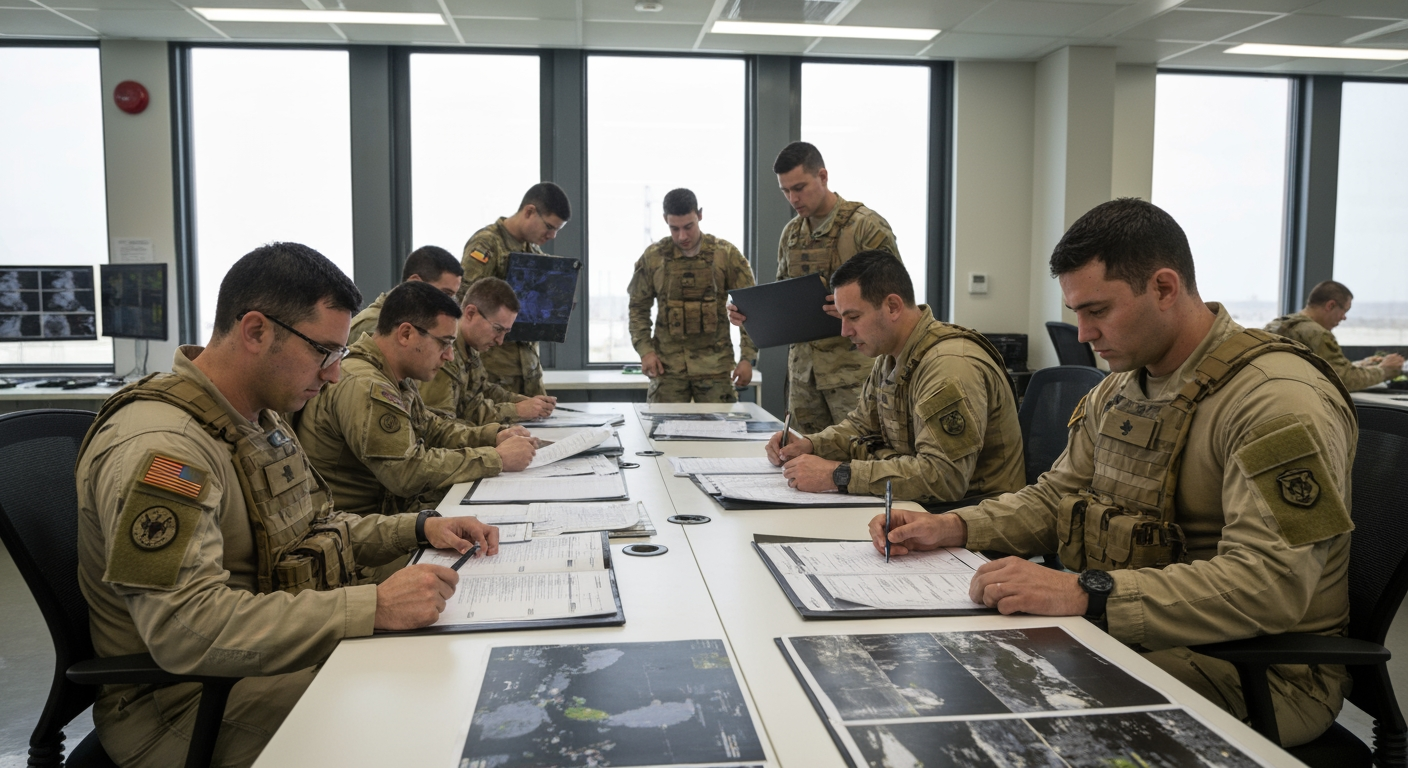
Reports circulating online suggesting Iran struck a secret United States military base in the Persian Gulf are unsubstantiated. While there is no evidence to support claims of an attack on an undisclosed American installation, verifiable incidents confirm that Iran has launched missile and drone attacks targeting known U.S. military facilities in the Gulf region over the past year, though these assaults have largely been mitigated with no reported casualties. These events underscore the volatile geopolitical climate and the persistent risk of misinformation exacerbating regional instabilities.
Unraveling the 'Secret Base' Narrative
The narrative of a "secret" U.S. base in the Gulf being struck by Iran appears to be a misrepresentation or an amplification of unverified rumors. Official statements from U.S. defense authorities and regional allies have consistently refuted any such incident involving clandestine facilities. However, the persistent circulation of such claims highlights the broader challenge of distinguishing factual reporting from speculative or deliberately misleading information in a digitally interconnected world. The focus on a "secret" base might serve to sensationalize events or sow confusion regarding the nature and extent of military engagements in the region.
The importance of credible information is paramount during times of heightened tension, as false narratives can quickly escalate misunderstandings or even incite further conflict. In the past, similar claims have emerged and been debunked. For instance, in early 2026, viral videos purporting to show an American airbase ablaze in Saudi Arabia following an Iranian missile attack were proven false, with the footage actually depicting an Israeli airstrike in Yemen from July 2024. Likewise, social media posts in January 2024 falsely claimed Iranian missile strikes hit a U.S. military base in Iraq's autonomous Kurdistan region, despite authorities confirming no American operations were impacted. These patterns illustrate a recurring trend of misattribution or fabrication concerning attacks on U.S. assets in the Middle East.
Documented Attacks on Established U.S. Installations
Despite the absence of evidence for strikes on "secret" bases, Iran has indeed engaged in direct missile and drone attacks on known U.S. military installations in the Persian Gulf. One significant incident occurred in late June 2025, when Iran's Islamic Revolutionary Guard Corps (IRGC) launched missile strikes against Al Udeid Air Base in Qatar, a prominent U.S. facility. This action was described by Iran as retaliation following U.S. strikes on Iranian nuclear sites.
During the June 2025 Al Udeid attack, reports indicated that short-range and medium-range ballistic missiles were fired. U.S. and Qatari air defense systems, including Patriot batteries, successfully intercepted the incoming projectiles, leading to no reported casualties among U.S. or allied personnel. Qatari officials confirmed the interceptions and stated that the base had been evacuated as a precautionary measure, which contributed to the absence of injuries. Then-President Trump characterized the Iranian response as "very weak," noting that "NO Americans were harmed, and hardly any damage was done." Iranian state media, however, presented the attack as a "mighty and successful response," claiming the number of missiles fired matched the U.S. bombs dropped on its nuclear facilities and that the base was targeted specifically because it was outside populated areas, signaling a calibrated intent. A U.S. military official explicitly stated at the time that no Iranian attack was detected at any other U.S. base besides the one in Qatar.
More recently, the region has experienced further exchanges. In late May and early June 2026, U.S. Central Command (CENTCOM) accused Iran of violating a fragile ceasefire after missiles and drones were launched toward Kuwait and Bahrain. Kuwait reported intercepting several ballistic missiles and drones, while the IRGC claimed responsibility for targeting U.S. military bases in both Kuwait (specifically Alial Salem) and Bahrain (the Fifth Fleet headquarters). These Iranian actions were reportedly in retaliation for U.S. strikes on Iranian radar sites. CENTCOM affirmed that U.S. forces intercepted multiple Iranian ballistic missiles and drones launched towards the Strait of Hormuz and neighboring Gulf states, emphasizing that Iranian claims of damaging the U.S. Fifth Fleet headquarters were false.
The volatility continued into early July 2026, when escalating tensions led to a new series of retaliatory strikes. Following Iranian attacks on three commercial vessels in the Strait of Hormuz, the U.S. military launched strikes against dozens of Iranian targets. Iran, in turn, retaliated by attacking "American military sites in the Gulf." Kuwait again reported intercepting two ballistic missiles and 13 drones, with some shrapnel causing minor disruptions to power lines. President Trump issued renewed warnings to Iran, indicating preparations for further strikes, and reiterated threats to target Iran's civilian infrastructure if hostilities continued.
Geopolitical Context and Information Warfare
The recurrent exchanges of fire and the dissemination of misinformation occur within a broader context of entrenched U.S.-Iran animosity and regional proxy conflicts. The Persian Gulf remains a strategic waterway, vital for global energy supplies, and any disruption carries significant international implications. Both the U.S. and Iran maintain a substantial military presence, often operating in close proximity, creating a constant potential for miscalculation.
The incidents involving missile and drone attacks, even if successfully mitigated, serve as stark reminders of the hair-trigger nature of regional security. In such an environment, the deliberate or accidental spread of false information becomes a potent tool for various actors. Misleading reports, such as those about "secret bases" or exaggerated damage, can be used to bolster narratives of military prowess, undermine adversary morale, or rally public support. The speed and reach of social media platforms further complicate the landscape, allowing unverified claims to gain traction before official refutations can be widely disseminated. This highlights a critical aspect of modern conflict: the information battleground is as significant as the physical one.
Conclusion
While specific claims of Iran striking a "secret" U.S. Gulf base lack credible evidence, the past year has seen confirmed Iranian missile and drone attacks on known U.S. military installations in the Gulf, particularly Al Udeid Air Base in Qatar, and reportedly in Kuwait and Bahrain. Crucially, these attacks have resulted in no reported casualties due to effective defensive measures and precautionary evacuations. The ongoing tensions between the U.S. and Iran, marked by cycles of provocation and retaliation, necessitate a vigilant approach to information. In an era where facts can be easily distorted, accurate and timely reporting is essential to provide clarity amidst the fog of conflict, ensuring that the public remains informed and that diplomatic efforts are not undermined by unsubstantiated claims.
Related Articles

Landmines Resurge Globally, Shattering Two Decades of Progress
The global effort to eradicate antipersonnel landmines, once heralded as a monumental success in humanitarian disarmament, is facing a perilous reversal. Despite an international treaty banning these indiscriminate...


Disinformation Campaigns Cloud Michigan's Critical US Senate Race
LANSING, Mich. — The fiercely contested Democratic primary for the U.S. Senate in Michigan has become a battleground not just of policy and ideology, but of pervasive disinformation, with progressive candidate Abdul...