Landmines Resurge Globally, Shattering Two Decades of Progress
The global effort to eradicate antipersonnel landmines, once heralded as a monumental success in humanitarian disarmament, is facing a perilous reversal. Despite an international treaty banning these indiscriminate weapons, their use has surged dramatically in recent years, claiming thousands of civilian lives and threatening to unravel decades of hard-won progress. This disturbing trend, particularly evident in active conflict zones and even among nations previously committed to the ban, signals a worrying erosion of international norms designed to protect civilians from the lasting scars of war.
A Retreat from the Ban: International Accord Under Threat
The 1997 Ottawa Treaty, formally known as the Convention on the Prohibition of the Use, Stockpiling, Production and Transfer of Anti-Personnel Mines and on their Destruction, stands as a cornerstone of international humanitarian law. Ratified by 164 state parties, the treaty comprehensively bans antipersonnel mines, which are designed to explode by the presence, proximity, or contact of a person, inflicting indiscriminate harm long after conflicts cease. The treaty's implementation led to the destruction of over 55 million stockpiled landmines and significant progress in clearing contaminated areas globally. However, this progress is now severely threatened by a stark resurgence in their deployment.
Recent reports from organizations like Human Rights Watch and the International Campaign to Ban Landmines (ICBL) highlight Russia's extensive use of antipersonnel mines in Ukraine since its full-scale invasion in 2022. Myanmar's military and various armed groups have also significantly increased their use of these weapons following the 2021 coup. Furthermore, non-state armed groups continue to employ victim-activated improvised explosive devices (IEDs)—which fall under the treaty's prohibition—in at least five countries, including Colombia, India, Myanmar, Thailand, Tunisia, Pakistan, and increasingly in the Sahel region of Africa.
Adding to the alarm, a concerning number of state parties to the Ottawa Treaty have signaled intentions to withdraw or suspend their commitments. Estonia, Finland, Latvia, Lithuania, and Poland have announced plans to exit the treaty, citing national security concerns amidst heightened tensions near Russia. Ukraine, a treaty signatory, has also stated its intention to suspend aspects of the accord, a move not permitted for states engaged in international conflict. These decisions risk legitimizing the use of banned weapons and undermining the treaty's efficacy. Notably, several major powers, including the United States, China, Russia, India, and Pakistan, have never acceded to the treaty, further complicating universal adherence.
Battlefields of Betrayal: Ukraine and Myanmar Bear the Brunt
The current conflicts in Ukraine and Myanmar have become grim illustrations of the catastrophic human cost of landmine proliferation. Ukraine, ravaged by Russia's invasion, is now considered one of the most heavily mined countries globally. Russia's forces have extensively deployed at least 13 types of antipersonnel mines, contaminating vast areas and posing an enduring threat to civilians and agricultural production. Investigations are also underway into allegations that Ukrainian forces used antipersonnel mines in and around Izium in 2022 when the city was under Russian control, creating an unprecedented situation where a treaty signatory is accused of using the weapon on its own territory.
In Southeast Asia, Myanmar has seen a dramatic increase in landmine use by both the military junta and various armed opposition groups since the 2021 military coup. This widespread deployment across nearly all states and regions has led to Myanmar recording the highest number of landmine casualties globally in both 2023 and 2024. The extensive contamination leaves communities in perpetual danger, inhibiting the return of displaced populations, disrupting farming, and creating an environment of fear long after active fighting subsides.
The Indiscriminate Toll on Civilian Lives
The most harrowing consequence of this resurgence is the escalating human toll, disproportionately affecting civilians. In 2023, at least 5,757 people were killed or wounded by landmines and explosive remnants of war worldwide, with a staggering 84% of these casualties being civilians. Children accounted for over a third of all civilian victims. The situation worsened in 2024, with casualties rising to 6,279, marking the highest annual figure since 2020. Myanmar alone recorded 2,029 casualties in 2024, followed by Syria with 1,015, Afghanistan with 624, and Ukraine with 293.
Landmines are inherently indiscriminate weapons, unable to distinguish between a combatant and a child at play, a farmer in their field, or a refugee returning home. They remain active for decades, turning former battlefields into deadly traps that continue to maim and kill long after hostilities have ceased. Beyond immediate injury or death, the presence of these weapons leads to long-term suffering, including physical disability, psychological trauma, social disruption, and displacement. They impede humanitarian aid, prevent agricultural activities, and hinder the rebuilding of communities, perpetuating cycles of poverty and insecurity.
The Path Forward: Renewed Commitment and Urgent Action
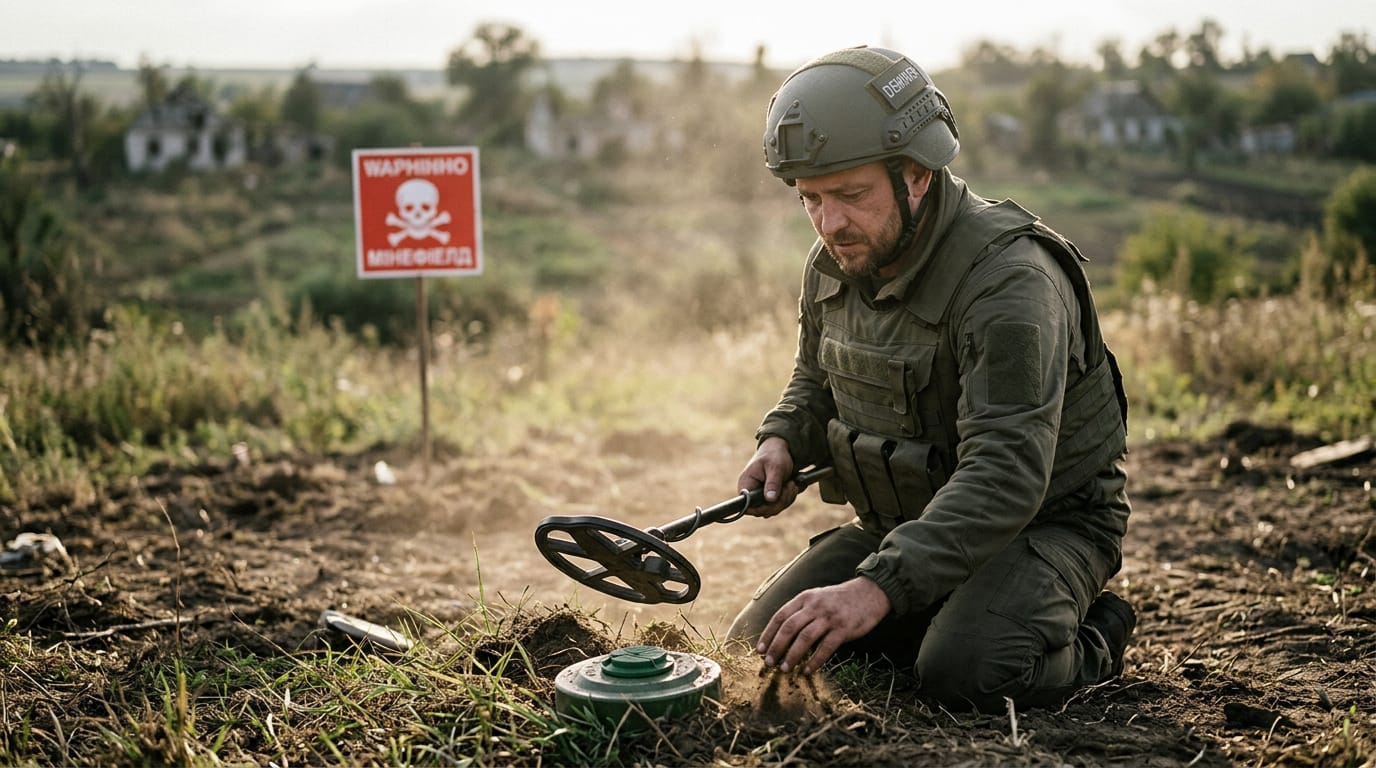
Despite the grim statistics, significant efforts continue in mine action. Since the Ottawa Treaty's inception, many countries have completed the clearance of all antipersonnel mines from their territories, with Cambodia and Croatia leading global demining efforts in 2023. In 2023, funding for mine action globally surpassed $1 billion for the first time, largely driven by substantial support for Ukraine, which received $308.1 million.
However, the continued threat demands sustained and renewed commitment. Despite increased overall funding, victim assistance programs saw a 23% decrease in funding in 2024, leaving many survivors without adequate support. The global community must not only maintain but intensify efforts in clearance, risk education, and victim assistance. Upholding the Ottawa Treaty's principles and condemning any use of antipersonnel mines, by any actor, under any circumstance, is paramount. The long-term security and well-being of countless communities depend on a firm recommitment to a mine-free world.
The resurgence of landmines is a stark reminder of the fragility of international norms and the devastating human consequences when they are undermined. The insidious nature of these weapons means their legacy endures for generations, long after the sound of gunfire fades. Reversing this dangerous trend requires a unified global resolve to reaffirm the ban, increase demining efforts, and provide comprehensive support to the victims who bear the brunt of this renewed threat.