Defense Secretary Healey Resigns Amidst UK Military Spending Standoff
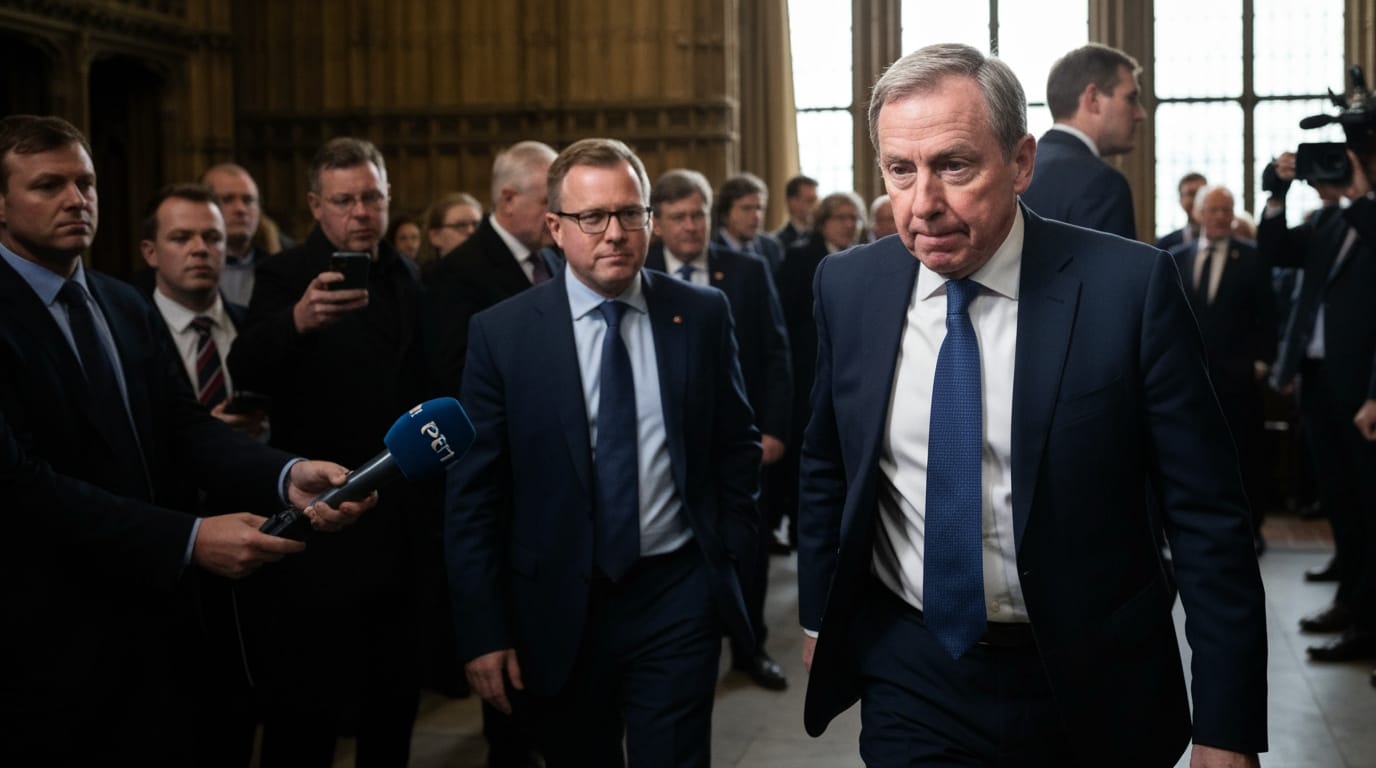
LONDON – In a significant blow to Prime Minister Keir Starmer’s administration, Defense Secretary John Healey dramatically resigned Thursday, citing an irreconcilable dispute over the government’s military spending plans and accusing the leadership of failing to adequately secure the nation against escalating global threats. Healey’s departure exposes deep divisions at the heart of government regarding defense priorities and the funding required to meet them, casting a shadow over the upcoming NATO summit.
Healey, a figure widely considered loyal to Starmer, stated in his resignation letter that he had "no other option" but to step down after being presented with a Defence Investment Plan (DIP) that he believed "falls well short of what is required for defence and the country at this dangerous time." He warned that accepting the proposed settlement would compel him to make decisions that would "reduce the readiness of our Forces and increase the risk to personnel on operations, and could make the country less safe." His resignation, delivered just ahead of the anticipated release of the delayed DIP and a crucial NATO meeting in July, highlights the immense pressure on the UK to bolster its defense capabilities in a volatile international landscape.
The Heart of the Disagreement: Insufficient Funding
The core of the dispute centers on the financial commitment to the Ministry of Defence (MoD) through the long-awaited Defence Investment Plan. Reports indicate that while Healey had sought significantly more, the Treasury reportedly offered an additional £10 billion, a sum Healey deemed insufficient to maintain national security. The finalized proposal, which Healey first reviewed on Monday, projected defense spending to rise to just 2.68% of Gross Domestic Product (GDP) by 2030, after reaching 2.6% next year. Healey had argued for a more robust increase, pushing for spending to hit 3% of GDP by 2030, aligning more closely with the government's own ambition to eventually reach 3.5% of GDP by 2035, a target set in line with NATO agreements.
This perceived shortfall in funding comes at a time when military chiefs have reportedly warned Prime Minister Starmer of a £28 billion deficit in defense funding over the next four years. The government's eventual compromise, reportedly an additional £15 billion agreed upon by Starmer and Chancellor Rachel Reeves, was to be partially funded by requiring other government departments to cut their capital budgets, a move that stirred discontent across Whitehall. Healey's letter specifically criticized both the Prime Minister for being "unable" and the Treasury for being "unwilling to commit the resources that the nation needs to defend the country at this time of rising threats."
Rising Threats and Delayed Responses
Healey's resignation underscores a growing concern within the defense establishment about the UK's preparedness for an increasingly dangerous world. In his letter, the outgoing Defense Secretary explicitly referenced several pressing global challenges, including the ongoing conflict in Ukraine, the "Iran war," increased Russian activity in the High North and towards NATO nations, and the broader escalation of international tensions. These concerns are not new; Prime Minister Starmer himself had issued a stark warning last week that UK intelligence indicated a potential Russian attack on a NATO country as early as 2030.
The delays surrounding the Defence Investment Plan have been a point of contention for months. Originally slated for publication last year, the plan, intended to outline funding for military equipment and services to achieve "warfighting readiness," has been held up by internal budget disputes. This protracted delay has not only frustrated military leaders and the defense industry, which requires long-term certainty for investment and planning, but also, according to some, has undermined the UK's credibility with its allies. The Unite trade union, representing thousands of defense workers, warned that the delay and underfunding risked UK jobs and national security, highlighting numerous defense contracts stalled awaiting the DIP's clarity.
Political Fallout and Future Implications
Healey’s sudden departure represents a significant challenge for Prime Minister Starmer, intensifying existing pressures on his leadership. It follows other recent high-profile resignations and comes amidst reports of internal party disquiet. Opposition parties were quick to seize on the development, praising Healey’s "integrity" and arguing that the resignation was a direct consequence of the government's underfunding of the armed forces. The Liberal Democrat leader called the resignation a "wake-up call" for the government to "get serious about funding our armed forces properly."
The incident highlights a broader strategic debate within the UK: how to balance pressing domestic spending needs with rising international security demands. For decades, UK defense spending has fluctuated, experiencing significant reductions in the post-Cold War era. While the government asserts it is delivering the "largest sustained boost to defence spending since the Cold War," Healey and his supporters contend that current efforts fall short of the immediate requirements.
The repercussions of Healey's resignation are likely to be far-reaching, influencing the perception of the UK's commitment to collective security ahead of the NATO summit and potentially impacting the morale and strategic planning within the armed forces. The appointment of a new Defense Secretary will be crucial, with eyes on whether the replacement will inherit, or seek to revise, the contested spending plan, and how this will reshape the nation’s defense posture in a turbulent global environment. The internal divisions exposed by Healey's departure suggest that the debate over the future of UK military spending is far from over.


